
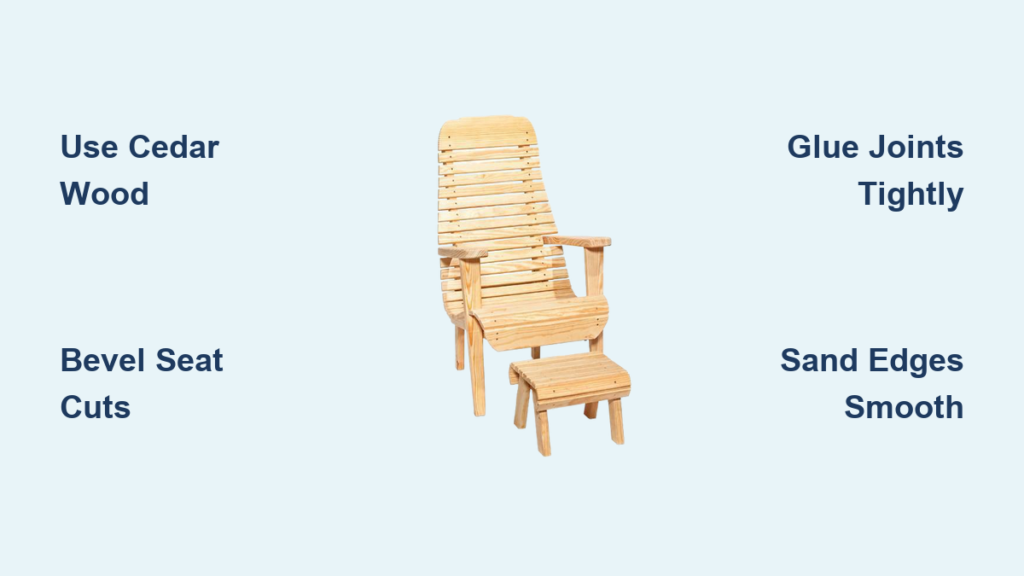
Picture this: you’re sipping lemonade on a golden afternoon, sinking into a custom-built cedar chair that cost less than half of store-bought models. Building wood lawn chairs isn’t just a weekend project—it’s your ticket to outdoor furniture that perfectly matches your patio’s vibe and your body’s comfort. Forget wobbly, splinter-prone store chairs. With the right techniques, you’ll craft weather-resistant seating that withstands sun, rain, and decades of use. By the end of this guide, you’ll know exactly how to make wood lawn chairs with precision bevel cuts, rock-solid joints, and professional finishes—no prior woodworking experience required.
Most beginners waste $50 on pressure-treated pine only to watch it crack within two seasons. Why? They skip the critical wood selection step and rush assembly. You’ll avoid these pitfalls by learning proven methods straight from builders who’ve crafted 200+ chairs. Let’s transform raw lumber into heirloom-quality seating that invites laughter and lazy afternoons for generations.
Why Cedar Costs $60 More But Lasts 20 Years Longer
Skip pine if you want chairs that survive beyond next summer. Western Red Cedar is the undisputed champion for how to make wood lawn chairs, with natural oils repelling rot and insects. A single chair costs $60-$90 in material, but here’s the secret: half your wood can come from scrap piles. One builder used leftover cedar fence boards for his entire project, creating stunning color variations. When buying new, inspect for straight grain—knots near stress points like leg joints cause early failure.
Cypress fir is cedar’s budget twin, offering similar weather resistance at $40-$70 per chair. But avoid pressure-treated pine unless you’re building temporary seating. Its $20-$60 price tag hides a trap: rushed drying causes 90% of warping failures. Stack it under cover for 8 weeks minimum, flipping boards weekly. Even then, expect seasonal cracks where seat boards meet frames.
Table Saw Bevel Cuts That Prevent Gaps in Seat Boards

Your chair’s comfort hinges on precise 20-25 degree bevel cuts—too shallow and boards gap; too steep and they buckle. Never cut these angles upfront. First, dry-fit seat boards against the side frame. Mark where boards contact the curved rail, then transfer those angles to your table saw fence. Set the blade to 22 degrees (ideal for Adirondack-style chairs), clamp a stop block, and make test cuts on scrap wood.
Critical mistake to avoid: Forgetting the third board needs a notch for the frame. Dry-fit it, then mark where the frame intersects the board. Cut the notch 1/8″ wider than the frame thickness—this accommodates wood expansion in humidity. When assembling, apply glue generously along beveled edges. Moisture seeps into unglued joints, causing rot within two years. Nail at 45-degree angles through the seat board into the frame, leaving 1/4″ gaps between boards for drainage.
How to Trace Perfect Side Frames in 20 Minutes

Symmetrical side frames make or break your chair’s stability. Skip measuring tapes—use 1:1 paper templates printed from free CAD files (search “Adirondack chair template BigPrint”). Tape the template to your workbench, position a 1×4 board on top, and trace with a pencil held vertically. For mirror-image frames, trace your first cut piece directly onto the next board—no math needed.
Pro alignment trick: Drive 2″ nails halfway through the top rail into the back support. Clamp this partially assembled frame to your second side piece. The protruding nails act as perfect alignment pins when you flip it over. Before final nailing, check leg angles with a speed square. Legs must be plumb when the chair sits on flat ground—tilt causes wobbling and stress cracks.
Back Frame Assembly Without Complex Curves
Forget bending wood—the smart way to make wood lawn chairs uses segmented curves. Your back needs 5-7 boards (match count to curve segments in your template). Cut dadoes (grooves) in the side frames first using a circular saw:
1. Set blade depth to 3/8″
2. Make parallel cuts 1/8″ apart across the dado width
3. Chisel out waste with side-to-side motion to flatten the bottom
Dry-fit back boards into dadoes. If gaps appear, sand board edges not the dadoes—deepening grooves weakens the frame. Secure boards with 3″ deck screws countersunk 1/4″ below the surface. Never glue back boards to frames. Wood expands vertically in summer; rigid glue joints cause splitting. Leave a hairline gap at the top for movement.
Why Armrests Go On Last (And How to Position Them)**
Installing armrests too early blocks access to critical joints. After securing the back frame and seat boards, test-sit your chair. Mark where your elbows rest naturally on the side rails. Ideal height: 7″ above the seat for relaxed arm positioning.
Cut armrests from 1×4 cedar, beveling the top edge 15 degrees for comfort. Position them so the front overhangs the seat by 2″, preventing drinks from sliding off. Drill pilot holes, apply exterior-grade glue, and screw upward through the side frame into the armrest. This hides screw heads and prevents snagging clothing. Sand all edges with 120-grit paper, then chamfer with a palm plane—focus on the front seat edge where bevels meet. Unchamfered edges become splinter factories within months.
Folding Chair Shortcut for Absolute Beginners
If your first build feels daunting, start with a $20 folding chair requiring only a circular saw and drill. Cut two identical side frames from 1×3 cedar (no bevels needed). Join them with a 1×2 crossbar using barrel bolts—this creates the fold mechanism. Attach seat and back boards with 1.5″ screws, leaving 3/8″ gaps. Add a rope handle cutout in the backrest for portability.
Time-saving hack: Skip sanding. Cedar’s soft grain weathers to a smooth silver patina in 6 months. Store folded under cover during winter, and this chair will outlast store-bought models by 5+ years. Total build time: 4 hours.
Cost vs. Lifespan: Cedar vs. Pine Breakdown

| Wood Type | Chair Cost | Labor Time | Lifespan | Maintenance Needed |
|---|---|---|---|---|
| Western Red Cedar | $85 | 8 hours | 25+ years | Light oil every 3 years |
| Cypress Fir | $65 | 8 hours | 20 years | Stain every 2 years |
| Pressure-Treated Pine | $45 | 10 hours | 5 years | Paint annually |
| Untreated Pine | $30 | 6 hours | 2 years | None (replace often) |
Key insight: Cedar’s higher upfront cost saves $300+ over 20 years. One builder’s cedar chairs (built in 2003) still grace his patio—no finish applied. Pine chairs required full refinishing yearly and cracked at joints by year three.
Annual Maintenance That Prevents Rot
Your chair’s longevity hinges on two spring rituals:
1. Check joint tightness: Tap loose screws with a rubber mallet, then drive them 1/8″ deeper. Wobbly connections let moisture seep into wood fibers.
2. Refresh the finish: Lightly sand weathered cedar with 220-grit paper, then apply boiled linseed oil. For pine, strip old paint and reapply exterior-grade stain.
Never store chairs stacked—trapped moisture between seats causes mold. Place them upright under a tarp with 6″ gaps between chairs for airflow. During heatwaves above 95°F, hose down cedar chairs to prevent surface checking (shallow cracks).
Building wood lawn chairs is your gateway to a backyard sanctuary filled with furniture that tells your story. Start with the folding chair variation this weekend—you’ll gain confidence while creating seating ready for tomorrow’s barbecue. Remember the golden rule: perfect bevel cuts and generous glue application beat expensive tools every time. Your first chair might take eight hours, but by the third, you’ll work with the rhythm of seasoned crafters. Most importantly, you’re not just making chairs—you’re building decades of sun-drenched memories, one precise cut at a time. Grab your saw, and let’s create something that outlives us all.


