

There’s nothing like sinking into a perfectly crafted Adirondack chair as the sun dips below the horizon, a cold drink in hand. But those iconic porch staples often cost $200-$500 at big-box stores. The good news? Learning how to make Adirondack chairs yourself slashes costs by 50-70% while giving you complete control over materials and design. Whether you’re revamping your patio or building matching sets for your community garden, this guide reveals the exact techniques professionals use to create weather-resistant chairs that last decades.
Forget flimsy knockoffs – we’ll cover authentic construction methods using time-tested angles and joints that define the classic Adirondack silhouette. You’ll discover why Western Red Cedar outperforms pressure-treated pine, master the critical 100-degree backrest angle that defines comfort, and avoid the top three mistakes that cause wobbly chairs. By the end of this guide, you’ll have two rock-solid chairs ready for generations of sunsets.
Choose Your Wood Wisely for Outdoor Durability
Western Red Cedar: The Rot-Resistant Champion
Western Red Cedar delivers unmatched value for how to make Adirondack chairs projects. Its natural oils repel moisture and insects without chemical treatments, giving you 15-20 years of service with minimal maintenance. You’ll appreciate how its lightweight nature (only 2.3 lbs per board foot) makes assembly effortless while resisting warping. Watch it gracefully age to a silvery patina within 6-12 months, though annual applications of teak oil preserve that warm reddish hue. Cut costs further by sourcing reclaimed cedar fencing – just ensure boards are straight and free of large knots.
Pressure-Treated Pine: Budget Builder’s Secret
Southern Yellow Pine cuts material costs to just $60-$90 per chair when building how to make Adirondack chairs projects. While it lacks cedar’s natural rot resistance, proper sealing with marine-grade spar varnish delivers 8-12 years of reliable service. Handle with care during cutting – always wear an N95 respirator to avoid inhaling chemical dust. Pro tip: Let pine boards dry for 30 days after purchase to minimize warping during assembly. You’ll save $60-$100 per chair compared to cedar, but expect more frequent finish reapplications.
Essential Tools That Prevent Costly Mistakes

Precision Cutting Equipment Checklist
Skip the frustration of misaligned slats by using these tools for how to make Adirondack chairs:
– Miter saw with laser guide: Ensures exact 15-degree leg angles critical for stability
– Jigsaw with scroll blade: Creates smooth 36-inch backrest curves without tear-out
– Drill with depth stop: Prevents splitting when driving 1.25″ deck screws into ¾” slats
– Angle gauge: Verifies the 100-degree backrest-to-seat connection (the comfort sweet spot)
Always clamp boards before cutting – a single slip on the back leg’s 100-degree top angle ruins the chair’s ergonomics. Keep a dedicated angle jig made from scrap wood to replicate critical cuts consistently across multiple chairs.
Stainless Steel Hardware Quantities
Use only marine-grade stainless steel fasteners when how to make Adirondack chairs:
– 70 pieces of 1.25″ deck screws for seat/back slats
– 35 pieces of 2″ deck screws for structural supports
– 10 pieces of 3″ deck screws for leg assemblies
– 4 sets of ¼” x 3″ carriage bolts with washers for backrest joints
Pre-drill every hole with a 1/8″ bit – skip this step and 70% of softwood screws will cause splitting. Apply exterior-grade wood glue to all joints before screwing; this doubles structural integrity and silences creaks.
Perfect the Signature Angles That Define Comfort
Seat Slope and Backrest Geometry
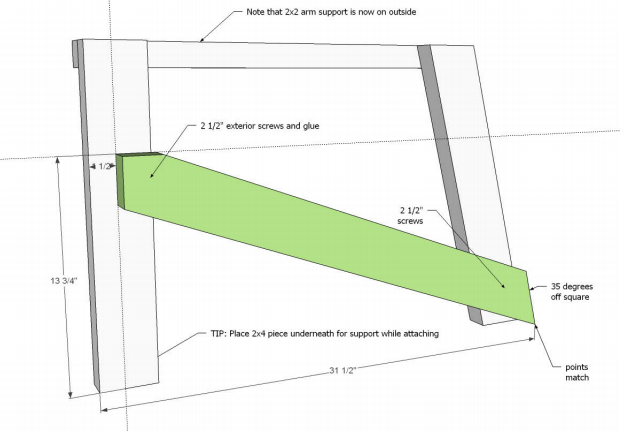
The magic of how to make Adirondack chairs lies in three non-negotiable angles:
– 15-degree backward seat slope: Creates that signature low-to-the-ground lounging position
– 100-degree backrest angle: Positions your spine for optimal relaxation (measured from seat plane)
– 15-degree leg splay: Prevents tipping while adding visual stability
Mark these angles directly on your back legs: 15 degrees at the foot for ground contact, 100 degrees at the top where the backrest attaches. A single degree error here throws off the entire chair’s balance. Test your angles using a smartphone protractor app before cutting – it’s saved countless DIYers from starting over.
Building the Rock-Solid Leg Assembly
Start by dry-fitting back legs with seat supports 15 inches from the bottom. Clamp tightly, then drill pilot holes to avoid splitting the 1×6 cedar. Drive two 2″ deck screws through each joint with exterior wood glue. Position front legs exactly 20 inches from back legs (measured center-to-center), checking with a framing square. Connect legs with 1×4 stretchers 8 inches up from the bottom – this triangulation prevents wobble. Your first critical test: Place the assembly on a flat surface; all four leg bottoms must touch simultaneously.
Install Slats Like a Professional Cabinetmaker
Seat Slat Spacing Secrets
Begin installing seat slats from the rear, flush against the back edge of supports. Use a ¼-inch spacer block (a scrap of 1×4 works perfectly) between each 22-inch slat to ensure consistent drainage gaps. Drive two 1.25″ screws per support into pre-drilled holes, countersinking slightly. The front slat should overhang the seat frame by ½ inch for a finished look. Never force misaligned slats – adjust spacer thickness by 1/16 inch instead. This precision prevents water pooling that causes premature rot.
Backrest Assembly Techniques
Cut the curved top on back supports using a paint can lid as a template (trace the 3.5-inch radius). Sand curves to 220-grit smoothness before assembly. Lay out six 36-inch back slats vertically, starting from the center outward for symmetrical spacing. Maintain ½-inch gaps using doubled-up 1×4 spacers. Attach slats from the backside with 1.5″ screws driven at 45-degree angles into supports – this “toe-screwing” technique prevents visible hardware. Check alignment by sighting down the backrest; uneven slats ruin the chair’s classic profile.
Achieve Flawless Finishes That Withstand Weather
Sanding Sequence for Glass-Smooth Results
Skip any grit and you’ll feel rough spots for years. Start with 80-grit to remove saw marks, progressing through 120-grit, finishing with 220-grit. Vacuum between each stage – embedded dust creates pitting in your finish. Round all sharp edges with a router’s ¼” round-over bit (or sand by hand) to prevent splinters. Run your palm over every surface; if it catches, you missed a spot. Pay special attention to armrest curves where sweat and rain collect.
Marine-Grade Varnish Application
For finishes that survive harsh climates when how to make Adirondack chairs:
1. Apply first coat of spar urethane with a foam brush in the direction of the grain
2. Lightly sand with 320-grit paper after 4 hours (before full cure)
3. Wipe away dust with a tack cloth
4. Apply second coat, focusing on end grains that absorb more finish
5. Repeat for third coat – minimum required for UV protection
Avoid thick coats that peel; “less is more” with varnish. Reapply annually in desert or coastal climates. For cedar, skip stains – they obscure the beautiful grain and require more frequent maintenance than clear finishes.
Fix Common Problems Before They Ruin Your Chair
Eliminating Wobble at the Source
A rocking chair isn’t a rocking chair – wobble means structural failure. Check leg angles with a digital protractor; any deviation from 15-degree splay causes instability. Place the chair on a known-flat surface (garage floor works well), then insert folded business cards under shorter legs until all four touch ground. Permanently fix by:
– Trimming long legs with a block plane
– Adding adjustable nylon furniture glides ($1.50 each)
– Reinforcing loose joints with epoxy-infused wood glue
Preventing Finish Failures
Peeling varnish almost always stems from poor surface prep. If your finish bubbles after rain, strip completely with Citristrip, then:
1. Sand to bare wood starting with 80-grit
2. Wipe with mineral spirits to remove residue
3. Apply wood conditioner (especially on pine)
4. Reapply three thin varnish coats
Never apply finish in direct sun or high humidity – 70°F with 50% humidity is ideal. Test finishes on scrap wood first; some oils darken cedar excessively.
Customize for Ultimate Relaxation
Built-In Cup Holders Done Right
Route 3.5-inch diameter holes into armrests 6 inches from the front edge – position them too close to the back and drinks become unreachable. Use a Forstner bit for clean edges, then sand the lip smooth. Drill a 1/8-inch drainage hole at the bottom to prevent water accumulation. For added security, line holes with silicone tubing from aquarium supply stores.
Matching Ottoman Construction
Double your comfort with a footrest built using identical techniques for how to make Adirondack chairs. Cut seat slats to 20 inches, legs to 8 inches tall with the same 15-degree splay. Maintain consistent ¼-inch slat spacing for drainage. Attach ottoman legs with 2.5″ screws into a 1×4 frame – no backrest needed. Your feet will thank you during marathon reading sessions.
Seasonal Maintenance That Extends Lifespan
Winter Storage Protocol
Store chairs vertically against a wall in a dry shed – never stack horizontally. If storing outdoors, use breathable cotton covers (vinyl traps moisture). Before covering, apply a final coat of finish and tighten all hardware. Remove cushions immediately after use; trapped moisture breeds mold. For teak chairs, skip winter storage – their natural oils handle freezing temps.
Spring Revival Checklist
Revive your chairs each season with this 20-minute ritual:
1. Scrub with TSP solution to remove mildew
2. Rinse thoroughly with garden hose
3. Sand rough spots to 120-grit
4. Apply fresh coat of spar varnish
5. Tighten all carriage bolts and screws
Replace any corroded stainless steel hardware immediately – one rusty bolt can stain entire sections of wood.
Building your own Adirondack chairs transforms your outdoor space while saving $200+ per chair. By following these precise angles, material choices, and finishing techniques, you’ll create heirloom-quality seating that outlasts store-bought versions. Remember the golden rule: Perfect the 100-degree backrest angle first – it’s the difference between a comfortable chair and one you abandon after 10 minutes. Now grab your miter saw and start cutting; that perfect sunset lounge session is only eight hours of work away. When you finally sink into your handmade chair, cold drink in hand, you’ll understand why generations have mastered how to make Adirondack chairs – it’s the ultimate payoff for DIY craftsmanship.


