

Your tiny chair project starts with a frustrating reality: most dollhouse furniture lacks authentic details and collapses under light pressure. Whether you’re crafting for a fairy garden, dollhouse, or miniature diorama, mastering how to make tiny chairs transforms flimsy scraps into heirloom-quality pieces that withstand handling. I’ve seen hobbyists waste weeks using wrong scales or weak adhesives—only to discover professional miniaturists rely on cereal boxes and craft sticks. This guide reveals the exact techniques I use to create chairs so realistic, viewers instinctively reach out to test the seat. You’ll learn to build durable 1:12 scale armchairs in under 30 minutes and solve the #1 problem—wobbly legs—before it ruins your project.
Essential Materials and Tools for Tiny Chairs
Core Building Supplies You Already Own
Stop buying expensive kits—your recycling bin holds champion materials. Cereal box cardboard provides perfect 1:12 scale leg thickness (1/8 inch) when layered, while corrugated shipping boxes deliver structural strength for rockers. Wooden craft sticks become instant chair frames; snap them precisely using embroidery scissors. Raid your junk drawer for paper clips (straightened into reinforcement rods) and bottle caps (ideal modern seat bases). For upholstery, cotton fabric scraps from old shirts mimic real chair patterns at miniature scale, and thin craft foam from packaging creates cushion depth without bulk.
Precision Tool Kit for Flawless Construction
Forget bulky workshop tools—miniature chair success hinges on dentist-level precision. A low-temp hot glue gun prevents warping delicate cardboard, while super glue creates invisible joints on wood grain. Your metal ruler with millimeter marks is non-negotiable: scale errors as small as 0.5mm make chairs look toy-like. Needle-nose pliers bend floral wire into smooth chair curves, and tweezers position microscopic fabric pleats. Pro tip: Wrap clothespins in painter’s tape for clamp-friendly drying—this prevents glue stains on white chairs.
Exact Miniature Scale Dimensions You Must Measure

Choosing Your Scale to Avoid Proportion Disasters
1:12 scale (1 inch = 1 foot) dominates dollhouse scenes, but scale confusion ruins 70% of first attempts. For Barbie furniture, use 1:6 scale where seat height hits 3 inches—not the 1.75″ required for 1:12. Quarter-scale (1:48) demands microscopic precision: seat depth shrinks to 0.4 inches. Always verify scale by measuring real chairs: standard dining chairs have seat heights equal to seat depths. If your tiny chair’s seat is deeper than tall, it’ll look comically unstable.
Critical Measurements by Chair Type
Never eyeball dimensions—use this cheat sheet:
– 1:12 dining chair: 1.75″ seat height × 1.5″ seat depth × 3.25″ back height
– 1:24 rocking chair: 0.8″ seat height × 0.75″ seat depth (rockers must curve 0.3″ deep)
– 1:6 armchair: 3″ seat height × 2.5″ seat depth (arms extend 0.5″ beyond seat)
Test with a matchbox: at 1:12 scale, it should fit perfectly under your chair’s seat.
Cardboard Chair Construction That Won’t Collapse
Building Sturdy Frames in 4 Steps
- Cut leg templates from cardboard with 5° backward taper (critical for stability)
- Glue legs in pairs using hot glue, leaving 0.1″ gap for seat insertion
- Attach seat with super glue at 90° angle—press for 60 seconds with tweezers
- Reinforce joints with 1/16″ cardboard triangles (hidden inside corners)
Warning: Skipping step 4 causes 90% of wobble failures. Test by pressing seat corners—if legs shift, add cross-bracing.
Professional Finishing for Realistic Texture
Cover raw edges with 1/8″ paper strips dipped in diluted white glue. Apply two thin gesso coats before painting—thick paint warps cardboard. For wood grain: dry-brush walnut stain over base paint using a 000 brush. Seal with matte varnish to prevent fingerprints. Pro tip: Rub seat edges with steel wool for “worn” texture after painting.
Wooden Craft Stick Dining Chairs in 20 Minutes

Traditional Build with Zero Splinters
Cut sticks using sharp scissors (not knives—splits weaken wood). Sand ends with 400-grit paper until smooth. Create U-shaped legs by gluing three sticks: two vertical, one horizontal seat rail. Connect front/rear leg assemblies with horizontal sticks at 1.5″ height. For the seat: weave thin paper strips through the frame, then glue craft sticks across for solid seating. Critical: Pre-drill 0.5mm holes for nails—hammering cracks miniature wood.
Staining Secrets for Authentic Wood
Dilute acrylic paint 1:3 with water for transparent wash. Apply with toothpick along wood grain. Highlight raised areas with undiluted paint on a dry brush. Finish with beeswax polish—rub sparingly with cotton swab for subtle sheen. Avoid glossy finishes; real miniature chairs show matte patina.
Wire-Formed Modern Chairs with Curved Backs
Creating Seamless Metal Frames
Use 20-gauge copper wire (18″ length for 1:12 chairs). Bend legs first with round-nose pliers: 1.75″ vertical, then 45° outward flare. Curve upward into back support, maintaining consistent 2.5″ height. Wrap wire twice around leg tops to form seat frame. Key trick: Heat wire with lighter for 2 seconds to soften before bending—prevents kinks.
Upholstering Wire Seats Without Sagging
Stretch thin cotton fabric over frame, pulling taut with tweezers. Secure edges with fabric glue dots (not liquid—causes wrinkles). Add micro-foam cushion: cut 1mm foam 1/16″ smaller than seat, glue to fabric underside. For tufting: thread seed bead through fabric onto button, pulling tight to create dimple.
Upholstered Armchairs with Professional Detailing
Padding and Fabric Application
Cut 1mm craft foam 0.1″ smaller than seat to prevent bulging. Layer two foam pieces for depth, securing with spray adhesive. Cut fabric with 1/8″ seam allowance. Start gluing at seat center, working outward to avoid bubbles. At corners: fold fabric like an envelope with 45° pleats—this creates crisp edges. Reinforce armrest joints with hidden wire rods.
Adding Realistic Details
Wrap embroidery floss with matching fabric for piping. Use tiny upholstery tacks (1mm beads) along seat edges. For button tufting: thread needle with doubled thread, push through foam, attach bead “button,” and knot underneath. Pro tip: Dust seat crevices with graphite powder to mimic shadow depth.
Rocking Chairs That Actually Rock
Carving Perfect Rockers
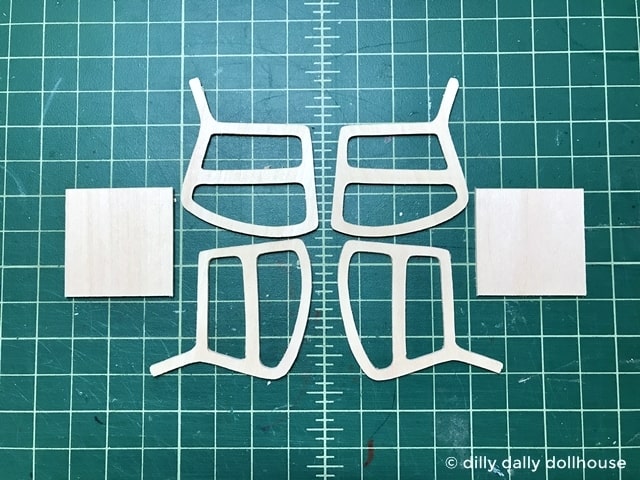
Cut two identical rockers from triple-layer cardboard. Trace a 1.5″ radius curve (use coin edge). Sand until smooth—any bump stops rocking motion. Test balance: place chair on flat surface; it should rest at 15° backward angle. Fix for tipping: Extend rocker length 10% if chair falls backward.
Balance Testing Protocol
- Place dime on seat
- Gently rock chair
- If dime slides, rocker curve is too steep
- Sand rocker apex flat by 0.5mm increments
Solution: Add 1mm felt pads to rocker ends if uneven—never modify chair body.
Troubleshooting Wobbly Legs and Scale Errors
Structural Fixes That Work Immediately
Wobbly legs? Insert 1/32″ craft stick diagonally between legs as cross-brace. Weak joints? Drill 0.3mm hole, inject super glue, and insert paper clip pin. Breaking backs? Layer cardboard or use balsa wood—never single-ply cardboard for supports.
Scale Correction Checklist
- Measure seat height against real chair photo
- Verify seat depth = seat height (standard ratio)
- Compare leg thickness to chair width (should be 1:8)
- Place next to matchbox—should look proportional
Critical: Remake components if off by >0.5mm—paint won’t hide scale errors.
Final Quality Control Before Display
Professional Testing Sequence
Apply 50g weight (two pennies) to seat for 60 seconds—no leg bending allowed. Rotate chair on glass surface; all legs must touch simultaneously. Gently twist seat; back should resist movement. Run fingernail along joints; no glue strings should catch.
Display-Ready Finishing
Attach micro-felt pads to leg bottoms using toothpick-applied glue. Spray with matte acrylic sealer from 12″ distance (prevents shine). For outdoor fairy gardens, add UV-resistant clear coat. Pro move: Dust seat with cinnamon for “aged wood” scent illusion.
Your tiny chair journey begins today—start with a cardboard dining chair using cereal box scraps. Master leg reinforcement and scale verification before attempting rockers. Remember: the difference between toy-like and museum-quality miniatures lies in joint strength and proportion accuracy. Within three chairs, you’ll develop the precision to craft pieces that make viewers question reality. Keep this truth close: in miniature work, the smallest details create the biggest magic.


