
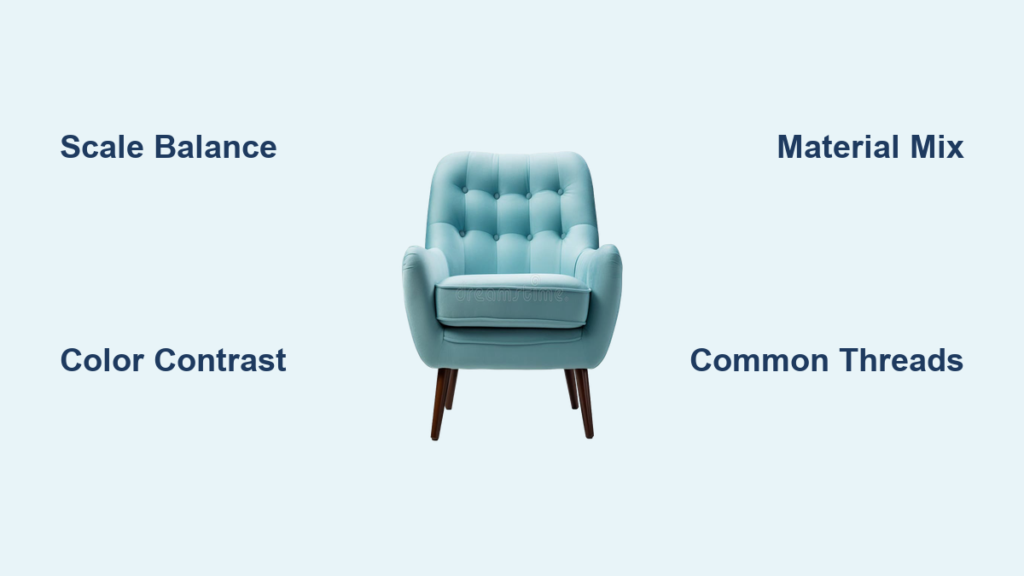
Picture walking into a living room where every accent chair tells its own story—yet somehow, they all belong together. This isn’t accidental design magic; it’s the art of intentional mismatched seating that transforms ordinary spaces into curated, sophisticated environments. While matching furniture sets feel predictable, mixing accent chairs creates depth, personality, and that coveted “collected over time” aesthetic that makes homes feel genuinely lived-in and loved.
The secret lies not in random selection, but in understanding the delicate balance between contrast and cohesion. When done thoughtfully, mismatched accent chairs become the jewelry of your room—individual statement pieces that collectively create an unforgettable impression. This guide walks you through the exact framework professionals use to achieve magazine-worthy chair combinations in any space.
Master Scale and Proportion Balance

Visual equilibrium starts with understanding how your chairs relate to each other and their surrounding space. A massive wingback chair positioned next to a delicate slipper chair creates intentional tension, but only if their combined visual weight feels balanced within the room.
Proportional Relationships to Master:
– Height variations: Allow 2-4 inch differences between chair backs
– Width ratios: Pair wider chairs with slimmer silhouettes
– Leg visibility: Balance leggy pieces with solid-base designs
Quick Scale Test: Place your chairs side by side and step back 8-10 feet. None should visually overpower the others or feel like an afterthought. If one piece dominates, swap it for something more proportional or reposition to distribute visual weight differently.
Avoiding Common Scale Disasters
Oversized chairs dwarfing petite sofas or mismatched seat heights creating awkward conversation are the most frequent mistakes. When mixing accent chairs, maintain consistent proportional relationships between all seating elements. An apartment-sized sofa should never be flanked by oversized lounge chairs that overwhelm the space. Instead, pair your sofa with chairs that complement its scale—whether that means selecting pieces with similar visual weight or intentionally contrasting sizes that still maintain balance.
Create Intentional Contrast Elements
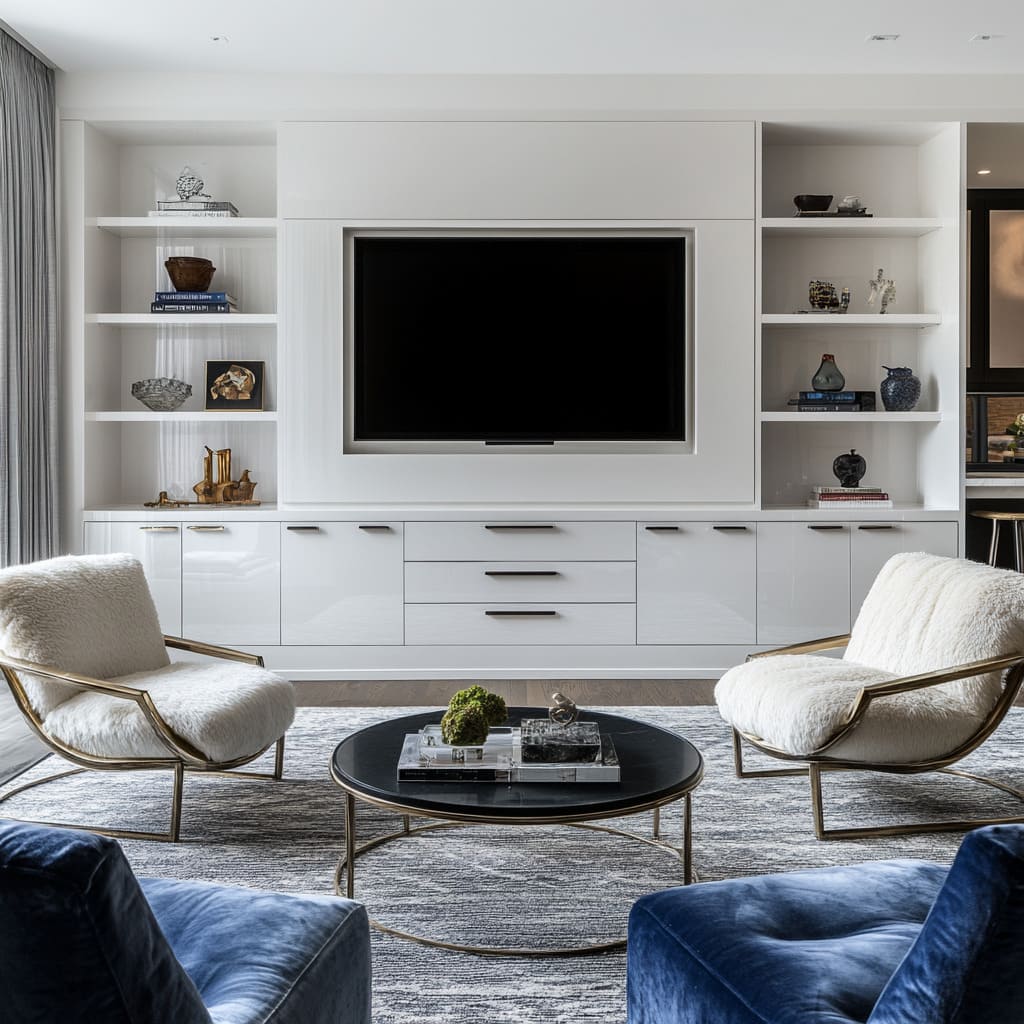
Successful mixing relies on calculated contrast across four key elements. The goal isn’t random variety—it’s purposeful differences that feel deliberate rather than accidental.
Color Contrast Strategies:
– Monochromatic depth: Use 3-4 shades of the same color family
– Complementary pops: Introduce one contrasting accent color through accessories
– Neutral anchors: Establish beige, gray, or white as your base palette
Shape and Silhouette Play:
Combine traditional rolled arms with modern square profiles, or pair curved backs with angular frames. Avoid perfectly matching silhouettes, but ensure shapes belong to the same visual family—think organic curves together or geometric angles complementing each other.
Material Mixing Rules
Texture creates visual interest without overwhelming your space. Combine one smooth texture (leather, velvet) with one textured material (linen, boucle) for sophisticated contrast. Successful pairings include:
– Velvet against woven cotton creates luxury-meets-casual appeal
– Leather paired with fabric adds textural richness
– Metal legs balance wood frames for modern-traditional fusion
Establish Common Thread Connections
While embracing differences, prevent visual chaos by establishing subtle connections between all pieces. These invisible threads create cohesion without forcing matchy-matchy styling.
Connection Strategies:
– Undertone matching: Ensure wood finishes share warm or cool undertones
– Accent color echo: Repeat one color in small details across all chairs
– Pattern rhythm: Use similar geometric or organic patterns in different scales
– Hardware harmony: Unite through consistent metal tones or leg styles
The Two-Element Rule: Every chair should share at least two connecting factors with other pieces—perhaps similar leg style and accent color, or matching undertones and pattern scale. This simple rule prevents your mixed accent chairs from looking like a random collection.
Perfect Chair-to-Chair Pairings
Complementary Silhouette Combinations
Pair traditional tufted chairs with sleek mid-century pieces. The key is ensuring both serve the same functional purpose—both reading chairs, both conversation seats—while offering visual contrast. Consider leg styles too: chairs with visible wooden legs balance beautifully against skirted upholstery. A traditional rolled-arm chair paired with a modern square-armed piece creates visual interest while maintaining functional seating.
Strategic Material Combinations
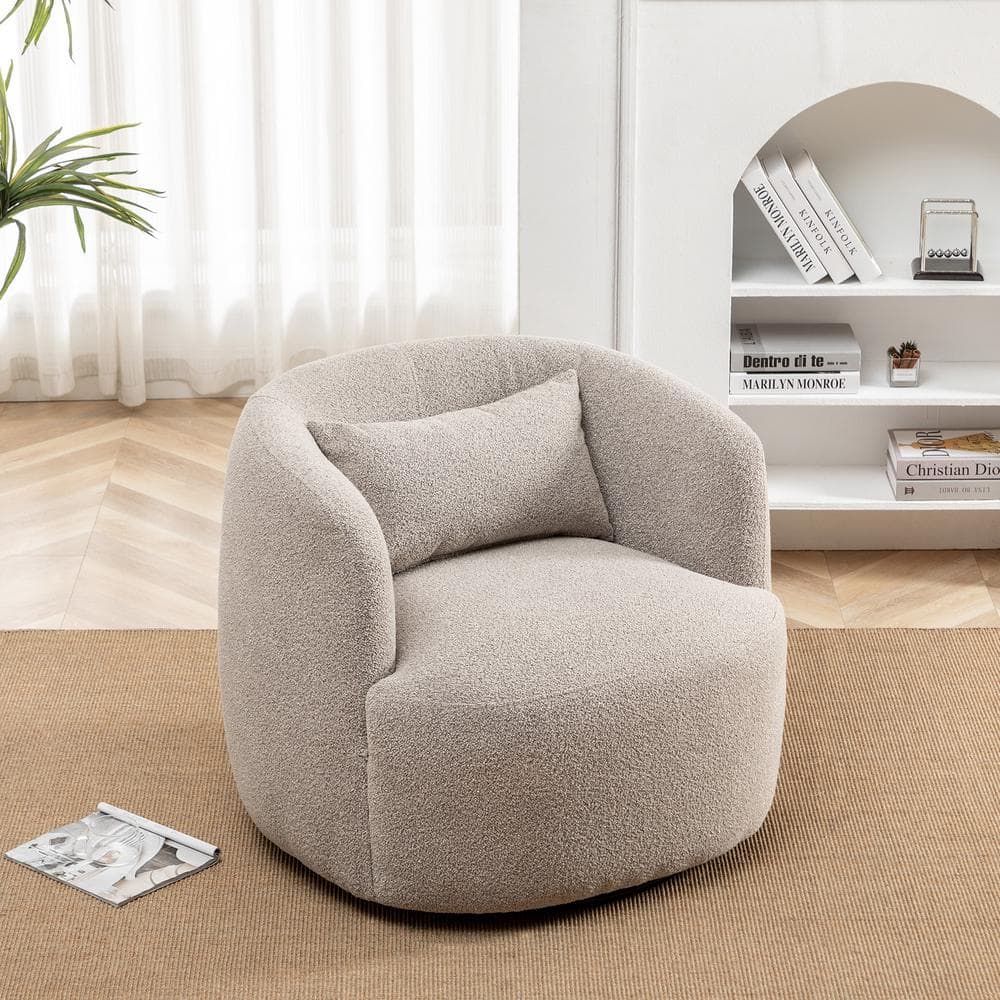
Proven Pairings:
– Boucle accent chair + leather occasional chair
– Velvet statement piece + linen slipper chair
– Wood frame traditional + metal frame modern
Texture Balance Formula: Combine one smooth texture (leather, velvet) with one textured material (linen, boucle) for sophisticated contrast that doesn’t overwhelm.
Balance Sofa and Chair Relationships
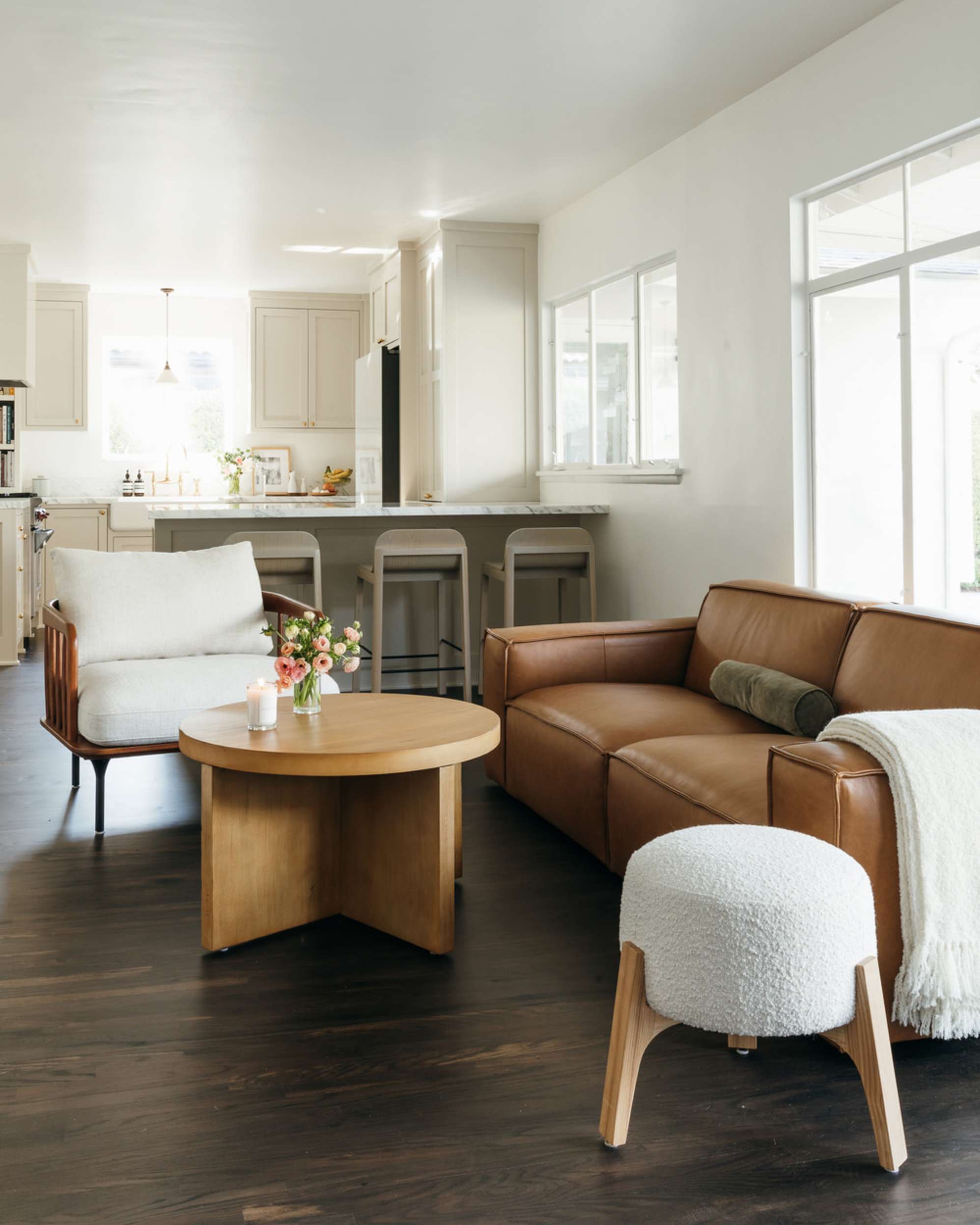
Visual Weight Distribution
A skirted, solid-base sofa demands lighter, leggy chairs to prevent visual heaviness. Conversely, a sleek raised sofa balances beautifully with more substantial chair designs. The goal is creating equilibrium where no single piece overwhelms the grouping.
Weight Assessment Tips:
– Heavy pieces: Skirted bases, dark colors, thick upholstery
– Light pieces: Visible legs, light colors, minimal profiles
– Balanced combinations: Mix 2-3 heavy with 1-2 light pieces
Style Bridge Techniques
Connect different eras through shared elements. A traditional camelback sofa pairs beautifully with modern chairs when both share similar wood tones. Modern sofas feel grounded with vintage chairs when connected through consistent textile choices or color palettes. This approach to how to mix and match accent chairs creates intentional cohesion rather than accidental mismatching.
Design Multi-Chair Arrangements
The Collected Look Method
For spaces requiring multiple accent chairs, create intentional variety while maintaining sophisticated cohesion. Each chair should contribute unique elements—one provides bold color, another offers interesting texture, another brings sculptural shape.
Chair Personality Roles:
– The Color Pop: One bold-hued statement piece
– The Texture Provider: Interesting material like boucle or velvet
– The Shape Maker: Unique silhouette or architectural lines
– The Neutral Anchor: Subtle piece that grounds the arrangement
Spatial Arrangement Rules
Maintain 36-inch minimum pathways between all seating. Position chairs to foster conversation—typically flanking coffee tables or angled toward each other. Use area rugs to anchor groupings, ensuring the rug extends at least 6 inches beyond chair legs.
Practical Selection Framework
Pre-Shopping Assessment
- Measure your space: Document room dimensions and existing furniture
- Identify chair purposes: Reading, conversation, or occasional seating
- Map traffic flow: Sketch natural movement patterns
- Photograph existing pieces: Document current color palette and style
Shopping Success Checklist:
– [ ] Scale matches existing furniture
– [ ] Color connects with current palette
– [ ] Style serves intended function
– [ ] Material suits lifestyle needs
– [ ] Price fits budget parameters
Avoid Common Mixing Mistakes
Scale Disasters to Prevent:
– Oversized chairs dwarfing petite sofas
– Mismatched seat heights creating awkward conversation
– Heavy pieces blocking natural light sources
Color Chaos Solutions:
– Limit palette to 4 colors maximum
– Use 60-30-10 distribution rule
– Repeat accent colors in at least 3 places
Function Failures:
– Choosing style over comfort for daily-use chairs
– Blocking traffic flow with poor placement
– Ignoring practical needs like side table access
Budget-Conscious Shopping Guide
Smart Investment Priorities
Splurge-Worthy Pieces:
– Primary accent chair in timeless silhouette
– High-quality upholstery in performance fabric
– Classic shape that won’t date quickly
Budget-Friendly Finds:
– Trendy colors or patterns through smaller chairs
– Vintage pieces with good bones for reupholstery
– Seasonal accessories for easy updates
Current Market Values:
– Entry level: $108-$163 for polyester boucle or swivel chairs
– Mid-range: $320-$599 for designer collaborations and velvet pieces
– Investment: $650-$1,695 for solid wood frames and luxury fabrics
Maintenance for Longevity
Fabric Selection Wisdom
Choose performance fabrics for high-use chairs, especially in homes with children or pets. Stain-resistant treatments extend fabric life significantly, while rotation schedules ensure even wear across multiple pieces.
Style Evolution Planning
Select foundational pieces in neutral tones or classic shapes that accommodate changing accent pieces over time. This approach allows for seasonal updates through accessories rather than complete furniture replacement.
Future-Proofing Strategy:
– Invest in quality neutral chairs
– Change personality through cushions, throws, and art
– Rotate accent chairs between rooms for fresh perspectives
– Add new pieces gradually to avoid overwhelming the space
The art of mixing accent chairs transforms ordinary rooms into extraordinary spaces through intentional contrast and thoughtful connection. By mastering scale balance, creating purposeful contrast, and establishing common threads, you’ll achieve that coveted designer look that feels both effortless and sophisticated. Start with one perfect piece, build gradually, and let your space evolve into a true reflection of your personal style.


