

Your once-beautiful teak dining set now looks dull and gray after months of sun exposure. Rainstorms have left mysterious green streaks on your cedar chairs, while spilled barbecue sauce has seeped into the grain of your acacia armchairs. Don’t replace them yet—most weathered outdoor wood chairs can be revived with proper cleaning techniques tailored to your specific wood type. This guide delivers actionable methods to restore any outdoor wood chair, whether you’re tackling light monthly maintenance or deep restoration projects. You’ll discover exactly which products work for your teak, cedar, or hardwood furniture and how to prevent future damage.
Ignoring regular cleaning leads to permanent graying, mold growth, and structural weakening. But with the right approach, you can extend your chairs’ lifespan by decades while maintaining their natural beauty. Follow these wood-specific protocols to transform weathered eyesores into patio showpieces.
Identify Your Wood Type Before Cleaning
Teak vs Other Hardwoods
Teak reveals itself through its distinctive oily feel and natural golden-brown hue that fades to silvery-gray over time. Eucalyptus and acacia mimic teak’s appearance but lack its protective oil content. Ipe—the densest option—feels noticeably heavy with minimal visible grain. Using teak-specific cleaners on acacia could cause irreversible damage, so accurate identification is crucial before applying any solution.
Softwood Characteristics
Cedar chairs emit a pleasant aroma and feature light, straight grain that turns fuzzy when over-cleaned. Pine remains the most vulnerable softwood, requiring seasonal sealant applications to prevent rapid deterioration. Redwood displays rich reddish tones when new that deepen with age—never treat it like teak since its porous structure absorbs cleaners differently. Always test cleaners on hidden areas first to avoid unexpected reactions.
Quick Finish Test
Splash water on your chair seat. Immediate absorption indicates weathered, unsealed wood needing deep restoration. Water beading up means the protective finish remains intact—use only mild cleaning methods. Partially failed finishes show patchy results (some areas bead water while others absorb), requiring spot treatment of exposed sections before resealing.
Essential Cleaning Tools Checklist
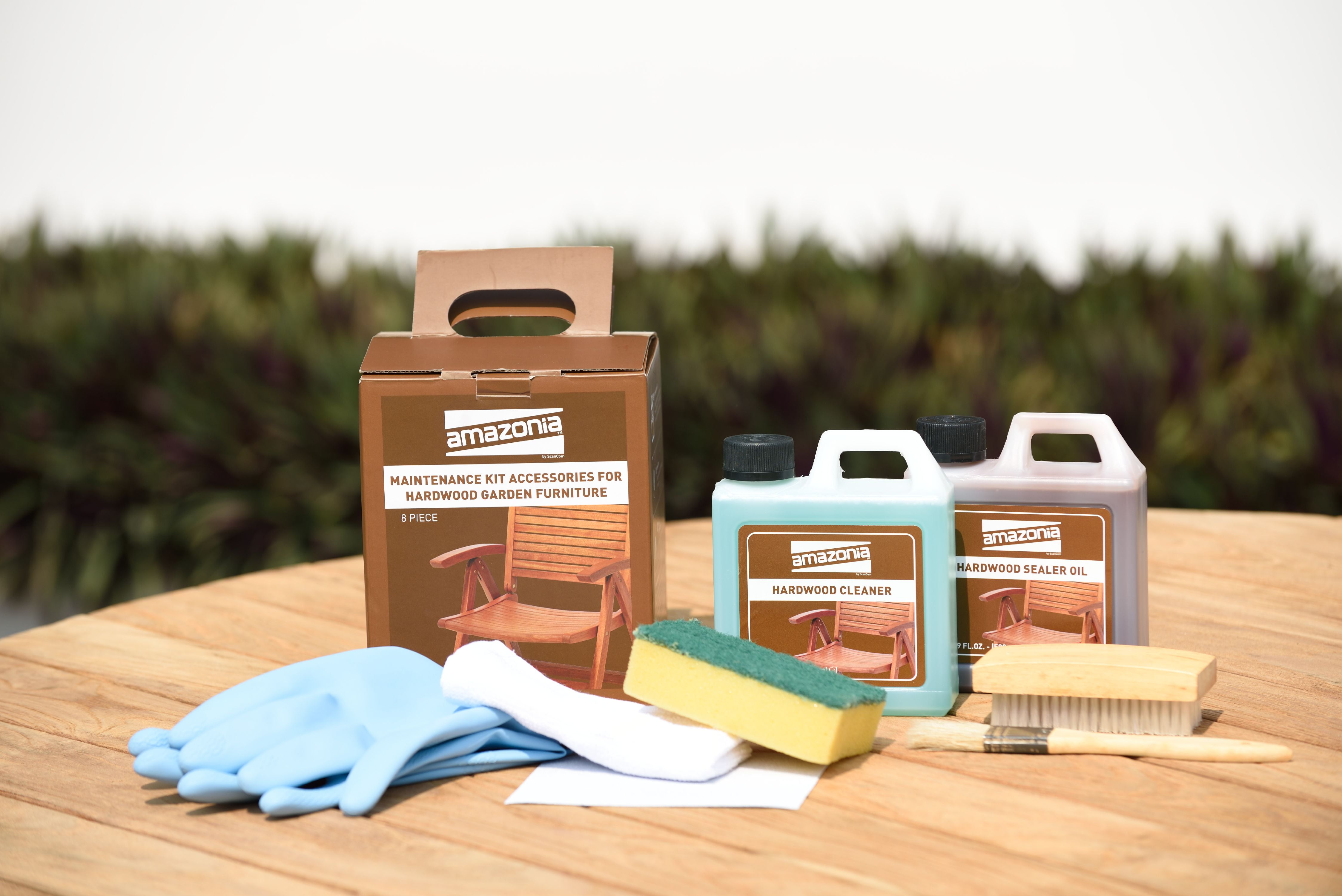
Must-Have Basics
- Soft-bristle brush (natural bristles for softwoods like cedar, synthetic for hardwoods)
- Microfiber cloths (3-4 for immediate drying to prevent water spots)
- Garden hose with adjustable spray nozzle (set to gentle flow)
- 2-gallon bucket for mixing solutions
- Rubber gloves and safety goggles (non-negotiable for chemical handling)
Deep Cleaning Additions
- Oxygen bleach (OxiClean works for most organic stains without wood damage)
- 120-grit sandpaper (for smoothing rough spots after cleaning)
- Teak-specific cleaner (only for genuine teak chairs)
- Mineral spirits (strictly for sap removal—never use on finished surfaces)
- Plastic scraper (metal tools will gouge wood permanently)
Quick Monthly Maintenance
Five-Minute Dry Prep
Brush off leaves and debris using light, downward strokes along the grain. Pay special attention to crevices where the seat meets backrest—trapped moisture here accelerates rot. While cleaning, check chair stability by gently rocking each leg. Tighten loose hardware immediately to prevent stress fractures.
Soap and Water Method
Mix ¼ cup dish soap in warm water (never hot—it warps wood). Working section by section, apply with your soft brush using circular motions. Keep the wood damp but never saturated. Rinse thoroughly with low-pressure hose spray—soap residue attracts dirt faster than untreated wood. Dry immediately with microfiber cloths, then allow 24 hours of shade-drying before use.
Monthly Inspection Points
- Hardware check: Replace corroded screws with stainless steel
- Stain watch: Blot spills within 5 minutes to prevent penetration
- Finish touch-ups: Apply oil only to dry spots (full recoating traps moisture)
Deep Clean Weathered Chairs
Heavy Debris Removal
Use your plastic scraper at a 30-degree angle to lift stubborn debris without gouging. Vacuum crevices with a brush attachment before wet cleaning. Remove all cushions and unscrew hardware—cleaning around bolts leaves residue rings. For chairs with intricate carvings, use an old toothbrush to dislodge packed-in dirt.
Oxygen Bleach Treatment
Mix oxygen bleach per package directions (typically 1 scoop per gallon warm water). Apply with a soft brush, working the solution into the wood grain. Never let it dry on the surface—maintain dampness for 10-15 minutes. Scrub vigorously with the grain using a stiff brush, then rinse with heavy water flow until runoff runs completely clear. This removes deep graying without chlorine damage.
Remove Mold and Mildew Fast

Identify the Culprit
- Black spots: Active mold colonies requiring immediate treatment
- Green fuzzy patches: Algae-mildew hybrids thriving in shaded areas
- White film: Harmless efflorescence (mineral deposits) from concrete
Bleach Treatment Protocol
Mix 1 cup household bleach with 1 gallon water for outdoor use only. Add ¼ cup dish soap to help the solution cling. Apply wearing full safety gear, let sit 15 minutes (no longer—bleach degrades wood), then scrub with a stiff brush. Rinse thoroughly 3x to eliminate chemical residue. Follow with a commercial mold inhibitor to prevent regrowth.
Tackle Stubborn Stains
Food and Grease Removal
For fresh spills, blot—never rub—to avoid driving stains deeper. Apply dish soap directly, work in with a soft brush, then rinse. For set-in stains, create a thick baking soda paste (3:1 ratio with water). Cover the stain completely, seal with plastic wrap overnight, then scrub gently. Repeat only if necessary—excessive scrubbing damages wood fibers.
Sap and Resin Solutions
Freezing method: Press ice cubes on sap until hardened, then scrape with plastic tool. Wipe residue with mineral spirits on a cloth. Solvent method: Test mineral spirits on hidden area first. Apply with cloth, wait 5 minutes, then wipe away dissolved sap. Always finish with soap-and-water rinse to remove chemical traces.
Wood-Specific Cleaning Protocols

Teak Care Secrets
Never apply teak oil to dirty wood—it seals in grime permanently. Use specialized teak cleaner for deep cleaning, followed by brightener to restore golden hue. Seal—not oil—after cleaning for UV protection. Teak’s natural oils mean it requires less frequent treatment than other woods.
Cedar Gentle Approach
Cedar demands pH-neutral cleaners only—harsh chemicals cause unsightly fuzzing. Always clean with the grain direction using light pressure. Expect noticeable lightening after cleaning; this is normal. Apply clear water repellent annually, and never exceed 500 PSI if pressure washing.
Hardwood Power Cleaning
Ipe, eucalyptus, and acacia tolerate stronger cleaners but may need light sanding for deep stains. Use 80-120 grit sandpaper only on affected areas. Apply penetrating oil finish to maintain rich color—these dense woods absorb finishes slowly, requiring 24-hour drying between coats.
Dry and Prep for Finishing
24-48 Hour Drying Rule
Position chairs upright in shaded, breezy area. Elevate legs on wooden blocks to prevent ground moisture wicking. Rotate chairs every 12 hours for even drying. Test readiness by touch—wood should feel completely dry ¼ inch deep. Rushing this step traps moisture, causing peeling finishes and mold.
Pre-Finish Inspection
Run your palm over surfaces checking for raised grain (feels rough). Identify remaining stains needing spot treatment—never apply finish over contaminants. Note cracks requiring filler before sealing. Address structural issues first; finishing damaged chairs wastes product and time.
Apply Protective Finish Correctly
Oil Application Technique
Choose teak oil for teak, tung oil for most hardwoods. Work in 2×2 foot sections following the grain. Allow 20 minutes absorption, then wipe off ALL excess—pooled oil turns sticky and attracts dirt. Apply 2 thin coats minimum, waiting 10 hours between applications. Less is more—thick coats peel prematurely.
Sealer for Maximum Protection
Use marine-grade spar varnish for chairs in harsh climates. Apply with foam brush in thin, even strokes. Sand lightly with 220-grit paper between coats for adhesion. Build 4 coats for complete UV/water protection, expecting reapplication every 18 months. Avoid sunny days—heat causes bubbling.
Create Your Maintenance Calendar
Weekly Quick Tasks
- Brush off pollen and bird droppings immediately
- Wipe drink rings with damp microfiber cloth
- Check for standing water in seat crevices
- Tighten any wobbly joints
Monthly Deep Clean
Perform light soap-and-water cleaning after heavy use. Inspect for early mold signs near legs. Touch up finish on sun-exposed areas. Rotate chair positions to prevent uneven fading from directional sunlight.
Seasonal Overhaul
Deep clean before storing for winter. Apply fresh protective finish even if recently done. Sand and refinish worn spots. Replace corroded hardware with marine-grade stainless steel. Store vertically to save space and improve air circulation.
Safety Guidelines
Chemical Handling
Always wear gloves and goggles when handling cleaners. Work in open areas only—never enclosed spaces. Never mix bleach with ammonia (creates toxic gas). Test all products on hidden chair areas first. Rinse spills on skin immediately with water for 15 minutes.
Tool Safety
Wear N95 masks when sanding—wood dust causes respiratory issues. Use safety glasses with power sanders. Keep electrical tools away from wet surfaces—use battery-powered equipment when possible. Store chemicals in original labeled containers away from children.
Regular cleaning transforms weathered outdoor wood chairs from neglected eyesores to conversation-worthy patio features. Start with simple monthly soap-and-water maintenance, then progress to deep oxygen bleach treatments annually based on your wood type and exposure. The critical rule? Match your method to your specific wood—teak needs different care than cedar, and hardwoods tolerate more than softwoods. With consistent seasonal attention, your outdoor wood chairs will provide decades of beauty and comfort while resisting nature’s toughest challenges. Never skip the drying phase before finishing, and always prioritize gentle techniques over aggressive cleaning—your chairs will reward you with generations of use.


