

That spilled glass of red wine on your patio chair. The stubborn ketchup stain from last weekend’s barbecue. The mysterious green mold creeping across your favorite seat. If you’re wondering how to clean canvas outdoor chairs effectively, you’re not alone. Most homeowners face this frustrating challenge as summer winds down. Left untreated, these stains and mildew spots can permanently damage your investment and make your patio look neglected. The good news is that with the right techniques, you can restore your canvas chairs to like-new condition—often using supplies already in your cleaning cabinet.
Canvas outdoor furniture faces constant assault from sun, rain, dirt, food spills, and body oils. Unlike indoor upholstery, these materials endure extreme conditions that accelerate wear and staining. But regular cleaning isn’t just about appearance—it extends your chairs’ lifespan by years. This comprehensive guide delivers proven methods to tackle everything from everyday dirt to stubborn mold, ensuring your outdoor seating remains inviting season after season.
Remove All Surface Debris Before Wet Cleaning
Skipping dry cleaning creates mud that drives dirt deeper into canvas fibers. Before applying any liquid, thoroughly remove loose particles that have settled into the weave. Use a stiff-bristled brush or broom to dislodge leaves, crumbs, and dried mud, focusing on crevices where the seat meets the frame—common debris traps that often get overlooked.
Critical dry cleaning steps:
– Brush downward to prevent particles from embedding deeper
– Shake chairs vigorously to dislodge hidden debris in padding
– Vacuum crevices with a brush attachment for stubborn particles
– Check underneath cushions for overlooked dirt accumulation
This simple five-minute process prevents 90% of permanent staining issues. When you skip dry cleaning, adding water transforms surface dirt into a grinding paste that abrades canvas fibers during scrubbing.
Create Targeted Cleaning Solutions for Different Problems
Basic Canvas Cleaning Formula
For routine maintenance and light stains, mix 1/4 cup dish soap with 1 gallon warm water. This solution effectively removes pollen, light food residue, and everyday dirt without damaging protective coatings. Warm water activates cleaning agents while avoiding the shrinkage risk of hot water. Always test solutions on an inconspicuous area first to check for colorfastness.
Powerful Grease-Fighting Mixture
Sunscreen, cooking oils, and body residues require stronger treatment. Combine 1/4 cup dish soap, 1/3 cup white vinegar, and 1 gallon warm water. The vinegar breaks down oily residues that regular soap can’t penetrate. Apply this solution weekly during heavy-use seasons to prevent grease buildup that attracts more dirt.
Natural Cleaning Alternative
For environmentally conscious users or those with chemical sensitivities, substitute regular dish soap with USDA-certified organic soap. The cleaning process remains identical, but this option reduces chemical exposure while still delivering effective results for most common stains.
Eliminate Specific Stains Before They Set

Oil-Based Stain Removal Process
Sunscreen, ketchup, and greasy food stains demand immediate attention. Follow this proven method:
- Blot immediately with paper towels—never rub, which spreads the oil
- Cover completely with cornstarch to absorb excess oil
- Wait 15-30 minutes for the powder to draw out residue
- Scrape gently with a credit card edge to remove powder
- Clean remaining stain with grease-fighting solution
This technique works because cornstarch acts like a magnet for oil molecules, pulling them out of the canvas weave before they oxidize and become permanent.
Mold and Mildew Elimination Protocol
When you spot black or green patches on your canvas chairs, act fast before spores spread. Even antimicrobial-treated fabrics develop mold in damp conditions.
Effective mold removal requires:
– Dry brushing visible mold outdoors (wear a mask to avoid inhaling spores)
– Creating a solution of 1/4 cup dish soap, 1 cup bleach, and 1 gallon water
– Spraying solution directly on affected areas
– Allowing 15 minutes of direct sunlight (UV enhances bleach effectiveness)
– Gently scrubbing with a soft brush until spots disappear
– Rinsing thoroughly until water runs clear
Critical warning: Never mix bleach with other cleaners—it creates toxic fumes that damage both your health and canvas fibers. Always apply bleach solution in well-ventilated areas.
Apply Correct Scrubbing Techniques to Preserve Fabric
Effective Scrubbing Method
Proper technique removes stains without damaging canvas weave. Use small, circular motions with consistent, gentle pressure. Focus on stained areas while avoiding over-wetting clean sections. Rinse your brush frequently to prevent redistributing dirt. This approach effectively loosens embedded particles while maintaining fabric integrity.
Common Scrubbing Mistakes to Avoid
- Back-and-forth scrubbing that frays canvas edges
- Excessive pressure that stretches and weakens fabric
- Metal brushes that tear delicate canvas fibers
- Over-saturation that extends drying time and promotes mildew
Remember: Canvas is durable but not indestructible. Treat it like fine outdoor fabric rather than industrial material.
Rinse Thoroughly and Dry Completely
Incomplete rinsing leaves soap residue that actually attracts new dirt faster than unwashed canvas. Use clean water in a spray bottle or hose to rinse until water runs completely clear. Pay special attention to seams and stitching where solution can pool unseen.
Optimal drying method:
– Stand chairs on edge when possible to maximize airflow
– Position in direct sunlight (monitored to prevent fading)
– Rotate every 30 minutes for even drying
– Never stack or store until completely dry to the touch
Pro tip: Six hours of midday sun can fade colors permanently. If your chairs are brightly colored, limit direct sun exposure during drying to 2-3 hours maximum.
Establish a Simple Maintenance Routine
Daily/After-Use Protocol
- Brush off visible debris immediately
- Address spills within minutes using the oil-stain method
- Stand chairs to air dry if damp from rain or spills
Weekly During Peak Season
- Quick wipe-down with basic cleaning solution
- Check for developing mold spots in shaded areas
- Tighten any loose frame connections
This consistent care extends canvas life by 2-3 years, potentially saving $200+ per chair in replacement costs. Well-maintained outdoor furniture maintains its appearance and structural integrity far longer than neglected pieces.
Store Canvas Chairs Properly Off-Season
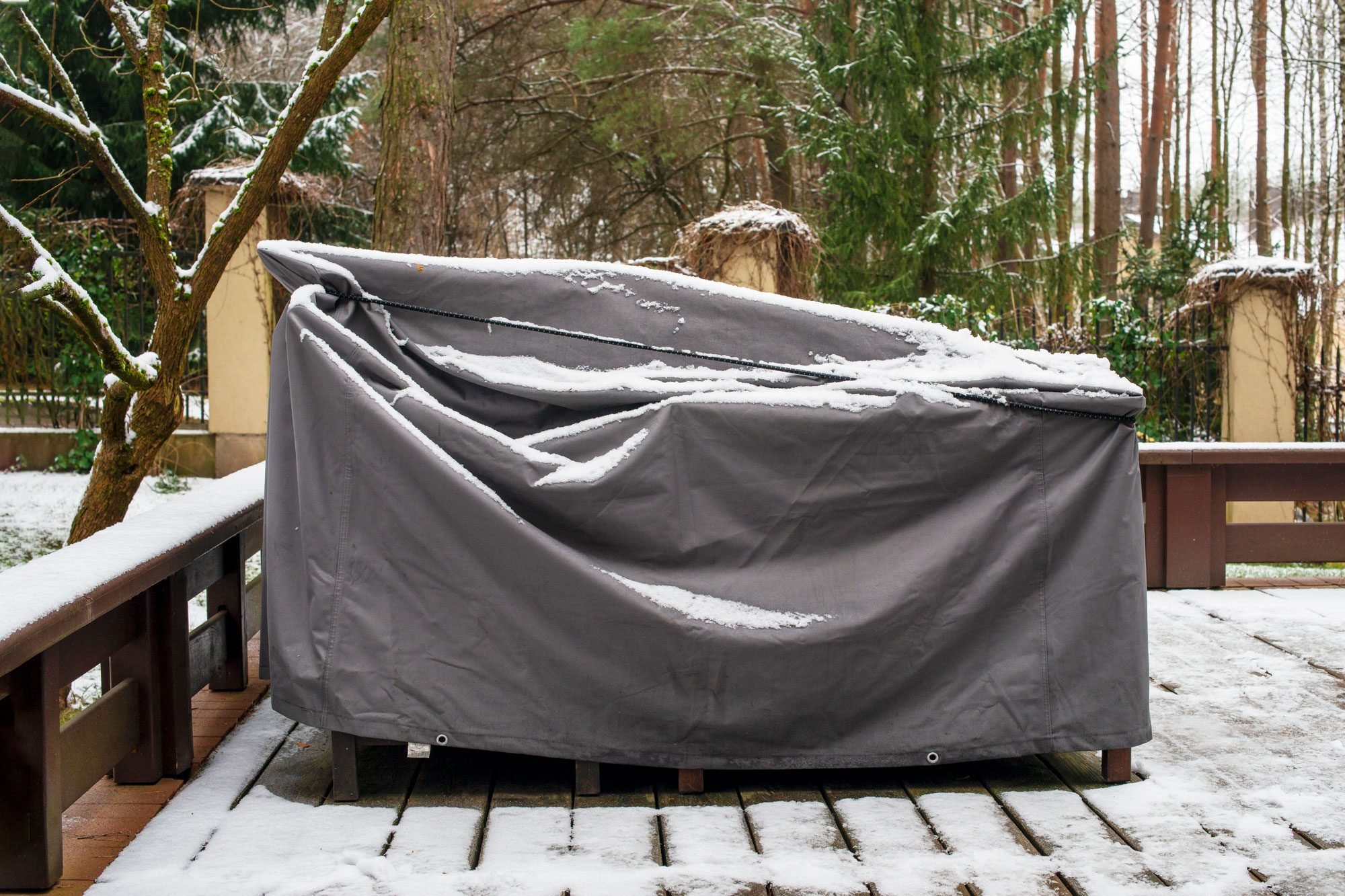
Improper storage destroys canvas faster than regular use. Follow these preservation steps before putting chairs away:
Pre-storage preparation:
– Ensure chairs are completely dry (moisture causes mold in storage)
– Apply fabric protector spray to clean, dry canvas
– Clean frames with mild soap solution to prevent corrosion
Storage location priorities:
– Choose dry, ventilated areas (never damp basements)
– Elevate chairs 2-3 inches off concrete floors using pallets
– Cover loosely with breathable fabric—not plastic, which traps moisture
– Avoid areas with chemical fumes or pest access
Recognize When to Replace Canvas
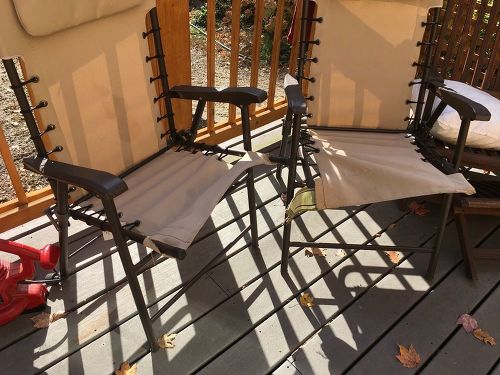
Even perfect maintenance can’t save canvas forever. Watch for these replacement indicators:
Visible damage signs:
– Stains that resist three cleaning attempts with proper solutions
– Fabric tears or noticeable thinning areas
– Rapid mold return within days of treatment
– Severe fading that creates mismatched appearance
Performance issues:
– Canvas feels rough or brittle to the touch
– Water no longer beads on the surface
– Structural sagging indicates fiber breakdown
– Hardware attachment points show significant wear
When replacement becomes necessary, choose outdoor-specific fabrics with 3-year warranties and antimicrobial treatments. These cost more upfront but deliver significantly longer service life than standard canvas.
Save Money with Proactive Prevention Strategies
The $15 you spend on fabric protector spray saves $200+ in replacement costs. Apply protector to clean, dry canvas at season start and mid-season for heavy use chairs. Additional cost-saving practices include:
- Spot-cleaning immediately rather than waiting for deep cleaning
- Using chair covers during extended non-use periods
- Storing chairs elevated to prevent ground moisture damage
- Rotating chair positions to ensure even sun exposure
Your canvas outdoor chairs work hard during summer months. With these how to clean canvas outdoor chairs strategies, they’ll look inviting year after year, ready for everything from morning coffee to evening gatherings. Proper cleaning and maintenance transform your patio furniture from a seasonal expense into a long-term investment that enhances your outdoor living space for years to come.


