

Your patio chairs’ fabric has faded to a ghostly white, and the mesh sags dangerously under your weight. Before you consider replacing the entire set, know that learning how to change fabric on patio chairs takes just one afternoon and costs a fraction of new furniture. This guide reveals the professional methods for replacing worn sling fabric on any channel-style or envelope-frame patio chair.
Using weatherproof materials like Phifertex® or Sunbrella® Sling, you’ll achieve a tension-perfect fit that resists sagging for years. We’ll cover exact measurements, sewing techniques, and tensioning tricks that DIYers often miss—saving you from common pitfalls like torn slits or uneven fabric. Whether you’re working with standard 24-inch chairs or custom designs, this step-by-step process restores both comfort and curb appeal.
By the end, you’ll have patio chairs that look store-bought but carry the pride of your own craftsmanship. The $45 fabric investment versus $300+ for replacements means you’ll fund that new patio umbrella with the savings. Let’s transform your sun-bleached eyesores into backyard showpieces.
Choose Weatherproof Fabric That Won’t Fade or Sag
Why Standard Fabrics Fail Outdoors
Bargain fabrics stretch under tension, fade in six months, and develop mildew stains within one season. How to change fabric on patio chairs successfully starts with selecting materials engineered for 200+ pounds of tension and constant UV exposure. Phifertex®, Sunbrella® Sling, and Textilene® dominate professional repairs because their vinyl-coated polyester construction maintains dimensional stability when properly tensioned.
Critical fabric specifications:
– Minimum 7 oz/yd² weight (lighter fabrics tear at bolt points)
– UV inhibitors embedded in fibers (not surface coatings)
– Microban® antimicrobial treatment for humidity resistance
– 54-inch width to accommodate standard chair dimensions
Exact Yardage Calculation for Your Chairs
Guessing fabric amounts wastes money and creates mismatched patterns. For standard 24-inch-wide chairs, one 54-inch-wide yard covers two seats with room for measurement errors. Use Sailrite’s online calculator: input your chair’s exact width and length to get cutting diagrams and precise yardage. When ordering:
– Add 1.5 yards for two chairs if mixing patterns
– Request swatches to verify color against existing décor
– Choose darker tones for high-traffic areas—they hide wear better
Grab These 5 Essential Tools Before Starting

Non-Negotiable Equipment for Flawless Results
A standard sewing machine will jam on thick mesh fabric. You need a heavy-duty walking-foot machine (like Sailrite Ultrafeed LSZ) that feeds multiple layers evenly. Pair it with Tex 70 UV polyester thread—its 150-yard spool per chair prevents mid-project breaks. Other must-haves:
– ¼-inch awning spline cording for channel-style chairs (creates tension sleeves)
– Flexible cloth tape measure (conforms to curved chair frames)
– Rubber mallet (reinserts end caps without marring aluminum)
Prevent Disassembly Disasters
Document every bolt location before removing hardware. Snap photos from three angles showing rail orientation and bolt sequences. Label left/right rails with masking tape and store hardware in muffin tins—one compartment per bolt type. This 5-minute step avoids midnight hardware hunts during reassembly. Pro tip: Place spreader bars in labeled zip bags marked “Left rail – top” or “Right rail – bottom.”
Measure Channel-Style Chairs for Perfect Fit
Avoid the #1 Measurement Mistake
Measuring straight across chair width ignores critical curvature. Instead:
1. Width: Measure center-to-center between side rails at both top and bottom—use the larger number
2. Length: Run tape from top rail, following the frame’s curve, to seat rail
3. Add 1 inch total for seam allowances (½ inch per end)
4. Mark bolt positions by laying old sling flat and transferring slit locations
Why Envelope-Style Chairs Are Easier
With envelope-style frames, skip complex pattern drafting. Cut two identical rectangles using your measurements plus 1 inch for seam allowances. Add a 1-inch-wide opening along the bottom edge for turning the fabric right-side-out. No curvature calculations needed—just precise rectangles that slip over rails like sleeves.
Disassemble Without Damaging the Frame
Critical Photo Protocol
Take these shots before touching a single bolt:
– Overall chair from front, side, and back
– Close-ups of every bolt location showing washer order
– Sequence of bolt removal (left-to-right, top-to-bottom)
Without these references, reassembly becomes guesswork that causes uneven tension and premature fabric failure.
Hardware Storage That Saves Hours
Pop bolts into labeled sections of a muffin tin: “Left rail – top,” “Right rail – bottom.” Keep plastic end caps and spreader bars in separate compartments. Aluminum frames strip easily if bolts are cross-threaded during reassembly—this organization prevents that costly error. Warning: Never force stuck bolts; warm rails gently with a hair dryer to break corrosion bonds.
Sew Professional Slings in 4 Key Steps
Envelope-Style Assembly That Prevents Slit Tears
- Cut rectangles using measured dimensions plus 1-inch seam allowance
- Mark ¾-inch slits (not 1-inch) at bolt positions—shorter slits resist tearing
- Sew perimeter with right sides together, ¼-inch seam, leaving envelope opening
- Apply binding tape around entire perimeter to reinforce edges and hide raw fabric
Channel-Style Hemming for Maximum Tension
Create 1-inch hemmed sleeves on both long edges to hold ¼-inch fiberglass rods. Insert rods before final stitching—they slide into frame channels and create the 200-pound tension needed for proper support. Pro tip: Lubricate rods with McLube Sailkote for smooth insertion without snags.
Re-Tension Fabric Like a Professional
The Bowing Technique for Wrinkle-Free Results
Use a rubber mallet to gently bow side rails outward before inserting fabric. This creates the critical 200-pound tension that prevents sagging. Work methodically:
1. Insert top rail first while pulling fabric taut
2. Slide bottom rail into place
3. Flex side rails into channels using mallet taps
Never skip this step—flat rails cause immediate wrinkles that ruin new fabric.
Bolt Tightening Sequence That Prevents Warping
Tighten bolts progressively in a star pattern: top-left → bottom-right → top-right → bottom-left. Start hand-tight, then snug with a socket wrench. Critical: Aluminum strips easily—stop when resistance increases sharply. Overtightening causes frame cracks that require full replacement.
Prevent Future Fading With 3-Minute Monthly Care
Cleaning Mistakes That Destroy Vinyl Coating
Bleach and pressure washers break down protective coatings within weeks. Instead:
– Brush off loose debris with a soft-bristle brush
– Spot-clean stains with mild soap and lukewarm water
– Rinse thoroughly with garden hose (no high pressure)
– Air-dry completely before storing
UV Protection That Doubles Fabric Life
Apply 303 Fabric Guard spray every 3-6 months—it penetrates vinyl coatings to block UV rays. During winter, stack chairs or store under breathable canvas covers (plastic traps moisture causing mildew). Check tension bolts annually; loose bolts cause microscopic stretching that leads to permanent sagging.
Troubleshoot Common Fabric Replacement Errors
Fix Sagging Fabric Within Minutes
If new fabric sags within weeks, don’t replace it—re-tension bolts using this sequence:
1. Loosen all bolts incrementally (⅛ turn at a time)
2. Bow side rails outward with rubber mallet
3. Re-tighten bolts in star pattern while maintaining tension
Pro tip: Warm vinyl with a hair dryer for 30 seconds—it becomes temporarily stretchy for easier adjustment.
Repair Torn Slits Without Starting Over
When slits rip at bolt points:
1. Cut X-shaped patch from leftover fabric (1-inch square)
2. Place patch behind tear
3. Sew reinforcement with zigzag stitch
For future projects, shorten slits to ¾-inch and reinforce with binding tape during initial sewing.
Kit vs. Custom: When to Choose Pre-Made Slings
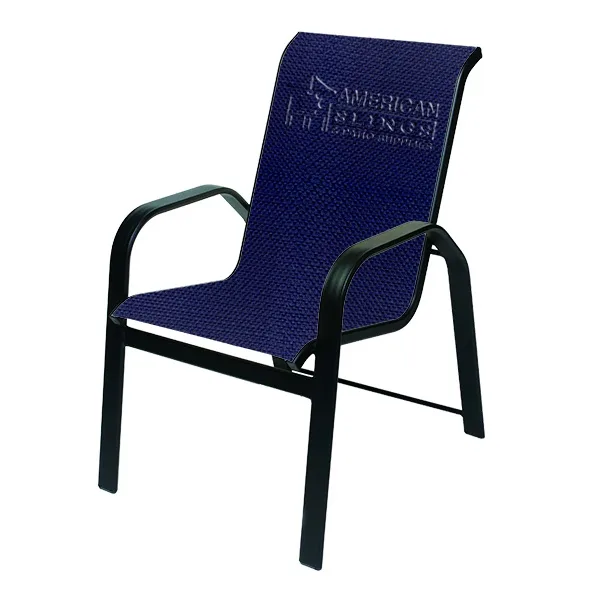
Save Time With Manufacturer Kits ($45-$90)
Order replacement kits if your chair brand (Homecrest, Ratana, Tropitone) offers them. Provide the model number stamped under the seat for exact fits. Kits include:
– Pre-sewn slings cut to your specifications
– New spline rods and color-matched thread
– Step-by-step visual instructions
Ideal when matching existing sets or avoiding sewing.
Go Custom for Maximum Flexibility
Choose custom sewing when:
– Original fabric color is discontinued
– You want to mix patterns within a set
– Chair dimensions are non-standard
– You’re upgrading to premium Sunbrella® acrylic
Custom work costs 30% more but offers unlimited design freedom.
Stapled Fabric Chair Repair Shortcut
Replace Cushion Fabric in 20 Minutes
For solid-seat chairs with stapled fabric:
1. Pry old staples with flat screwdriver
2. Cut new fabric 2 inches larger than panel on all sides
3. Staple center-front, then center-back, pulling taut
4. Work toward corners, folding hospital corners neatly
5. Reattach panels with original screws
Warning: Stretch fabric diagonally during stapling—this prevents wrinkles better than straight pulls.
Final Quality Checklist Before Sitting Down
Verify these critical points before declaring your project complete:
– [ ] All bolts snug but not overtightened (aluminum strips easily)
– [ ] End caps flush with frame edges (no gaps where moisture enters)
– [ ] Fabric uniformly taut with no puckers when pressed firmly
– [ ] Leftover fabric labeled with chair model and stored
– [ ] Finished chair photos archived for future repairs
Your revitalized patio chairs now boast commercial-grade fabric that handles seasons of sun and rain with ease. The $200+ saved versus replacement buys that new fire pit you’ve been eyeing—proving how to change fabric on patio chairs is the smartest upgrade for your backyard. With proper maintenance, this professional-quality repair will outlast store-bought chairs by years.


