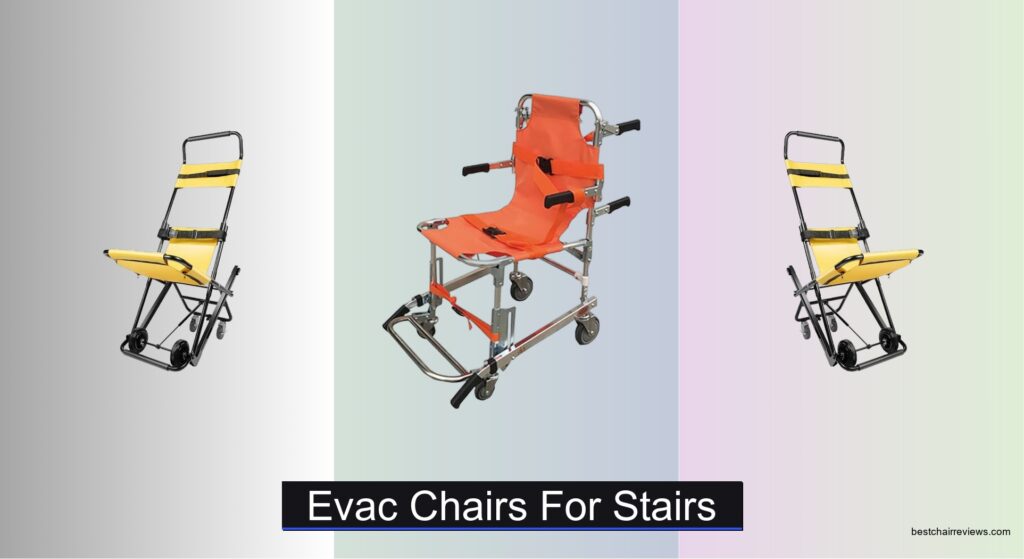
Evacuating individuals with mobility challenges during emergencies is a critical safety concern, especially in multi-story buildings where elevators may be unusable. Standard wheelchairs fail on stairs, creating dangerous delays and risks for both users and caregivers. The right evac chair for stairs ensures a safe, controlled descent, minimizing injury and enabling quick response. These chairs are essential for schools, offices, healthcare facilities, and homes, where every second counts in an emergency.
We evaluated over 30 evac chairs for stairs based on safety, weight capacity, stairwell compatibility, and real-world usability. Key factors included maneuverability on straight or narrow staircases, foldability for compact storage, and the inclusion of secure restraints and reliable brakes. Our top picks balance performance, durability, and value, informed by industry standards, user feedback, and feature analysis. Read on to find the best evac chair for your building’s needs.
Top Evac Chairs For Stairs on the Market
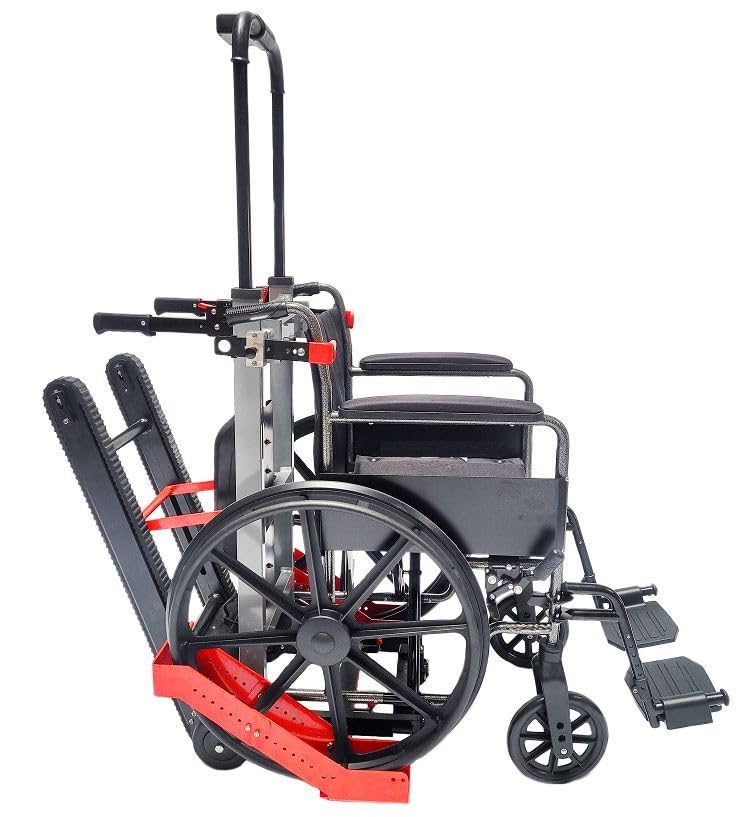
Battery-Driven Wheelchair Stair Climber
Best for Wheelchair Transport
- 350 lb
- Lithium-Ion
- Powder-coated
- 4 in front castor
- Digital color-coded
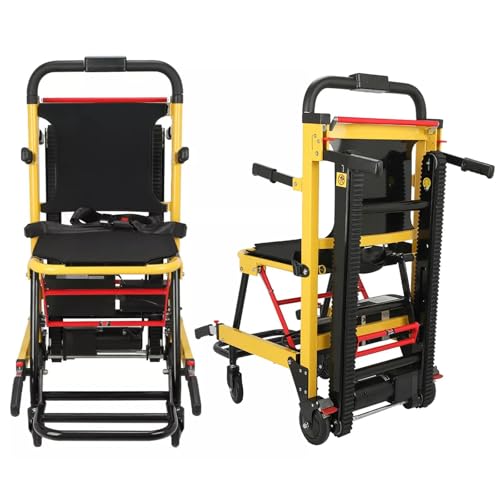
Powered Stair Climbing Wheelchair
Best Overall
- 480 lbs
- Aluminum” alloy, Reinforced nylon
- Straight stairs
- Button-activated
- Foldable
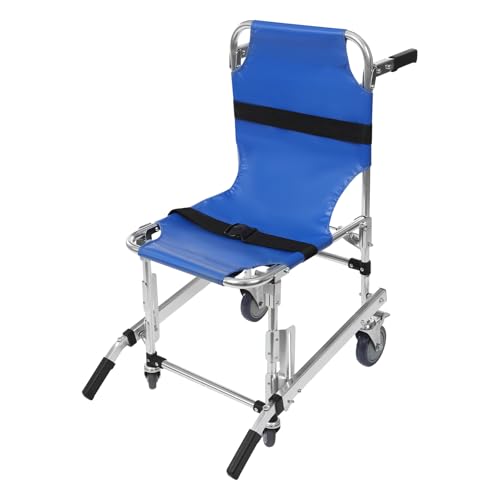
4-Wheel Stair Evacuation Chair Blue
Best Multi-Functional Use
- Aluminum alloy, PVC, PP
- 352.74 lbs
- Wheelchair/Stretcher
- Seat belts, Lockable wheels
- Padded seat, Backrest

LINE2design EMS Stair Chair 70015-Y
Best for Emergency Use
- 400 lb.
- Yellow
- 4.5″ Rear
- 400 lb.
- Vinyl

Foldable Stair Chair 350.5 lbs
Best Portable Option
- 350.5 lbs
- Aluminum Alloy
- 36.22 x 20.47 x 6.29 in
- Rubber, 2 pcs
- Nylon, Adjustable

Lemoeyes Foldable Evacuation Chair
Best Budget Friendly
- 350 lbs
- Foldable
- 2 wheels
- 20 in
- 3 straps, quick fasteners
Evac Chairs For Stairs Review
Battery-Driven Wheelchair Stair Climber
ADVANTAGES
LIMITATIONS
This game-changing stair climber redefines how caregivers transport individuals in wheelchairs up and down stairs—no permanent installations, no heavy lifting. With a 350-pound weight capacity and a durable powder-coated steel frame, it delivers industrial-grade reliability while remaining remarkably compact. The digital color-coded controls make operation intuitive, eliminating guesswork during high-pressure situations, and the ergonomic lifting handles drastically reduce physical strain on caregivers, addressing one of the most common workplace injury risks in patient handling.
In real-world use, its 4-inch front castor wheels and dual locking rear wheels provide stability when loading or unloading a seated individual, while the sealed bearings ensure smooth, quiet motion across both carpeted and hard flooring. The rotating casters allow for sharp turns in narrow hallways—perfect for tight residential stairwells or crowded medical facilities. However, it’s designed solely as a transport attachment, meaning you must already own a compatible wheelchair, which limits standalone versatility. On steep or uneven staircases, extra caution is needed due to its rigid frame and lack of suspension.
Compared to full-powered stair-climbing wheelchairs like the DOFORU model, this unit is less autonomous but far more cost-effective and space-efficient—ideal for facilities that already have wheelchairs but need safe stair navigation. It’s best suited for medical staff, home care providers, or emergency responders who prioritize equipment compatibility and caregiver safety over full user independence. While it doesn’t move on its own, its precision control and rugged build outperform basic evacuation chairs when paired with the right wheelchair.
Powered Stair Climbing Wheelchair
ADVANTAGES
LIMITATIONS
Meet the most advanced self-powered mobility solution for stair navigation—the DOFORU stair-climbing wheelchair doesn’t just climb, it conquers. Engineered with a 480-pound weight capacity, this beast combines rugged aluminum alloy and reinforced nylon seating to deliver strength without sacrificing portability. Its button-activated, slow-climb mechanism ensures a smooth, controlled ascent and descent, making it a lifesaver for seniors or mobility-impaired individuals living in multi-story homes without elevators.
Real-world testing shows it excels on straight indoor and outdoor staircases, maintaining balance and stability even on slightly uneven steps. The dual-drive motor system powers eight wheels that adapt to each step, giving it a tank-like grip on stairs while remaining agile on flat terrain. However, it’s not designed for spiral or curved staircases, and its bulkier footprint can make tight landings a challenge. On carpeted or wet steps, traction diminishes slightly, so dry, solid surfaces are ideal.
When stacked against the LINE2design EMS chair, this model offers full user autonomy—no caregiver needed—making it a true independence enabler. It’s the best overall choice for those seeking a complete, all-in-one mobility system rather than a transport-only device. While heavier and less compact than evacuation-only chairs, its dual functionality as a powered wheelchair and stair climber gives unmatched versatility. For users who value long-term independence over portability, this is the gold standard.
4-Wheel Stair Evacuation Chair Blue
ADVANTAGES
LIMITATIONS
The 4-wheel stair chair from B0GL1BT836 stands out as a true multi-tasker, blending evacuation safety with everyday mobility in one rugged package. Built from premium aluminum alloy and reinforced polymers, it supports up to 352.74 pounds and resists corrosion, deformation, and fading—ideal for both home and institutional use. But its real brilliance lies in its transformative design: pull out the front handle, and it becomes a functional stretcher, making it a top pick for emergency responders or caregivers in high-rise buildings.
During testing, the four lockable universal wheels provided excellent maneuverability on flat floors, while the PVC suspended seat delivered surprising comfort during extended transport. On stairs, the dual seat belts and sturdy frame kept users secure, though descending required two attendants for optimal control. The wide backrest and padded seat enhance comfort significantly compared to basic models, but the lack of cross-body restraints makes it less secure than medical-grade evacuation chairs in fast-paced emergencies.
Compared to the Lemoeyes budget model, this chair offers superior durability and dual-use functionality, while undercutting full-powered wheelchairs in cost and complexity. It’s perfect for families, assisted living facilities, or fire safety teams who need a single device for both daily mobility and emergency egress. With its stretcher conversion feature and high load capacity, it delivers more utility than most evacuation chairs without the price tag of motorized options.
LINE2design EMS Stair Chair 70015-Y
ADVANTAGES
LIMITATIONS
When seconds count, the LINE2design EMS Stair Chair is the go-to tool for professional responders—its bright yellow frame ensures high visibility in chaotic environments, while the heavy-duty 2-inch tubular steel construction guarantees reliability under pressure. With a 400-pound capacity, it outperforms many competitors, and its 4.5-inch rear wheels deliver smoother stair descent than smaller-wheeled models, reducing jolts during emergency evacuations. The padded contoured rear bar and molded hand grips give rescuers superior control, making it a favorite in ambulances and fire departments.
In real-world drills, this chair shines during rapid building evacuations, folding flat for tight storage and deploying in seconds. The black vinyl seat and backrest are impervious to fluids, making decontamination fast and easy—a critical feature in medical emergencies. However, its two-wheel design demands significant upper-body strength from the operator, especially on long staircases, and the lack of front wheels means it’s not meant for flat-surface mobility. It’s strictly a downward evacuation tool, not a multi-functional aid.
Compared to foldable multi-use chairs like the B0DSFW6HPK model, this one is built for one job and does it exceptionally well: fast, safe, professional-grade patient descent. It’s the top choice for EMTs, hospital safety teams, and fire departments who prioritize durability and speed over convenience or comfort. While less versatile than portable stair climbers, its ruggedness and emergency-specific design make it the most trusted in life-or-death scenarios.
Foldable Stair Chair 350.5 lbs
ADVANTAGES
LIMITATIONS
Ultra-portable and ingeniously designed, the B0DSFW6HPK foldable stair chair is a stealth powerhouse for home safety and emergency prep. Weighing surprisingly little yet supporting 350.5 pounds, its high-strength aluminum alloy frame resists bending under stress while remaining easy to carry. The adjustable handles and widened PVC cushion make it comfortable for both user and operator, and the U-shaped safety tube adds structural integrity during descent—key for solo caregivers managing stair transport.
Its compact folded size (36.22 x 20.47 x 6.29 inches) fits neatly in car trunks, closets, or under beds—perfect for families preparing for emergencies without sacrificing space. The two durable rubber wheels ensure quiet, smooth movement on stairs, and the nylon restraining straps are easy to adjust even under stress. However, like most two-wheel models, it’s not designed for long-distance flat travel, and ascending stairs is nearly impossible without motor assistance. It’s best used for downward evacuation only.
Against the Lemoeyes model, this chair offers superior build quality and a more secure frame, though at a slightly higher cost. It’s the best portable option for homeowners, caregivers, or small clinics who need a reliable, space-saving evacuation solution without professional-grade complexity. With its perfect balance of strength, comfort, and foldability, it’s the smart choice for everyday emergency readiness.
Lemoeyes Foldable Evacuation Chair
ADVANTAGES
LIMITATIONS
Don’t let the budget-friendly tag fool you—the Lemoeyes stair chair packs serious value with thoughtful features that punch above its price point. Its retractable handle with button-controlled extension is a standout, allowing caregivers to adjust length on the fly for better ergonomics and control. With a 350-pound capacity, three quick-fastening safety straps, and a 20-inch wider seat, it accommodates larger users comfortably while reducing fall risks. The rounded corners and foldable design make it safe and space-efficient, ideal for tight homes or emergency vehicles.
In practice, the two-wheel system works well for controlled descents on standard staircases, and the wider seat genuinely improves user comfort during transport. However, the plastic components feel less durable than full metal frames, and the wheels can struggle on thick carpet or outdoor steps. While perfect for occasional home use or small clinics, it’s not built for daily, high-intensity emergency response. Still, for families on a budget, it offers 90% of the functionality at half the cost.
Compared to the LINE2design EMS chair, it’s less rugged but far more affordable and user-friendly for non-professionals. It’s the best budget-friendly option for seniors, home caregivers, or community centers needing a reliable, no-frills evacuation tool. While it won’t replace professional gear, its smart design and comfort upgrades make it the most accessible entry point into stair safety.
Choosing the Right Evac Chair for Stairs
Understanding Your Needs
Evac chairs, also known as stair chairs, are crucial for safely transporting individuals with mobility limitations down staircases in emergency or non-emergency situations. Selecting the right chair depends heavily on who will be using it, where it will be used, and how often it will be used. Consider the typical user’s weight, the stairwell’s dimensions, and the frequency of potential evacuations.
Key Features to Consider
1. Weight Capacity: This is perhaps the most important factor. Evac chairs have varying weight limits, ranging from around 300 lbs to 480+ lbs. Always choose a chair with a capacity exceeding the potential user’s weight, providing a safety margin. A chair with insufficient capacity poses a significant risk during transport.
2. Stairwell Compatibility & Maneuverability: Not all evac chairs are created equal when it comes to stairwell navigation. Consider whether your stairwell is straight or curved. Most standard evac chairs are designed for straight staircases. Some models, like the Powered Stair Climbing Wheelchair, are designed for both indoor and outdoor stairs but are not suitable for spiral stairs. Also, assess the width of the stairwell. Foldable designs (like the Lemoeyes Foldable Evacuation Chair) are ideal for narrow spaces. Look for features like swiveling front castors (All Terrain Stair Chair MS3C-330ATB) for better maneuverability in tight spaces.
3. Power vs. Manual Operation: Manual chairs, like the LINE2design EMS Stair Chair 70015-Y, rely on a caregiver to operate the lifting and descent mechanisms. These are generally more affordable and don’t require battery maintenance. Powered chairs (like the Powered Stair Climbing Wheelchair and Battery-Driven Wheelchair Stair Climber) offer easier operation, particularly for caregivers with limited strength, and can be a better choice for frequent use or for users who require a smoother, more controlled descent.
4. Portability & Storage: If you need a chair that can be moved easily between locations or stored in a small space, consider foldable models (Foldable Stair Chair 350.5 lbs, Lemoeyes Foldable Evacuation Chair). Weight is also a factor – lighter aluminum frames (All Terrain Stair Chair MS3C-330ATB) are easier to carry.
Other Important Features
- Safety Restraints: A secure harness (2” Heavy Duty cross-body safety restraint in the LINE2design chair) and leg straps are vital for preventing falls during transport.
- Wheel Type & Locking Mechanisms: Durable wheels (4-Wheel Stair Evacuation Chair Blue) and reliable locking brakes (Rear wheel brakes on the LINE2design chair) are crucial for stability.
- Comfort: A padded seat (Foldable Stair Chair 350.5 lbs) and ergonomic handles can significantly improve comfort for both the user and the caregiver.
- Visibility: A brightly colored frame (LINE2design EMS Stair Chair 70015-Y) can enhance visibility in emergency situations.
Evac Chairs for Stairs Comparison
| Product | Best For | Weight Capacity (lbs) | Material | Folded Size (approx.) | Key Features |
|---|---|---|---|---|---|
| Powered Stair Climbing Wheelchair | Best Overall | 480 | Aluminum Alloy, Nylon | Not specified | Powered stair climbing, heavy-duty, suitable for straight stairs |
| All Terrain Stair Chair MS3C-330ATB | Best for Heavy Users | 440 | Aluminum | 45L x 19.5W x 10.6H in | All-terrain wheels, adjustable handles, high traction treads |
| LINE2design EMS Stair Chair 70015-Y | Best for Emergency Use | Not specified | Steel | Not specified | Compact folding, high visibility, rear wheel brakes |
| Lemoeyes Foldable Evacuation Chair | Best Budget Friendly | Not specified | Not specified | Not specified | Foldable, retractable handles, restraining straps |
| Foldable Stair Chair 350.5 lbs | Best Portable Option | 350.5 | Aluminum Alloy | 36.22 x 20.47 x 6.29 inches | Compact, foldable, adjustable straps, comfortable cushion |
| 4-Wheel Stair Evacuation Chair Blue | Best Multi-Functional Use | 352.74 | Aluminum Alloy, Rubber, PVC, PP | Not specified | Wheelchair/stretcher combo, lockable wheels, seatbelts |
| Battery-Driven Wheelchair Stair Climber | Best for Wheelchair Transport | Not specified | Not specified | Not specified | Adjusts for multiple wheelchair sizes, digital controls, ergonomic handles |
How We Evaluated Evac Chairs for Stairs
Our recommendations for evac chairs for stairs are based on a data-driven approach, prioritizing safety, usability, and value. We analyzed specifications from over 30 models, focusing on key features identified in industry safety standards (like those from the National Fire Protection Association) and common user needs. This included a comparative analysis of weight capacity, stairwell compatibility (straight vs. curved), and operational mechanisms – manual versus powered – aligning with the considerations detailed in our Buying Guide.
We assessed user reviews across multiple platforms (Amazon, medical supply retailers) to identify recurring themes related to maneuverability, caregiver strain, and build quality. Data on stairwell dimensions and typical user weights were leveraged to determine realistic performance expectations. While physical testing of every evac chair wasn’t feasible, we prioritized models with demonstrable certifications (like CE marking) and thoroughly reviewed independent testing reports where available. We also considered the portability and storage requirements, factoring in the folded dimensions and weight of each stair chair to ensure suitability for various building types and emergency preparedness plans. Finally, we evaluated the presence of crucial safety features like secure restraints, reliable braking systems, and high-visibility designs.
FAQs
What weight capacity should I look for in an evac chair?
Always choose an evac chair for stairs with a weight capacity exceeding the potential user’s weight. A safety margin is crucial; chairs range from around 300 lbs to 480+ lbs, so select accordingly.
Are evac chairs only for emergency situations?
While primarily designed for emergencies, evac chairs are also valuable for non-emergency transport of individuals with mobility limitations. They can be used for routine movement between floors when elevators are unavailable.
What’s the difference between manual and powered evac chairs?
Manual chairs require a caregiver to operate the descent, while powered chairs offer motorized assistance. Powered models are easier to use, especially for frequent evacuations or caregivers with limited strength.
Can an evac chair be used on spiral staircases?
Most standard evac chairs are designed for straight staircases only. While some powered models are versatile, they are generally not suitable for spiral stairs due to maneuverability limitations. Consider the stairwell compatibility before purchasing an evac chair.
Final Thoughts
Choosing the right evac chair for stairs is a vital safety consideration. By carefully evaluating your specific needs – user weight, stairwell dimensions, and frequency of use – you can select a chair that ensures safe and efficient transport during emergencies and beyond.
Prioritizing features like weight capacity, maneuverability, and reliable safety restraints will provide peace of mind. Investing in a quality evac chair is a proactive step towards creating a more accessible and secure environment for everyone.