
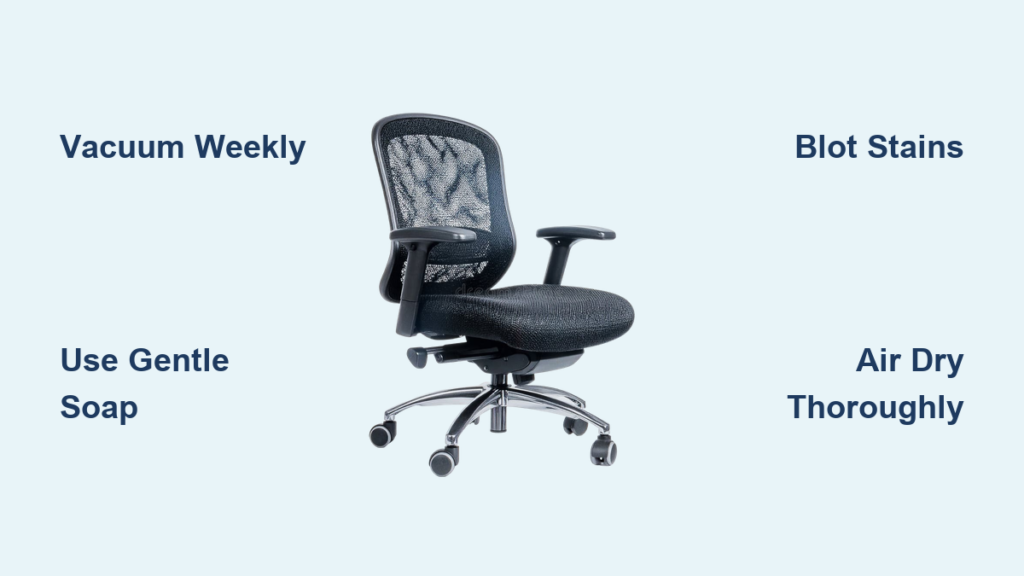
Your mesh office chair silently collects dust, body oils, and coffee spills between its microscopic fibers every single day. Without proper cleaning, that breathable mesh transforms into a grimy, odor-trapping surface that compromises both comfort and air circulation. This happens because thousands of tiny gaps in the polyester or nylon weave act like a magnet for daily grime—especially in high-contact areas where your skin meets the seat. If you’ve noticed stubborn stains or unpleasant smells lingering after regular vacuuming, it’s time for targeted mesh chair cleaning that won’t damage the delicate fabric.
You don’t need expensive equipment or harsh chemicals to revive your chair. This guide reveals field-tested methods for removing embedded dirt, eliminating odors, and restoring breathability—whether you’re reviving a budget home office chair or a premium ergonomic model. Crucially, we’ll focus on techniques that respect mesh tension and prevent permanent stretching. By the end, you’ll know exactly how to deep-clean mesh chairs safely while extending their lifespan through simple daily habits.
Essential Tools for Mesh Chair Cleaning

Required Cleaning Arsenal
Skip the heavy-duty gear—mesh chairs demand gentle tools. Start with a vacuum cleaner set to low suction using the upholstery attachment; high suction can distort the weave. Pair this with three microfiber cloths: one for cleaning solutions, one for rinsing, and one for drying. A natural-bristle soft brush (like a nylon toothbrush) lifts debris without generating static electricity that attracts more dust. Keep two spray bottles ready—one for your cleaning mixture and another for distilled water to prevent mineral deposits. Always use fragrance-free, dye-free dish soap to avoid sticky residues that trap future dirt.
Specialized Stain Solutions
Match your solution to the specific stain. For general grime, mix one teaspoon of dish soap with one quart of distilled water. Tackle odors and mild discoloration with equal parts white vinegar and water—the 5% acidity breaks down organic matter without bleaching colors. When sanitizing high-touch areas like armrests, combine 70% isopropyl alcohol with water (1:1 ratio) to kill germs without warping plastic components. For stubborn body oil stains, an enzyme cleaner works wonders by digesting oils at a molecular level—never use bleach or ammonia, which degrade mesh fibers.
Safety Equipment
Protect yourself and your chair with nitrile gloves to shield skin from cleaning solutions. Keep a test cloth hidden under the seat to trial any new solution—wait 24 hours to check for discoloration or texture changes. If using alcohol or vinegar sprays, wear safety glasses to prevent accidental splashes. Crucially, never work in enclosed spaces; open windows or use fans to maintain ventilation during cleaning.
Daily Mesh Maintenance Routine
2-Minute Morning Refresh
Prevent deep-set grime with a daily ritual. Before sitting down, run a lint roller across the seat and upper backrest where airborne particles accumulate. Focus on the “sitting zone”—the center of the seat and lower backrest where body oils transfer most aggressively. Follow immediately with vertical and horizontal vacuum passes using low suction, spending 10 seconds per section. This simple habit stops debris from embedding into the mesh pores where regular wiping can’t reach.
Weekly Deep Dust Removal
Weekly maintenance requires methodical attention. Vacuum first using overlapping passes: start top-to-bottom on the backrest, then left-to-right on the seat. Switch to the crevice tool for frame edges where mesh meets plastic—this hidden border traps hair and crumbs. Next, use compressed air held 6-8 inches away, firing short bursts while vacuuming simultaneously to capture dislodged particles. Finally, clean adjustment mechanisms: lift armrest caps and spray compressed air into lever holes where dust jams moving parts.
Monthly Deep Cleaning Process
Pre-Cleaning Assessment
Identify trouble spots before applying liquids. Look for darkened patches on contact points (body oil), faint rings around spills (beverage residue), or fuzzy growth under the seat (mold). Test cleaning solutions on a hidden area first—dampen a cloth with your mixture and press firmly for one minute. If the mesh darkens, stiffens, or loses elasticity, switch to a milder solution. Never skip this step; mesh reactions vary by manufacturer.
Step-by-Step Deep Clean
Dampen a microfiber cloth with your chosen solution until it’s barely moist—wring out excess water to prevent oversaturation. Starting at the top of the backrest, work downward using gentle circular motions with zero pressure. Let capillary action pull the solution into the mesh; forcing liquid through fibers stretches the weave. After 2 minutes, switch to a distilled water-dampened cloth to rinse away soap residue. Finish by blotting with a dry cloth, then air-dry upright in a ventilated room for 4+ hours. Never use hairdryers or direct sunlight—they cause uneven drying and fading.
Stain Removal Techniques That Work
Body Oil and Sweat Stains
These appear as greasy, dark rings where your skin contacts the mesh. Apply enzyme cleaner directly to the stain and wait 15 minutes—this allows time for the enzymes to break down oils. Gently brush in small circles using a soft toothbrush, working from the stain’s edge inward to avoid spreading. Blot aggressively with a dry cloth to pull out dissolved oils. For severe cases, repeat the process but never scrub vigorously; mesh fibers tear easily when saturated.
Ink and Pen Mark Removal
Act immediately on fresh ink. Blot (don’t rub!) with a paper towel to absorb excess. Dip a cotton swab in 70% alcohol and dab from the stain’s perimeter toward the center—this prevents spreading. Replace the swab as it absorbs ink to avoid reapplying pigment. Once the ink stops transferring, wipe the entire area with soapy water to eliminate alcohol residue that attracts new dirt. For dried ink, skip alcohol; use a vinegar-water mix instead to avoid dissolving older stains deeper into fibers.
Frame and Component Maintenance
Plastic Frame Cleaning
Dust plastic frames weekly with a dry microfiber cloth to prevent static buildup. For deeper cleaning, use your soap-water solution on a cloth—never spray directly onto the chair, as liquid seeps into joints. Target adjustment levers and base crevices with cotton swabs dipped in solution. Rinse by wiping with a distilled water-dampened cloth, then dry immediately with a second cloth to prevent water spots. Avoid all-purpose cleaners containing citrus oils—they cloud plastic over time.
Metal Frame Components
Wipe chrome or polished metal with a 50/50 vinegar-water solution on a soft cloth, buffing in circular motions. For painted metal parts, stick to mild soap water to prevent finish damage. After cleaning, apply furniture polish sparingly to metal joints to inhibit rust—especially in humid climates. Lubricate tilt mechanisms quarterly with silicone spray (not WD-40), working the chair through its full range of motion to distribute the lubricant evenly.
Troubleshooting Cleaning Challenges

Persistent Odor Removal
When vinegar rinses fail, create a baking soda paste (3 tbsp baking soda + 1 tbsp water). Apply a thin layer to smelly areas using a soft brush, working it into the mesh. Let it sit 24 hours—baking soda neutralizes odors at the molecular level. Vacuum thoroughly with an upholstery attachment, then rinse with distilled water. For lingering smells, repeat the process but extend the dwell time to 48 hours.
Mesh Sagging After Cleaning
If your mesh appears loose post-cleaning, don’t panic. Moisture temporarily stretches fibers—allow 72 hours for complete drying in a well-ventilated space. Check tension adjustment knobs under the seat; tighten incrementally in 15-degree turns. If sagging persists, contact the manufacturer before attempting DIY repairs; improper tightening can snap mesh anchors. Never use heat to speed drying—it permanently weakens fibers.
Safety and Warranty Protection
Chemical Compatibility Rules
Your mesh chair’s warranty likely voids if you use bleach, ammonia, or abrasive cleaners. Always test solutions on hidden areas first—even “safe” products can react with dyes. When using vinegar or alcohol, limit dwell time to 20 minutes max to prevent fiber degradation. Document your cleaning process with before/after photos; manufacturers often require proof of proper maintenance for warranty claims. For chairs over $500, consider professional cleaning—it’s cheaper than replacement.
Maintenance Schedule for Longevity
Prevent deep cleaning emergencies with tiered upkeep. Daily: 2-minute vacuum/lint roll. Weekly: 15-minute frame wipe-down and crevice cleaning. Monthly: Full deep clean (1-2 hours). Quarterly: Lubricate joints and inspect mesh tension. In humid environments, add mold prevention: spray vinegar-water mix monthly on the chair’s underside. Rotate your chair position every 3 months to ensure even sun exposure and wear patterns.
Reviving a grimy mesh chair takes less time than you think—just consistent, gentle care. Stick to distilled water and mild solutions, avoid aggressive scrubbing, and prioritize drying time over speed. Within weeks, you’ll notice improved breathability and comfort as trapped grime releases from those microscopic fibers. Most importantly, you’ve protected your investment: a well-maintained mesh chair lasts 5-7 years versus 2-3 for neglected models. Start today with that 2-minute morning refresh—it’s the simplest step toward a cleaner, healthier workspace.


