
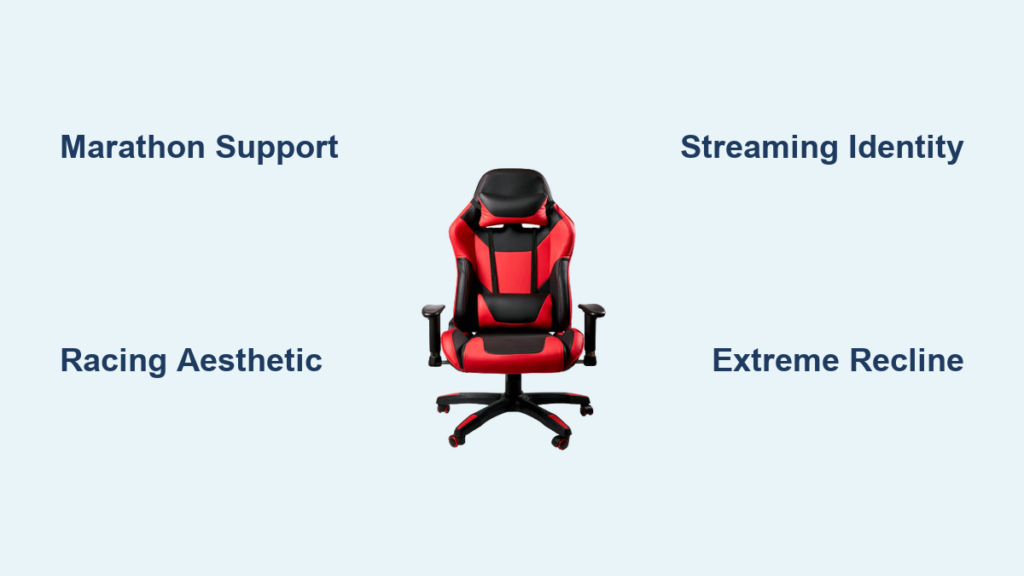
Picture this: You’re watching your favorite streamer dominate a tournament, but something catches your eye—their bold racing-style chair. It’s not just furniture; it’s part of their gaming identity. Why do gaming chairs exist when regular office chairs seem sufficient? The answer reveals a fascinating collision of automotive industry crisis, streaming culture explosion, and the unique physical demands of competitive gaming that transformed bucket seats into billion-dollar icons.
Gaming chairs weren’t born from ergonomic research but from necessity and opportunity. When Chrysler discontinued car lines in 2006, DXRacer—a luxury seat manufacturer—faced warehouse shelves full of unused bucket seats. Instead of writing off inventory, they pivoted to gamers who needed marathon seating solutions. Why do gaming chairs exist today? Because they solve problems office chairs never addressed: creating visual legitimacy in digital spaces while supporting extreme sitting durations that would destroy standard furniture.
The Automotive Crisis That Created Gaming Chairs
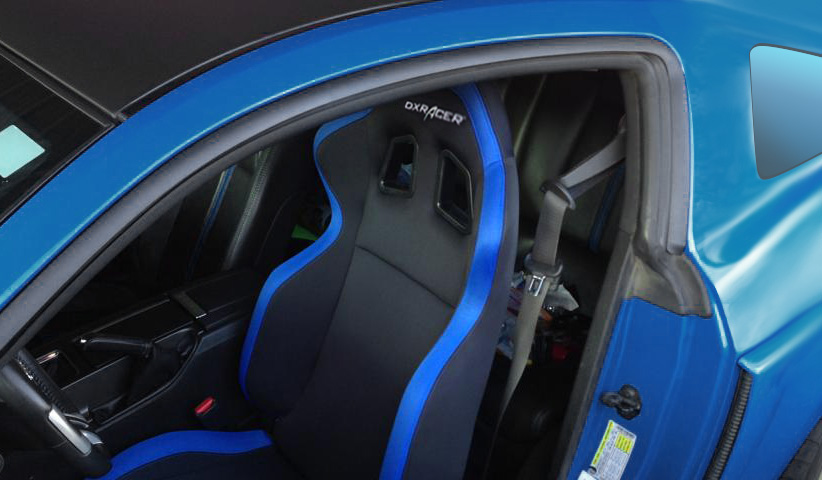
2006 DXRacer’s Survival Pivot
When Chrysler axed multiple car models in 2006, DXRacer faced financial ruin with warehouses overflowing with specialized bucket seats. Rather than scrap the inventory, they spotted an emerging opportunity: PC gamers logging 12-hour sessions needed serious back support that office chairs couldn’t provide. The racing aesthetic—designed for high-G cornering—perfectly matched competitive gaming’s intensity, creating instant visual credibility.
Twitch’s Visual Culture Catalyst
The 2011 launch of Twitch transformed gaming chairs from functional furniture to cultural must-haves. Streamers needed backgrounds that screamed “gamer,” and these racing seats became instant status symbols. Viewers associated the aesthetic with professional play, creating demand that exploded beyond actual esports athletes. Why do gaming chairs exist in every streamer’s setup? Because they serve as portable stages that visually authenticate digital performers.
Solving Marathon Gaming’s Physical Demands

Extended Session Support System
Unlike office workers who sit 2-3 hours at a stretch, competitive gamers regularly endure 6-12 hour marathons. Standard office chairs fail catastrophically under this strain, but gaming chairs exist specifically for extreme use cases. Their 30-33 inch high backrests provide complete spinal support from tailbone to skull—addressing the unique fatigue patterns of rapid head movements during intense gameplay.
Immersion Through Racing Aesthetics
The bucket seat design serves psychological functions beyond ergonomics. Racing car aesthetics trigger performance associations that office chairs can’t replicate. When you sink into what feels like a cockpit, your brain shifts into “competition mode” more readily. Why do gaming chairs exist with aggressive styling? Because they create environmental cues that enhance focus during critical gaming moments.
Critical Differences From Office Chairs
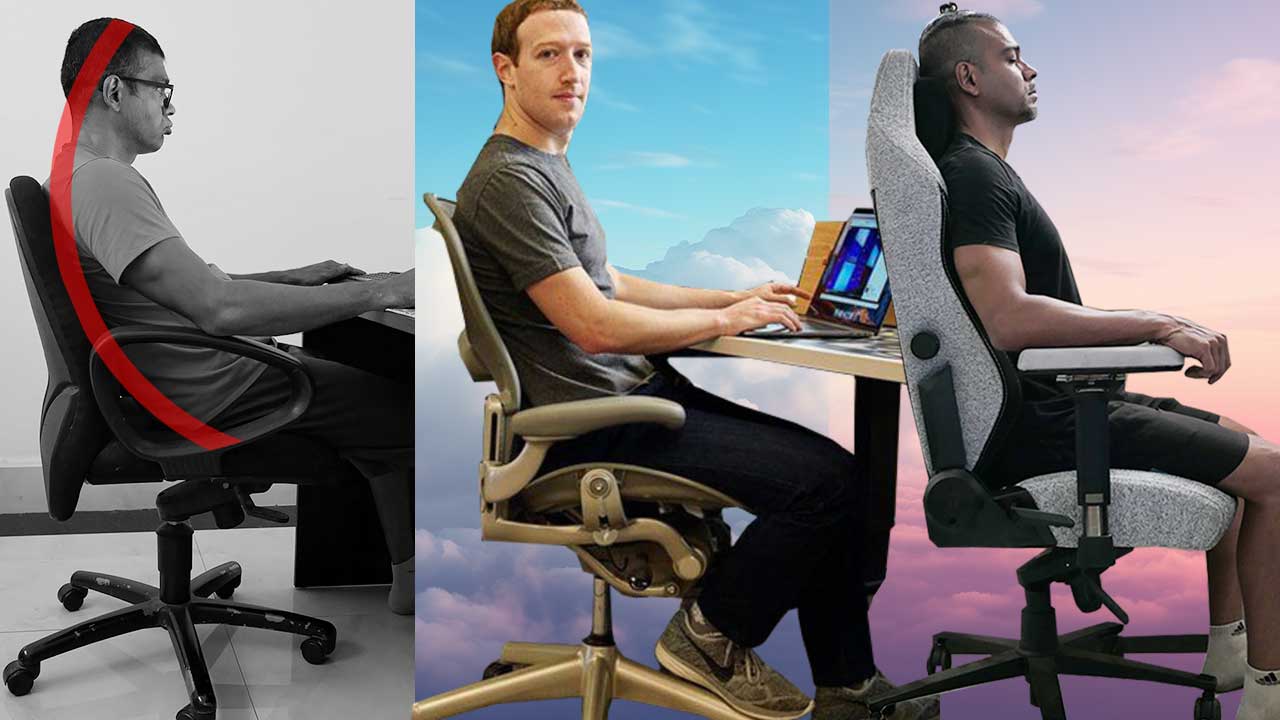
Backrest Design Breakdown
Gaming chairs feature fixed high backrests supporting your entire vertebral column in one continuous plane. Office chairs typically stop at mid-back or require separate headrest attachments. This fundamental difference exists because gamers need consistent support during rapid head movements—office workers don’t dodge virtual bullets while typing reports.
Recline Range Reality Check
While office chairs tilt just 10-15 degrees, gaming chairs recline fully flat to 135-180 degrees. This isn’t just for comfort—it’s practical for between-match recovery, streaming breaks, and the deep relaxation needed after competitive adrenaline spikes. Why do gaming chairs exist with extreme recline? Because gaming sessions demand both intense focus and complete recovery within the same environment.
Visual Identity Beyond Seating Function
Streaming Background Necessity
Modern gaming chairs serve as portable sets for content creators. The distinctive silhouette immediately communicates “gamer” to viewers, functioning like a uniform for digital performers. Streamers invest in premium models because it’s literally their backdrop for every broadcast—making chair choice as critical as camera quality.
Esports Legitimacy Bridge
Professional tournaments standardized gaming chairs as part of the competitive environment. When casual gamers see their favorite pros using specific models, it creates aspirational purchasing behavior. Why do gaming chairs exist as status symbols? Because they visually connect amateur players to the professional realm they aspire to join.
Market Evolution Timeline
2006-2011: Niche Product Phase
Initially, gaming chairs served only hardcore PC gamers. Sales remained modest until streaming culture created visual demand beyond pure functionality. During these early years, chairs existed primarily as practical seating solutions without strong cultural identity.
2011-2020: Mainstream Cultural Explosion
Twitch growth and esports popularization drove exponential market expansion. Gaming chairs evolved from practical seating to cultural artifacts, with pricing reflecting their new social value rather than just ergonomic function. Why do gaming chairs exist at premium prices? Because they sell identity as much as comfort.
2020-Present: Pandemic Hybrid Adoption
Remote work adoption saw gaming chairs invade home offices. The dual-purpose appeal—gaming at night, working during day—justified investments for consumers who’d never considered them previously. This transition revealed gaming chairs’ unexpected versatility beyond pure gaming applications.
Ergonomic Reality vs Marketing Claims

Legitimate Design Limitations
Despite aggressive marketing, gaming chairs face valid criticism. The bucket design constrains sitting positions—you literally can’t sit cross-legged. Side bolsters designed for race car stability become restrictive barriers during long sessions. Why do gaming chairs exist with these limitations? Because visual aesthetics often trump functional design in this market segment.
Lumbar Support Shortcomings
Most gaming chairs rely on detachable pillows that flatten within 30 minutes, offering inferior support compared to office chairs’ integrated systems. This exists because manufacturers allocate significant budget to visual elements (40% in $300 models) rather than functional ergonomics. Why do gaming chairs exist despite these flaws? Because they solve problems office chairs were never designed to address.
Future Market Trajectory
Hybrid Design Innovations
Manufacturers now address criticism with modified designs. The Secretlab Titan Evo 2022 features reengineered bolsters for improved comfort while maintaining visual identity. This evolution shows the category maturing beyond pure aesthetic appeal toward functional solutions.
Premium Tier Convergence
High-end gaming chairs increasingly incorporate office chair ergonomics, creating products that serve both gaming culture and professional needs. Why do gaming chairs exist as a separate category? Because they fulfill psychological and social needs beyond pure functionality—needs traditional office chairs can’t satisfy.
Why Gaming Chairs Persist Despite Criticism
Multi-Need Fulfillment Success
Gaming chairs exist because they simultaneously address physical comfort during extreme use, visual identity within gaming communities, and aspirational connections to professional gaming. No office chair can provide the cultural signaling that gaming chairs deliver—making them indispensable infrastructure for digital identity.
Specialized Niche Dominance
Traditional office chairs can’t serve gamers’ need for immersive environments, streaming credibility, and marathon comfort in one product. Why do gaming chairs exist despite ergonomic limitations? Because they solve problems office chairs were never designed to address—creating a specialized market segment that continues growing at 6% annually.
The existence of gaming chairs ultimately reflects gaming culture’s transformation from basement hobby to global lifestyle. These seats aren’t just furniture—they’re performance enhancement tools, symbols of community belonging, and visual proof of gaming’s evolution into a legitimate cultural force. As remote work and digital entertainment continue converging, why do gaming chairs exist becomes clearer: they’re the physical anchors for our increasingly virtual lives.


