
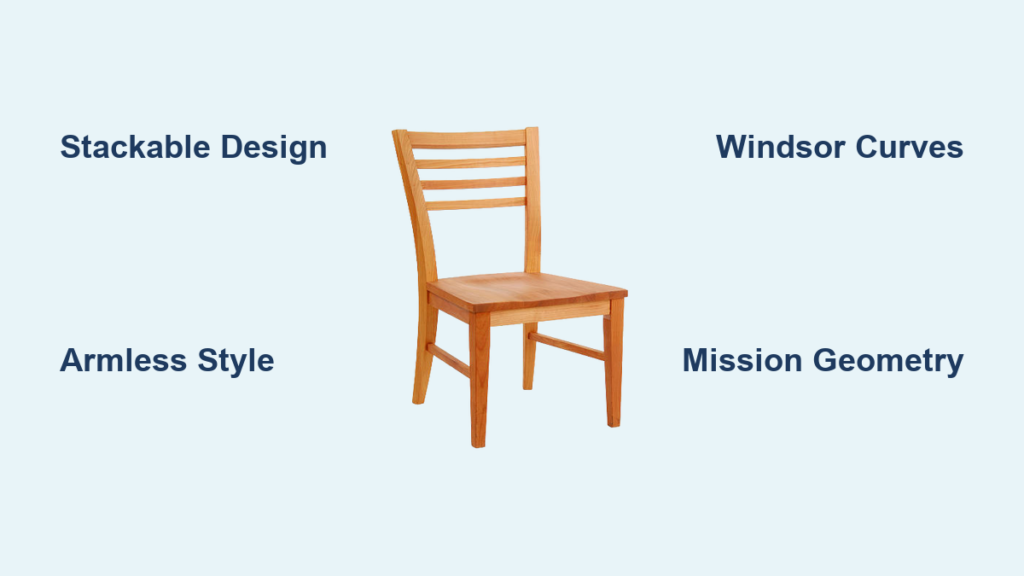
Picture this: you’re setting up your dining area and scrolling through endless furniture options, only to realize that what looks like a simple wooden chair actually represents centuries of design evolution. Each style carries distinct functionality and aesthetic language, making the right choice crucial for creating spaces that feel intentionally designed rather than accidentally assembled. Understanding the different types of wooden chairs transforms overwhelming choices into confident decisions that enhance both comfort and style in your home.
From medieval ladderbacks to sleek modern keyhole designs, wooden chairs serve as the backbone of furniture collections worldwide. Whether you’re furnishing your first apartment or upgrading your entire home, knowing these distinctions helps you match chair styles with your specific needs and existing décor. This comprehensive guide breaks down every major category of wooden chairs so you can select pieces that work perfectly in your space for years to come.
Stackable vs Fixed Designs

Commercial-Grade Stackable Chairs
Stacking chairs revolutionize storage efficiency through reinforced frames engineered specifically for vertical storage. Restaurant owners rely on these during deep cleaning rotations, while teachers appreciate how thirty chairs can disappear into a single corner during school plays. The critical detail: only identical models from the same manufacturer stack safely—mixing brands creates unstable towers that damage chair legs.
Look for reinforced seat rails and thicker back posts that withstand the weight of stacked units. Most commercial stacking chairs support 4-6 high towers, though lightweight models designed for churches may stack 8-10 units. The trade-off comes in aesthetics—these chairs prioritize function over ornate details, making them ideal for high-traffic environments like community centers and school cafeterias.
Permanent Statement Pieces
Non-stacking chairs embrace design freedom through intricate backs, curved arms, and sculptural forms. Your grandmother’s Windsor with its curved spindle back or that upholstered wingback anchoring your reading nook exemplify this category. These pieces become permanent room features rather than temporary seating, demanding dedicated space but offering unparalleled style.
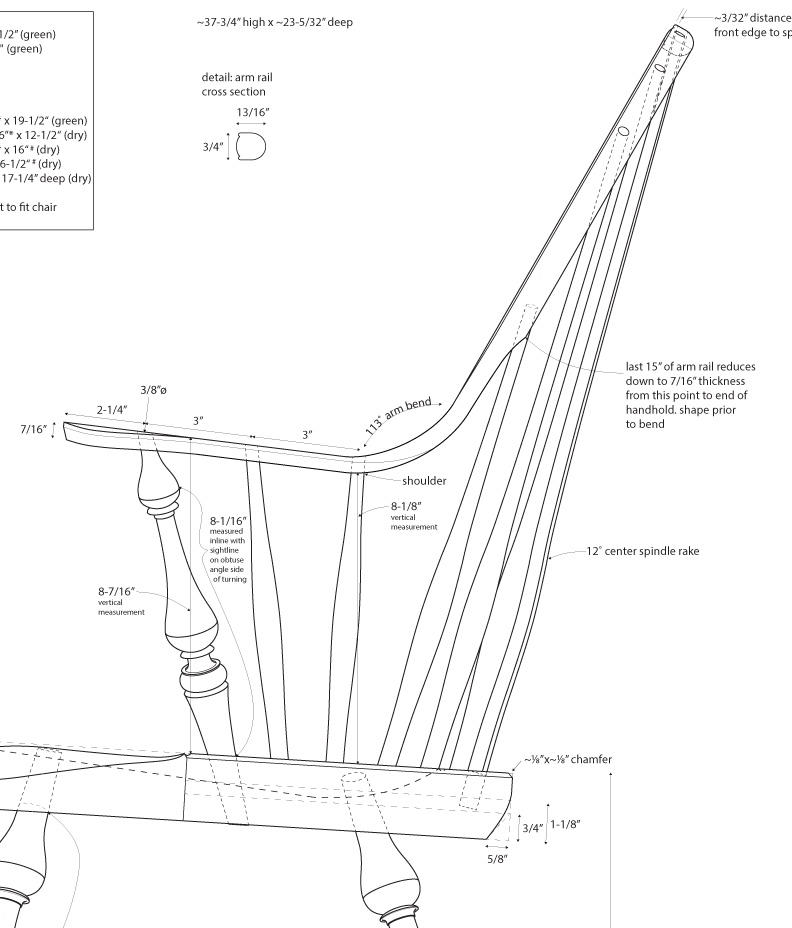
The open back design of Windsors prevents visual bulk—crucial in compact dining rooms where solid chair backs would create barriers. Each spindle is thick in the middle and tapered at ends, combining strength with graceful proportions that define traditional types of wooden chairs.
Arm vs Armless Variants
Space-Saving Side Chairs
Side chairs maximize flexibility in tight spaces—you can squeeze six around a 60-inch table where armchairs would limit you to four. Their clean profiles slide completely under tables, making them ideal for apartment dining areas where every inch counts. The absence of arms accommodates users of all body types without the constriction that wide armrests create.
These armless wooden chairs work particularly well in open-plan living areas where seating needs frequently change. Their versatility makes them essential components in any collection of wooden chair types, easily transitioning from dining to workspace to extra seating.
Supportive Armchair Solutions
Built-in armrests transform sitting and standing for elderly users or anyone recovering from injury. The support points reduce strain on wrists and shoulders during lengthy dinner conversations. However, arms add 4-6 inches to overall width—crucial when planning seating capacity. Most manufacturers offer companion side chairs within the same style, letting you mix two armchairs at table ends with four armless sides for optimal space usage.
Traditional Heritage Styles
Mission Style’s Clean Geometry
Mission chairs showcase straight-edged vertical slats creating rhythmic linear patterns across chair backs. The style emerged from the Arts and Crafts movement, emphasizing honest construction and visible joinery. Oak remains the traditional choice, though maple and walnut offer lighter or darker alternatives.
These chairs bridge formal dining rooms and casual breakfast nooks effortlessly. The geometric simplicity complements both rustic farmhouse tables and sleek modern surfaces. Look for through-tenon joinery and square legs that exemplify the “truth in materials” philosophy central to this enduring style of wooden chairs.
Windsor Style’s Timeless Curves
English craftsmanship from the 16th century produced Windsor chairs with their distinctive curved backs cradling vertical spindles. The solid wooden saddle seat anchors spindle legs and back supports, creating visual lightness perfect for small dining areas. Traditional versions embrace country cottage aesthetics, while painted finishes in charcoal or navy adapt them for modern spaces.
Contemporary and Hybrid Designs
Modern Wood Innovations
Modern wooden chairs share three unifying elements: bent wood techniques that create fluid curves, celebrated wood grain patterns, and streamlined silhouettes. These pieces eschew ornamentation in favor of material honesty and ergonomic function. They integrate seamlessly with glass dining tables or stand alone as occasional seating.
Look for waterfall edges on seats and backs where wood grain flows continuously around curves. The construction often employs lamination techniques unavailable to traditional craftsmen, creating shapes impossible with solid wood alone.
Rustic Character Pieces
Rustic chairs celebrate natural imperfections through hand-crafted construction from logs, reclaimed timber, or unhewn wood. The aesthetic emphasizes rough-sawn textures and visible grain patterns. While naturally suited to country schemes, these chairs gain sophistication when paired with modern textiles or metallic accents.
Specialized Design Categories
Crossback (X-Back) Chairs
French Country style features curved X-shaped backrests providing both ergonomic support and visual elegance. The design originated in European bistros, explaining its natural fit for farmhouse kitchens. Popular finishes combine natural wood with painted white frames, creating versatile pieces that complement both rustic and refined settings.
Keyhole Modern Chairs
Minimalist designs incorporate keyhole-shaped cutouts in square chair backs, creating negative space that reduces visual weight. The cutouts provide functional airflow during extended seating while maintaining clean geometric profiles. These chairs excel in contemporary dining rooms where sculptural forms take precedence over traditional styling.
Fan Back Variations
Contoured fan-shaped backrests enhance ergonomic support while creating elegant silhouettes. The design adapts across style periods—from Mission style vertical fans to Postmodern interpretations. The curved support follows natural spine contours, making these chairs suitable for lengthy dinner parties.
Upholstery and Construction Options

Solid Wood Durability
Hardwood seats withstand rigorous cleaning protocols, making them ideal for families with young children. Maple and oak resist denting from dropped utensils, while walnut hides scratches better than lighter species. The maintenance simplicity—occasional oiling or waxing—appeals to busy households seeking long-lasting types of wooden chairs.
Upholstered Comfort
Fabric or leather padding transforms wooden chairs into all-day seating suitable for home offices or formal dining. Performance fabrics resist staining from wine or food, while leather develops attractive patina over decades. The trade-off involves periodic reupholstering as fabrics wear, typically every 7-10 years with daily use.
Style Compatibility Matrix
Mission/Craftsman: Chunky square legs, exposed joinery, and oak construction define this aesthetic. The style emphasizes horizontal and vertical lines over curves, creating substantial pieces that anchor dining rooms.
Farmhouse/Country: Distressed finishes, tapered legs, and reclaimed hardwood construction create relaxed, approachable pieces. Asymmetrical details and weathered surfaces prevent formality while maintaining structural integrity.
Shaker Simplicity: Straight lines, subtle curves, and zero ornamentation reflect the Shaker philosophy of utility over decoration. Cherry and maple remain traditional choices, though painted finishes expand versatility.
Making Your Final Selection
Start with your table—Mission oak pairs beautifully with similar styles but clashes with ornate Queen Anne pieces. Consider your lifestyle: solid wood seats wipe clean after children’s meals, while upholstered chairs require fabric protection sprays in busy households.
Measure carefully—armchairs need 24-26 inches per person versus 20 inches for armless sides. Factor in storage needs if you host large gatherings occasionally; stacking Mission chairs solve storage while Windsor pieces require permanent space.
Pro Tip: Test chairs in person whenever possible. Sit in them for at least five minutes to assess comfort, especially if you’ll be using them for extended periods. Pay attention to how your back and legs feel—what looks beautiful may not provide the support you need.
Your wooden chairs become daily companions for decades. Understanding these distinctions transforms furniture shopping from guesswork into informed decisions that create cohesive, functional spaces reflecting your personal style and practical needs. Whether you’re selecting traditional types of wooden chairs or exploring contemporary interpretations, the right choice enhances both your home’s aesthetics and your everyday living experience.


