
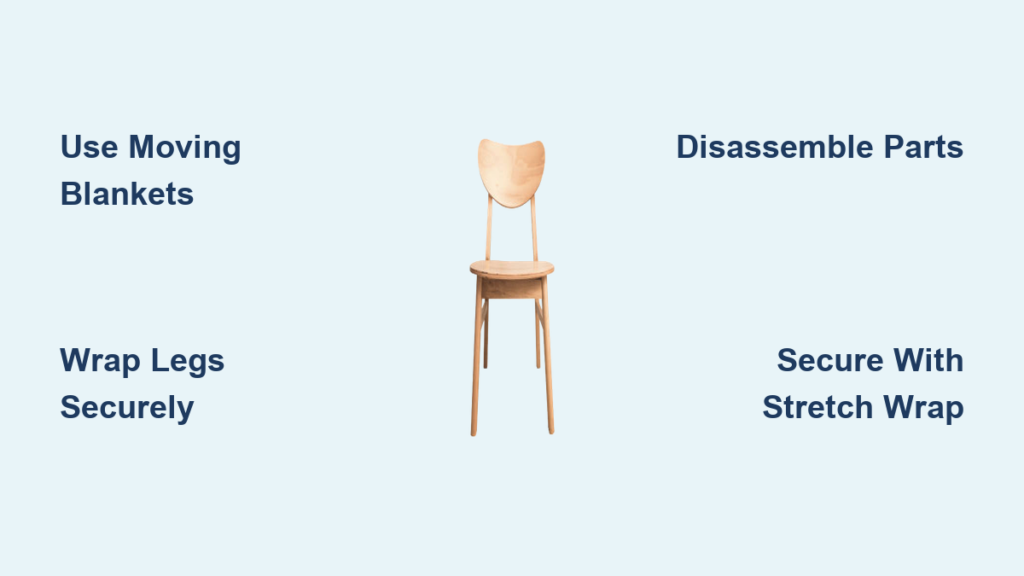
That sinking feeling when you unpack a chair only to find a cracked leg or gouged upholstery ruins any moving high. Nearly 90% of chair damage during relocation happens from improper wrapping—not accidents. Whether you’re shifting antique dining chairs across town or bundling modern office chairs for cross-country transport, professional-grade wrapping techniques prevent costly repairs and headaches. This guide reveals the exact methods movers use to protect every chair style, from delicate heirlooms to heavy outdoor sets. You’ll discover which materials actually shield against dents (hint: household blankets fail), precise wrapping sequences for different chair types, and critical mistakes that cause irreversible damage—ensuring your chairs arrive unscathed.
Skipping proper chair wrapping risks more than scratches: unprotected legs snap under pressure, moisture ruins antique wood, and tape residue permanently scars finishes. But with the right approach, you’ll avoid $200+ repair bills and unpack stress. By the end, you’ll know how to wrap chairs for moving like a pro—even if you’ve never handled a roll of stretch wrap before.
Chair-Specific Wrapping Materials That Actually Work

Moving blankets (not regular blankets) are non-negotiable for scratch prevention. These quilted furniture pads absorb impacts household blankets can’t, and rental services like U-Haul charge just $5-$10 each. Bubble wrap goes beyond basic cushioning—you need two layers for antique chairs and high-traffic areas like chair legs. Stretch wrap replaces tape for securing layers; it won’t leave residue when removed after long moves. Cardboard strips reinforce leg corners, while furniture sliders protect floors during loading.
Avoid These Costly Supply Mistakes
Never wrap chairs with standard plastic sheeting—it traps moisture against wood, causing warping. Household blankets compress under pressure, exposing surfaces to dents. Most critically: tape directly on chair surfaces pulls up fabric and paint veneers. Painter’s tape works only for same-day moves; for anything longer, use stretch wrap over blankets. Outdoor chairs need waterproof covers added after bubble wrap to block rain, while wardrobe boxes are mandatory for high-backed dining chairs on cross-country trips.
Pre-Move Chair Assessment Checklist
Before wrapping, document every chair’s condition with photos—this proves pre-existing damage to movers. Measure doorways and stairwells in both locations; a chair that fit your old dining room might jam in a new hallway. Then deep-clean chairs with material-appropriate products (wood polish for solids, upholstery cleaner for fabrics) and ensure they’re bone-dry to prevent mold.
Critical Disassembly Steps You Can’t Skip

Removing parts prevents 70% of transport damage. Unscrew legs, cushions, and backrests using the correct tools (Allen wrenches for modern chairs, flat-head screwdrivers for antiques). Store hardware in labeled Ziplock bags taped under seat bases—never loose in boxes. For office chairs, lock height/tilt mechanisms with tape and remove wheels. Bar stools need adjustable parts secured with bungee cords. Skipping disassembly stresses joints, causing cracks during bumps.
Dining Chair Wrapping: Local vs. Long-Distance
Local Moves (Under 50 Miles)
Wrap high-backed dining chairs in three layers:
1. Cover surfaces with bubble wrap (focus on carved details)
2. Center chair on a moving blanket, folding corners inward
3. Secure with stretch wrap from base upward—never tape directly to wood
Stack chairs vertically with legs facing outward in the truck, padding between each seat. Avoid placing heavy items on top.
Long-Distance Moves (50+ Miles)
Most movers require wardrobe boxes for dining chairs. After bubble-wrapping:
– Place chair in box upright
– Fill empty space with packing paper to prevent shifting
– Add extra cardboard around legs inside the box
– Seal box with heavy-duty tape only on seams
High-backed chairs must travel in boxes—loose wrapping fails during multi-day transit.
Specialty Chair Protection Protocols
Bar Stools & Office Chairs
For bar stools, double-wrap footrests with bubble wrap and secure adjustable height mechanisms with tape. Office chairs need wheels removed (or bubble-wrapped) and lumbar supports padded before final blanket wrapping. Always lock tilt functions—unsecured mechanisms snap during loading.
Outdoor Furniture Survival Tactics
Follow standard wrapping but add a waterproof tarp over stretch wrap. Bundle metal legs together after individual bubble-wrapping to prevent bending. Glass tabletops require corner guards and vertical storage—never lay flat.
Antique Chair Emergency Protocol
Antiques demand extreme care:
– Apply 3 bubble wrap layers over carvings
– Cover upholstery with cotton sheets (never plastic—it degrades antique fabric)
– Wrap wood/metal parts separately with foam wrap
– Place in climate-controlled storage if moving long-distance
High-value antiques warrant professional consultation—improper wrapping can slash value by 40%.
Loading Chair Legs Without Breakage

Legs cause 80% of chair damage. Protect them like this:
1. Wrap each leg individually with bubble wrap (2 layers minimum)
2. Slide cardboard strips along leg sides for corner reinforcement
3. Secure with stretch wrap over cardboard—never tape to wood
4. Position chairs sideways in trucks with legs facing outward
Never stack chairs leg-down—that vertical pressure cracks joints. Always place a cardboard buffer on the truck floor first.
Truck Loading Strategy That Prevents Damage
Position chairs against truck walls with legs outward, not stacked. Secure with ratchet straps—not rope—to stop shifting during turns. Keep chairs away from moisture sources like appliances. Label each wrapped chair with:
– Destination room (e.g., “DINING ROOM – CHAIR 1 OF 6”)
– “FRAGILE” if antique or upholstered
– Orientation arrows showing which way is up
Use furniture sliders when loading—dragging wrapped chairs tears blankets.
Unpacking & Reassembly Without Mishaps
Unwrap chairs immediately upon arrival to prevent moisture buildup. Inspect for damage before discarding wrapping. For reassembly:
1. Reference photos taken during disassembly
2. Match labeled hardware bags to parts
3. Hand-tighten connections (over-tightening strips threads)
4. Test stability by sitting gently before full use
Never force parts—if something doesn’t align, check for missing hardware. Upholstered chairs need 24 hours to recover shape before use.
When to Hire Movers vs. DIY Wrapping
DIY makes sense if:
– You’re moving locally with basic dining chairs
– You have time to source supplies (rental costs: ~$50)
– No stairs or tight pathways exist
Call professionals when:
– Moving antiques valued over $500
– Transporting chairs up/down stairs
– Dealing with bulky recliners or barstool sets
– Your schedule can’t accommodate 2+ hours per chair
Movers charge $25-$50 per chair but provide insurance and climate-controlled trucks—critical for heirlooms.
Last-Minute Wrapping Fixes When Supplies Run Short
If you’re out of bubble wrap, prioritize legs and corners:
– Wrap legs in multiple layers of newspaper
– Use bed sheets under moving blankets for extra padding
– Secure with rope instead of tape (loop around blankets only)
– Place chairs in the center of the truck surrounded by soft items
For storage, elevate chairs on pallets in climate-controlled units—never set directly on concrete floors. Remove all plastic after 30 days to avoid moisture damage.
Proper chair wrapping isn’t optional—it’s the difference between unpacking treasures and trash. By using moving blankets correctly, disassembling strategically, and loading with leg protection, you’ll avoid the #1 moving regret: furniture damage from preventable mistakes. Start wrapping 48 hours before moving day to ensure dry, clean chairs, and never let tape touch surfaces. Your future self will thank you when you sit on an unblemished chair in your new home.


