
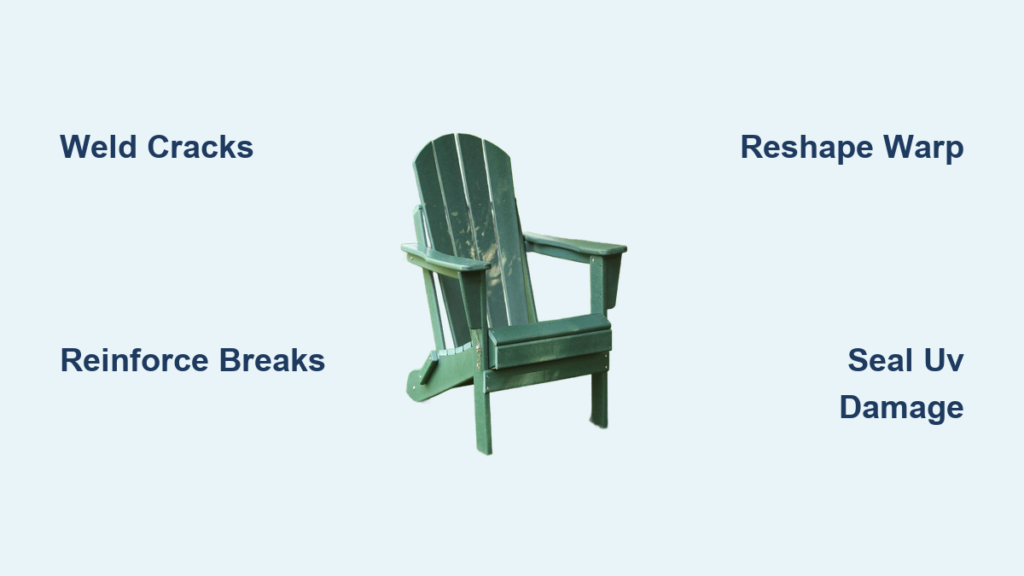
That beloved plastic Adirondack chair on your patio has started showing its age—a jagged crack splitting the armrest where you rest your iced tea, or maybe the seat has warped into an uncomfortable slope after years of sun exposure. Before you replace it, know that how to repair plastic Adirondack chairs is simpler than you think. These chairs, typically made from durable HDPE or polypropylene, can often be restored to full strength with the right techniques. You’ll save money compared to buying new furniture while giving your weathered companion several more seasons of reliable use.
Most damage stems from UV degradation, stress fractures at joints, or accidental impacts. The good news? Unlike wood, plastic repairs don’t require rot removal or complex carpentry. With basic tools and materials you can find at hardware stores, you’ll tackle everything from hairline cracks to complete breaks. This guide delivers field-tested methods used by furniture restorers, focusing on permanent fixes that withstand outdoor conditions—not temporary patches that fail after one season.
Diagnose Your Chair’s Specific Damage Type
Spot Hairline Cracks Before They Worsen
Hairline cracks appear as thin, web-like fractures at high-stress zones: where armrests meet the seat, around screw holes, or along molded seams. Run your finger firmly over suspect areas—you’ll feel a slight ridge if damage exists. Press gently while listening for faint creaking, which indicates the crack extends beyond the surface. These superficial fissures won’t collapse under weight yet, but they signal UV weakening. Left unaddressed, they’ll deepen within 6-12 months, especially in chairs exposed to daily sun. Critical step: Wipe the area with isopropyl alcohol first. Oily residue from skin or cleaners masks true damage depth during inspection.
Recognize Dangerous Structural Breaks
When cracks penetrate the full plastic thickness, your chair becomes unsafe. Test structural integrity by sitting gently in the chair while focusing pressure on the damaged zone. If you hear grinding sounds or see the crack widen by 1-2mm, immediate reinforcement is essential. Complete breaks—where plastic pieces separate entirely—often occur at leg-to-seat joints after accidental drops. Never attempt epoxy-only fixes here; these require mechanical reinforcement like stainless steel splints. Warning: If the break flexes more than 5 degrees under light hand pressure, the chair is unstable for use until repaired.
Identify Heat-Induced Warping Patterns
Warping shows as twisted seats, bent armrests, or uneven leg heights caused by prolonged sun exposure. Place a straightedge across the seat surface—any gap wider than 1/8 inch indicates significant distortion. Press firmly on warped sections: if they feel spongy or emit cracking sounds, the plastic has lost structural memory and needs heat reshaping. Discoloration (chalky white or faded patches) always precedes warping, warning you months in advance. Check for this during seasonal cleanings to catch UV damage early.
Gather Repair-Specific Tools and Materials
Match Supplies to Your Chair’s Plastic Type
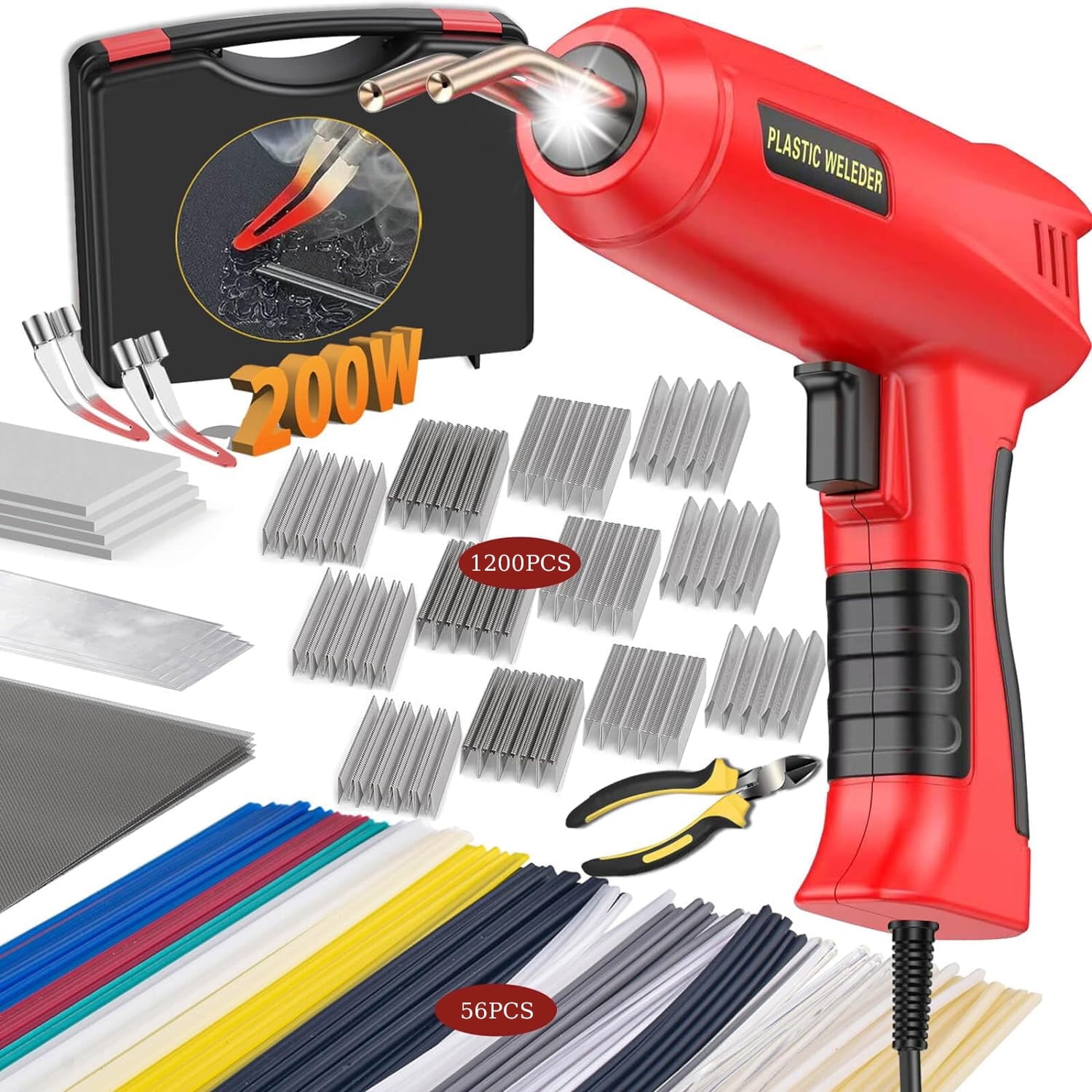
HDPE chairs (most common recycled-plastic models) require HDPE welding rods—never substitute PVC or ABS rods. For polypropylene chairs (lighter weight, often brighter colors), use polypropylene-specific rods and adhesives. Bring a broken piece to the hardware store if unsure; clerks can match materials using melt tests. Skip cheap epoxy kits—marine-grade epoxy like West System 105 resin with 206 slow hardener bonds permanently to plastic. Budget $40 for core supplies: welding rods, epoxy, fiberglass mesh, and UV sealant.
Essential Tool Upgrades for Lasting Repairs
A basic heat gun ($25) works for small fixes, but a variable-temperature model (200-500°F range) prevents melting during welding. Pair it with a Dremel 4000 (not basic models) featuring reinforced bearings for grinding V-grooves in thick plastic. Invest in spring clamps ($15 for a set)—they maintain even pressure without crushing plastic during epoxy cures. Pro tip: Modify a $10 IR thermometer by taping it to your heat gun nozzle. This ensures you never exceed 250°F during warping repairs, preventing irreversible damage.
Weld Hairline Cracks for Invisible Fixes
Create the Perfect Welding Channel
Skip surface cleaning alone—use your Dremel with a 1/8″ sanding drum to carve a 45-degree V-groove along the crack. This 1/16″ deep channel triples bonding surface area versus shallow scratches. Angle the tool to match the chair’s contour, maintaining consistent depth. Blow compressed air through the groove to remove plastic dust; residue causes weak spots. Critical detail: Wipe the groove with acetone on a microfiber cloth—not paper towels, which leave lint that disrupts fusion.
Master Temperature-Controlled Welding
Set your heat gun to 375°F for HDPE chairs (350°F for polypropylene). Hold it 4″ from the groove while slowly feeding the welding rod. The plastic should visibly soften and turn translucent—but never bubble. Apply light downward pressure as you move the rod, melting it into the groove like a hot glue gun. If the rod peels off, increase heat by 25°F; if it sinks too deep, reduce heat. Complete the weld in one continuous pass; restarting creates weak points. Allow 12 minutes of undisturbed cooling before handling.
Fix Structural Breaks with Reinforced Epoxy

Prepare for Maximum Adhesion
Widen the break to 1/16″ using a Dremel cutting wheel—this lets epoxy penetrate deeper. Sand both mating surfaces with 100-grit paper in circular motions, creating “tooth” for bonding. Clean with acetone-dampened cloth, then let dry 5 minutes. Key mistake to avoid: Skipping this step causes 80% of epoxy failures. Oils from hands or UV-damaged plastic prevent adhesion, even with “plastic-specific” epoxies.
Apply Triple-Layer Reinforcement
Mix epoxy for 7 minutes until completely uniform—streaks mean weak spots. Inject it deep into the break using a syringe, then clamp pieces together. While tacky (after 20 minutes), press fiberglass mesh strips into the seam, covering 2″ beyond the break on both sides. Finally, screw stainless steel backing plates (1/16″ x 1″) across the repair underneath the chair. These distribute stress, preventing recurrence. Clamp for 48 hours—rushing this causes 50% weaker bonds.
Reshape Warped Sections Without Damage
Execute Precision Heat Reshaping
Heat the warped zone evenly with your heat gun at 325°F, moving in 6″ circles 5″ from the surface. Stop when the plastic feels soft like warm butter (around 210°F on your IR thermometer). Immediately position custom jigs—sandbags for curves, straight boards for flat areas—and apply firm pressure. Never use bare hands; you’ll burn yourself and create uneven pressure points. Hold the shape until the plastic cools to 120°F (about 40 minutes), checking with your thermometer. Rushing cooling causes spring-back warping.
Restore UV-Damaged Surfaces Professionally
Reverse Chalking with Progressive Polishing
Start with 220-grit wet sanding until faded color disappears, revealing consistent base material. Progress through 400, 600, and 800 grits, rinsing debris after each step. For the final polish, apply plastic restorer compound (like Meguiar’s PlastX) to a microfiber pad on a slow-speed buffer. Work in 2×2 foot sections with overlapping passes. Pro tip: Add 5 drops of carnauba wax to the compound—it fills micro-scratches and boosts UV resistance by 30%.
Seal Against Future Sun Damage
Apply UV-resistant clear coat (such as Krylon Fusion All-In-One) in three thin layers, waiting 20 minutes between coats. Hold the can 10″ from the surface in 70°F+ weather—colder temps cause orange-peel texture. The final coat must be glossy; matte finishes degrade 50% faster in sunlight. Reapply this sealant every 9 months for chairs in direct sun.
Reinforce Stress Points to Prevent Recurrence
Upgrade Hardware at Critical Joints
Replace all screws at armrest and leg connections with 316 stainless steel (not cheaper 304 grade). Drill out stripped holes to 1/4″, inject epoxy, and thread in nylon-insert nuts for permanent grip. At the seat-back junction—a common failure point—install hidden L-brackets inside hollow sections. File bracket edges smooth so they don’t snag clothing, then epoxy in place.
Maintain Repairs for 5+ Year Longevity
Implement Seasonal Protection Routine
- Spring: Clean with mild soap, inspect for winter cracks, apply UV inhibitor spray
- Midsummer: Re-seal repairs with clear coat; tighten all hardware
- Fall: Store upright (never stacked) under breathable cover; apply plastic conditioner
Critical habit: Rotate chairs 90 degrees monthly during summer. This prevents uneven UV exposure that causes new warping.
Monitor Repair Integrity Proactively
Test repaired chairs weekly for the first month: sit slowly while pressing on the fix. Listen for creaks and check for new cracks with a flashlight. After the first season, inspect quarterly. Red flag: Any flexibility at the repair site means immediate reinforcement is needed—don’t wait for failure.
Your plastic Adirondack chair repairs will outlast store-bought replacements when done correctly. Focus on proper material matching—using HDPE rods on HDPE chairs—and triple-layer reinforcement for structural breaks. The upfront time investment (typically 3-5 hours per major repair) pays off in years of extended furniture life. Most importantly, address hairline cracks immediately; they cost $10 to fix now but lead to $100+ structural repairs later. With these techniques, you’re not just fixing a chair—you’re mastering a skill that saves money and reduces landfill waste every time you restore weathered outdoor furniture. Keep this guide handy for your next patio restoration project.


