
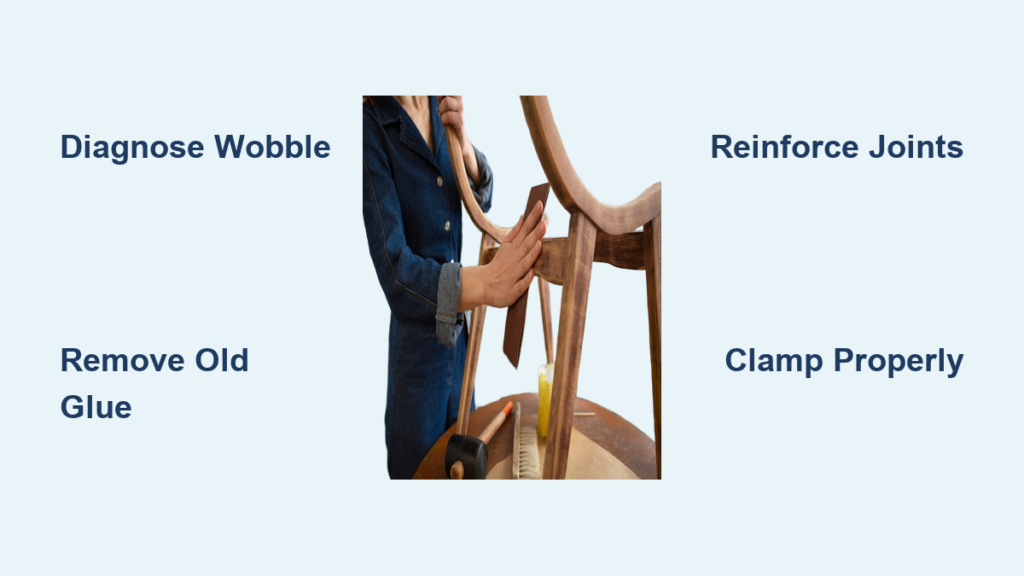
Your dining chair squeaks with every movement, and that office seat leg wobbles dangerously close to giving way. Most chair problems stem from the same culprits: failed joints, worn tenons, and cracked frames. Ignoring these issues risks sudden collapse and permanent damage. This guide reveals professional techniques to repair loose legs, broken back rails, and cracked seats using basic tools. You’ll learn exactly how to diagnose structural weaknesses, disassemble joints properly, and reinforce repairs for lasting stability—all without damaging your furniture’s integrity.
Diagnose Structural Weakness Before Collapse
Identify Critical Failure Points
Structural damage compromises weight-bearing capacity and requires immediate repair. Test your chair by applying downward pressure while rocking it sideways. If joints separate visibly or produce loud creaks, you’re dealing with dangerous instability. Key danger zones include leg-to-seat connections, back rail junctions, and spindle attachment points where stress concentrates during use.
Cosmetic damage like surface scratches or hairline cracks in non-load-bearing areas won’t cause collapse but should be monitored. The critical difference: structural issues worsen rapidly with use, while cosmetic flaws remain static. Never ignore movement at joint intersections—this indicates failed glue bonds that worsen with seasonal humidity changes.
Gather These 10 Chair Repair Tools Before Starting
Essential Repair Kit
- Trigger clamps (2-4 with padded jaws) for angled joints
- Yellow PVA wood glue (standard for most repairs)
- Artist brushes (for precise glue application)
- Putty knife (old screwdriver works for disassembly)
- 120/220-grit sandpaper (cleaning joint surfaces)
- Drill with 1/8″–3/8″ bits (dowel reinforcement)
- Self-locking pliers (padded with leather to prevent marring)
- Pine quarter-round strips (for custom wedges)
- Silk thread (tenon enlargement)
- Wax paper (prevents clamp sticking during curing)
Specialty Items Worth Investing In
Steel mending plates provide invisible reinforcement for cracked frames. Dowel rods in multiple diameters allow precise joint rebuilding. A glue injector syringe helps target hard-to-reach areas. Never substitute polyurethane glue—its expanding foam lacks structural strength in wood gaps and creates messy cleanup.
Disassemble Loose Joints Properly for Permanent Fix

Complete Glue Removal Process
Never glue over old adhesive—new bonds will fail instantly. Start by labeling parts with painter’s tape as you disassemble. Insert a putty knife into joint gaps and tap gently with a hammer to separate pieces. For stubborn joints, twist the component slightly while pulling to break the glue seal. Remove hidden fasteners from glue blocks using needle-nose pliers wrapped in cloth.
Critical cleaning step: Scrape all joint surfaces with your putty knife dipped in warm water. Residual glue prevents proper adhesion—mating surfaces must feel completely smooth. Wipe clean with a dry cloth and let dry overnight before reassembly. Pro tip: Photograph complex joints during disassembly to avoid reassembly errors.
Re-glue Mortise-and-Tenon Joints Correctly
Precision Glue Application Technique
Apply yellow PVA glue only to the sides of tenons and mortises—never the bottom or ends. This prevents hydraulic pressure from forcing parts apart during clamping. Use an artist brush for mortises and the brush handle end for tenons. Never use your fingers—skin oils weaken the bond significantly.
Professional Clamping Method
Position clamps so pressure runs parallel to the joint direction. For chair legs, place clamps vertically between leg and seat frame. Apply firm, even pressure until glue squeezes out uniformly around the joint. Wipe excess immediately with a damp cloth. Clamp for 24 hours minimum—PVA glue needs full curing time for maximum strength. Test with gentle pressure after 48 hours before use.
Fix Wobbly Chair Legs with Silk Thread or Wedge Methods

Silk Thread Tenon Repair (Best for Antiques)
Wrap worn tenons with silk thread to rebuild diameter without altering geometry:
1. Apply thin glue coat to tenon surface
2. Wrap thread tightly in spiral pattern (add layers as needed)
3. Let dry 24 hours before reassembly
4. Test fit before final gluing
This method preserves original joint alignment while creating perfect friction fit. Thread layers build gradually—stop when tenon slides into mortise with firm hand pressure.
Wedge Enlargement for Stubborn Joints
When thread isn’t sufficient:
1. Clamp leg securely in padded vise
2. Saw 3/4″ deep vertical cut into tenon end
3. Carve thin pine wedge slightly oversize
4. Tap wedge into cut to spread tenon evenly
5. Trim flush with sandpaper after assembly
Critical: Test wedge fit dry first—over-spreading causes new cracks. Always cut wedges from soft pine to avoid splitting hard tenons.
Repair Broken Back Rails Without Professional Help
Safe Replacement Process
Never attempt DIY rail replacement unless you can disassemble the entire back structure. Start by removing only affected joints—preserve undamaged sections. Take both broken and matching undamaged rails to a millwork shop for exact replication. During reassembly:
- Clean all joint surfaces thoroughly
- Apply glue to mating surfaces only
- Position new rail carefully
- Use strap clamps around entire back assembly
- Clamp for 48 hours before use
Cost-saving note: Professional rail replacement costs $50-$150 but prevents catastrophic failure. Attempting shortcuts risks permanent damage to valuable chairs.
Mend Cracked Chair Seats Using Dowel Reinforcement

Step-by-Step Dowel Installation
For load-bearing cracks:
1. Separate broken ends completely
2. Drill 1/8″–3/8″ holes perpendicular to crack (1″ deep)
3. Insert nail to mark matching hole locations
4. Cut dowels 1/4″ shorter than hole depth
5. Score dowel sides with pliers for grip
6. Round ends slightly with sandpaper
7. Apply glue and insert dowels
8. Clamp with rope or strap clamp
Visual cue: Properly installed dowels create visible glue squeeze-out around each hole. Wipe excess immediately to avoid hardened bumps.
Avoid 5 Chair Repair Mistakes That Cause Further Damage
Critical Errors to Eliminate
- Adding screws to joints: Metal fasteners crack wood during seasonal movement—glue alone provides flexible strength
- Using polyurethane glue: Expanding foam creates pressure points that split joints over time
- Skipping disassembly: Gluing over old adhesive guarantees failure within weeks
- Inadequate clamping: Weak pressure creates micro-gaps where glue fails
- Ignoring grain direction: Replacement wood must match original orientation
Proven success factor: Every mating surface must show uniform glue squeeze-out when clamped. If you don’t see this, your joint will fail prematurely.
Maintain Repaired Chairs to Prevent Future Repairs
Quarterly Maintenance Routine
Check all joints by gently rocking the chair. Address movement immediately—delaying repairs multiplies damage. Apply paste wax annually to reduce moisture absorption in wood. Position chairs away from heating vents and direct sunlight to minimize humidity stress. Always lift chairs instead of dragging—they’re designed for vertical load, not lateral stress.
Final inspection protocol: After repairs cure, sit carefully while shifting weight side-to-side. Any remaining movement indicates incomplete glue penetration—disassemble and restart the process. Properly repaired chairs should feel rock-solid for decades, not months. Remember: early intervention saves 90% of major restoration costs. Address that first wobble before it becomes a collapse hazard.


