
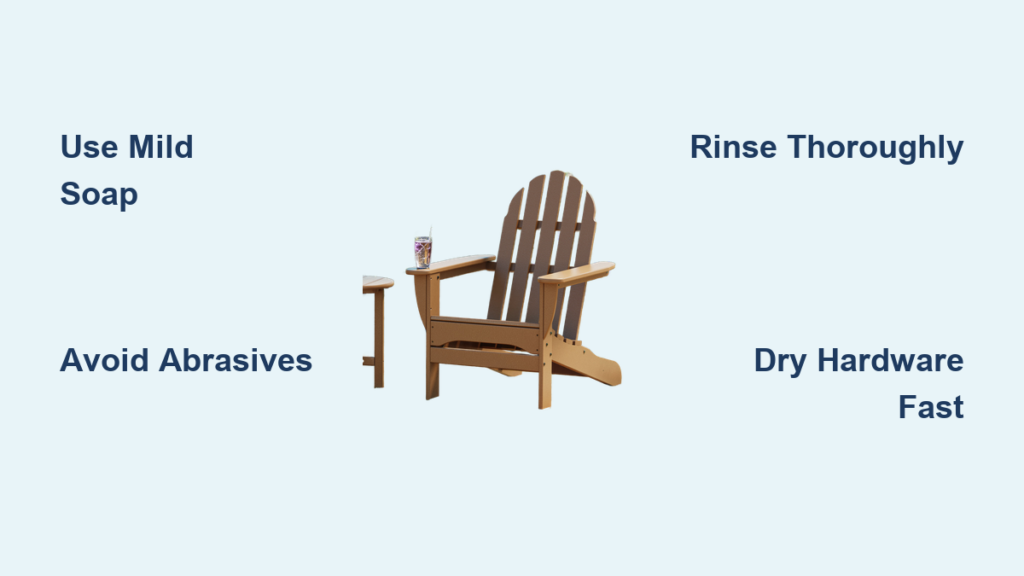
Your POLYWOOD chairs endure relentless sun, pollen storms, and accidental spills—all while maintaining their structural integrity. Yet that chalky film dulling their vibrant colors isn’t permanent damage; it’s just environmental buildup that proper cleaning eliminates. When you learn how to clean POLYWOOD chairs correctly, you’ll revive their factory-fresh appearance using household items in under 30 minutes. Skip abrasive cleaners that void warranties and discover why gentle methods actually extend your furniture’s lifespan decades beyond typical outdoor sets.
Most owners mistakenly scrub with harsh tools that scratch surfaces or use oil-based products that attract more dirt. The truth? HDPE (high-density polyethylene) lumber responds best to mild soap solutions and consistent maintenance. This guide reveals field-tested techniques from POLYWOOD’s engineering team—including pressure-washer settings that won’t etch surfaces and coastal-specific hardware care. You’ll master routine cleaning, deep-stain removal, and seasonal prep that keeps chairs looking new year after year.
Essential Supplies for POLYWOOD Cleaning
Required Tools Checklist
Gather these five items before starting: a soft-bristle brush (never wire or abrasive pads), mild dish soap, warm water bucket, garden hose, and microfiber towel. The brush’s nylon bristles lift grime without scratching HDPE’s protective surface layer. Warm water activates soap molecules to break down oils more effectively than cold water. Always rinse with clean hose water—not sprinklers—to avoid mineral deposits. Finish with microfiber towels that trap moisture without leaving lint in crevices.
Optional Deep-Clean Additions
For mold outbreaks or stubborn stains, add baking soda paste (3 parts baking soda to 1 water) or a bleach solution (1:2 bleach-to-water ratio). Use pressure washers only at or below 1,500 psi with a 40-degree fan tip nozzle. Critical warning: Never use oil-based cleaners, degreasers, or chlorine tablets—they degrade HDPE polymers and instantly void warranties. Test any new cleaner on an inconspicuous chair leg first.
Quick 15-Minute Routine Cleaning Method
Remove Surface Debris First
Start dry: vacuum or whisk-broom all surfaces to eliminate loose pollen, leaves, and sand. Focus on textured areas like armrest grooves and seat slats where debris accumulates. Skipping this step turns your brush into a scratching tool. For chairs under trees, tap legs to dislodge hidden grit in joints—this prevents abrasive particles from grinding into surfaces during washing.
Mix and Apply the Perfect Solution
Fill your bucket with warm water and add exactly two drops of dish soap—more creates stubborn residue. For post-pool-party sanitizing, mix 1 cup bleach per 2 cups water. Dip a washcloth into the solution and wipe all surfaces, letting it dwell for 3-5 minutes. This dwell time dissolves pollen and skin oils without drying out. Avoid spraying bottles which unevenly distribute soap and cause streaking.
Scrub and Rinse for Spot-Free Results
Use circular motions with your soft-bristle brush, applying light pressure on high-contact zones like seat edges. Rinse immediately with clean hose water using downward motions to prevent water pooling in joints. Check for soap film by running a dry finger—any slipperiness means incomplete rinsing. Air-dry upright for 20 minutes; never sit on damp chairs as moisture traps dirt in micro-grooves.
Deep Clean With Pressure Washer Safely

Setup Safety Protocol
Wear goggles, gloves, and closed-toe shoes before starting. Position chairs on concrete (not grass) to contain runoff. Set pressure washer to 1,500 psi maximum with a 40-degree fan tip—wider angles reduce impact force. Key mistake to avoid: Never hold nozzle closer than 8 inches from surfaces. Test on a chair leg first; if water beads bounce erratically, you’re too close.
Execute Without Surface Damage
Move the wand in slow, overlapping strokes from top to bottom, following the lumber’s grain pattern. Spend no more than 2 seconds per square foot—lingering causes etching. For pollen-caked chairs, make two light passes instead of one aggressive blast. After washing, immediately inspect for residual grime; stubborn spots need the baking soda paste treatment, not higher pressure.
Stainless Steel Hardware Revival

Corrosion-Proof Cleaning Technique
Mix fresh soap solution and scrub all fasteners (screws, bolts, brackets) with your soft brush. Salt air accelerates white corrosion spots, so coastal owners must dry hardware with microfiber towels within 60 seconds of rinsing. Never let stainless steel air-dry—mineral deposits from evaporating water create rust nucleation sites. For existing corrosion, gently rub with baking soda paste before reapplying soap solution.
Coastal Climate Adjustments
If within 5 miles of saltwater, clean hardware monthly instead of quarterly. After drying, apply car wax to bolts—it creates a hydrophobic barrier against salt mist. Store chairs under covered patios during windy days to minimize salt deposition. During cleaning, check for “weeping” corrosion (brown streaks) which requires immediate attention with vinegar-soaked cloths.
Prevent Future Buildup Proactively
Strategic Placement Secrets
Position chairs at least 10 feet from flowering trees to avoid pollen bombs during spring. Elevate legs on patio blocks to prevent water pooling that causes mold rings. In high-pollen zones, drape breathable cotton covers overnight—never plastic tarps which trap moisture and accelerate mildew.
Maintenance Schedule That Saves Hours
Adopt this tiered approach: bi-weekly dry debris removal during peak season, monthly full soap-and-rinse cleans, seasonal deep cleans (spring launch and fall storage), and quarterly hardware inspections. For chairs under oak trees, add spot-cleaning after heavy winds. This prevents 90% of buildup that requires pressure washing.
Solve Common Problems Immediately
:strip_icc()/Clean-Outdoor-Furniture-34bc286d99604bce93f968cc0e060c68.jpg)
Mold and Mildew Emergency Protocol
Mix 1 part bleach to 2 parts water and saturate affected areas. Let sit 10 minutes (no scrubbing yet), then gently brush with baking soda paste. Rinse while sunlight hits the area—UV rays enhance mildew elimination. Never stack damp chairs for storage; space them 6 inches apart for airflow in covered areas.
Stubborn Stain Removal Hacks
For tree sap or sunscreen stains: Apply baking soda paste thickly, cover with plastic wrap for 15 minutes, then scrub with damp microfiber cloth. Sunscreen requires two applications due to oil content. Avoid acetone—it dissolves HDPE’s UV inhibitors. Test on chair undersides first; persistent stains may need professional restoration.
Environmental Best Practices
Runoff Management System
Place chairs on driveways or gravel during cleaning to prevent soap runoff from harming plants. Scoop debris into trash bags instead of washing into storm drains. In drought areas, reuse rinse water for non-edible landscaping—HDPE-safe solutions won’t harm established trees.
Warranty-Safe Product Rules
Stick exclusively to dish soap, baking soda, and diluted bleach. Oil-based “furniture polishes” create permanent hazing that attracts dirt. Abrasive pads leave micro-scratches where grime embeds faster. When in doubt, call POLYWOOD’s support—they’ll verify cleaner compatibility without voiding warranties.
Your POLYWOOD chairs can outlive three generations when you master how to clean POLYWOOD chairs the right way. Consistent light cleaning prevents the aggressive scrubbing that damages surfaces, while coastal hardware care stops corrosion before it starts. This weekend, spend 15 minutes on routine maintenance instead of hours battling stubborn buildup—you’ll gain more relaxation time and decades of vibrant outdoor enjoyment. Remember: The secret isn’t deep cleaning frequency; it’s protecting that HDPE surface layer through smart, simple habits.


