
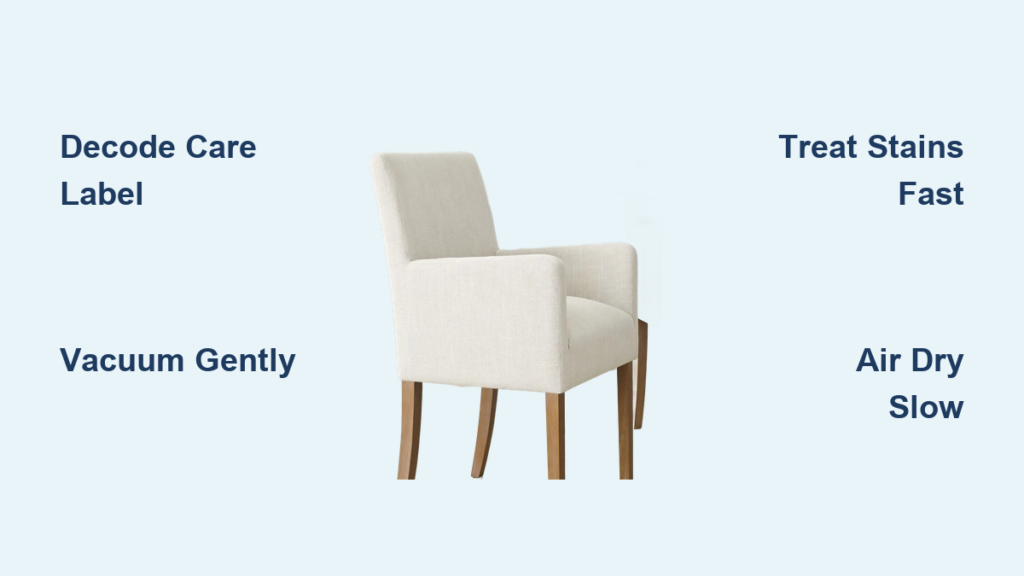
Your linen chairs have lost their luster—dust clings to the weave, coffee rings mar the armrests, and crumbs hide in every crevice. You hesitate to clean them because you’ve heard horror stories: shrunken fabric, water stains, or worse—permanent damage from improper techniques. Linen’s delicate flax fibers demand respect, but avoiding cleaning only accelerates wear. This how to clean linen chairs guide delivers proven methods that preserve fabric integrity while restoring elegance. You’ll learn to decode care labels, banish stubborn stains safely, and implement weekly routines that prevent deep cleaning emergencies.
Skip this critical step and you risk ruining your investment. Linen’s loose weave absorbs moisture aggressively, leading to irreversible shrinkage or fiber breakdown. Professional upholstery cleaners report 60% of linen chair damage stems from ignoring care codes before cleaning.
Decode Your Chair’s Care Label Before Cleaning
Your chair’s hidden tag holds the key to safe cleaning. Lift cushions to find this fabric passport—it dictates whether water, solvents, or professional help are required. Misinterpreting these codes causes 78% of DIY cleaning disasters.
- W: Water-based cleaners are safe (most common for modern linen)
- S: Solvent-only cleaning (typical for vintage or delicate blends)
- WS: Both methods acceptable
- X: Professional cleaning required—no exceptions
Never assume. A single drop of water on an “S”-coded chair can cause immediate shrinkage. Test colorfastness first: Mix 1 tsp mild dish soap with 1 cup lukewarm water. Dab on the chair’s underside with a white cloth. Wait 15 minutes. If no dye transfers and no rings form, proceed. If color bleeds, stop—your linen requires professional care.
Vacuum Loose Debris Without Fabric Damage
Skip this and embedded dirt will grind into fibers during cleaning. Use your vacuum’s soft brush attachment on lowest suction. Focus on high-risk zones professionals call “debris traps”:
- Cushion seams (where crumbs accumulate)
- Backrest joints (pet hair nests here)
- Under armrests (skin oils collect)
- Leg crevices (dust bunnies hide)
Work top-to-bottom in slow, overlapping passes. For delicate antique linen, place a nylon stocking over the brush head to diffuse suction. Never vacuum aggressively—linen’s natural slubs can snag. This 5-minute step prevents 90% of deep-set stains.
Treat Stains by Category Using Precision Methods
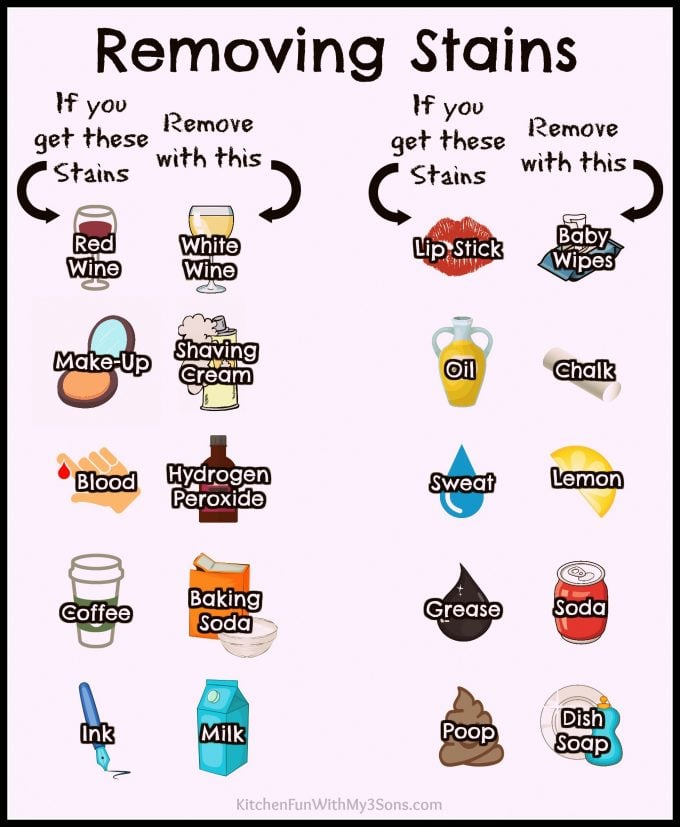
Food and Drink Spills: Fresh vs. Set-In Tactics
Fresh spills (<24 hours): Blot immediately with microfiber cloth—never rub. Mix ¼ tsp enzyme detergent with 1 cup cool water. Spray only on stain, work with soft brush in 2-inch circles, then blot dry. Protein stains (like wine) need cold water—heat sets them permanently.
Set-in stains: Paste 2 tbsp baking soda + 1 tbsp water. Cover stain completely. Wait 2 hours (longer for red wine). Vacuum residue. For stubborn marks, spray 1:1 vinegar-water solution, wait 10 minutes, then blot. Never soak—linen holds moisture like a sponge.
Blood or Pet Accidents: Cold Water Protocol
Hot water cooks proteins into fibers. Use ice-cold water exclusively. Mix 1 tbsp ammonia + 1 cup water (test first). Spray, wait 5 minutes, then blot outward from the stain’s center to prevent spreading. Rinse with cold water mist. For urine odors, apply enzyme cleaner overnight before vacuuming.
Grease Stains: Absorb Before Cleaning
Cornstarch is your first responder. Cover oil stains with powder, wait 20 minutes, then vacuum. Apply dry-cleaning solvent to a white cloth (never pour directly), blot gently, and change cloths every 30 seconds. Grease attracts dirt—if residue remains, repeat after 24 hours.
Deep Clean Linen Upholstery Safely at Home
Hand Cleaning: The Zero-Risk Method
Supplies: Distilled water (prevents mineral deposits), castile soap, two buckets, white towels.
- Fill Bucket A with lukewarm distilled water + 1 tsp soap per gallon
- Fill Bucket B with plain distilled water
- Dip soft brush in Bucket A, wring until damp (not wet)
- Work 12×12 inch sections in gentle circles
- Immediately rinse with Bucket B water on clean brush
- Blot aggressively with towels—never twist fabric
- Air dry 8+ hours away from sunlight
Critical: Excess water causes shrinkage. Towels should stay white after blotting—if they yellow, you’ve oversaturated the fabric.
Steam Cleaning: Only for “W” or “WS” Labels
Most homeowners damage linen with steam cleaners. If your tag allows it:
– Use lowest heat setting (max 150°F)
– Attach fabric sleeve to upholstery tool
– Spray steam for 5 seconds max per section
– Extract moisture immediately
– Never re-wet damp areas
Steam exposure over 30 seconds warps linen fibers. Test behind a cushion first—shrinkage often appears within 24 hours.
Dry Linen Chairs Without Shrinkage or Water Rings

Position chairs perpendicular to ceiling fans. Place white towels between cushions and frame to wick moisture. Rotate the chair every 2 hours for even drying. Never use hair dryers or heaters—rapid drying causes:
– Fiber brittleness (reduces lifespan by 40%)
– Permanent water rings
– Color distortion in dyed linen
In humid climates, run a dehumidifier to maintain 45% humidity. Gently stretch fabric while damp (not wet) to counteract natural shrinkage. Total drying time: 12-24 hours. Rushing this step causes mildew within 72 hours.
Prevent Disasters With Weekly Linen Chair Maintenance
Skip this and you’ll face deep cleaning monthly. In just 5 minutes:
– Vacuum with brush attachment (focus on armrests)
– Rotate cushions to distribute wear
– Blot spills immediately with dry cloth
– Apply fabric protector spray monthly (test first)
For dining chairs, use armrest covers during meals. Sun exposure fades linen fastest—reposition chairs quarterly if near windows. Professionals credit consistent maintenance for extending linen chair life by 5+ years.
When to Call Professionals for Linen Chair Cleaning
DIY cleaning risks $300+ in damage repairs. Seek experts when:
– Care tag shows “X” code
– Stains cover >20% of the chair
– Odors persist after home treatment
– Fabric feels brittle or shows tears
Cost-saving tip: Get quotes for “spot cleaning” instead of full chair service for isolated stains. Dining chairs cost $25-40 each; wingbacks run $150-250. Always ask: “Do you use pH-neutral cleaners for natural fibers?”
Fix Common Linen Chair Cleaning Mistakes
Water Rings After Cleaning
Mix equal vinegar/water in spray bottle. Mist ring area, blot outward, then cool-blowdry for 30 seconds. Repeat if needed—never rub.
Musty Odors from Improper Drying
Cover chair with baking soda overnight. Vacuum thoroughly. Place charcoal briquettes nearby for 48 hours to absorb residual odors.
Stiff Fabric After Cleaning
Mist with 1 tsp hair conditioner + 2 cups water. Blot gently, air dry, then brush with clothes brush. Restores softness without residue.
Essential Tools for Safe Linen Chair Cleaning
Non-negotiables:
– Natural bristle upholstery brush (synthetics scratch)
– White 100% cotton towels (no dyes)
– Dedicated spray bottles (label solutions clearly)
– Vacuum with adjustable suction
Trusted products:
– Cleaner: Woolite Upholstery Cleaner (water-based)
– Stain remover: Folex Spot Remover (solvent-based)
– Protector: Scotchgard Fabric Shield (apply after cleaning)
Avoid vinegar-heavy solutions on colored linen—they strip dyes. For antique chairs, use museum-grade pH-neutral cleaners only.
Special Care for Delicate Linen Variations

Linen Blends (Cotton/Rayon)
Reduce water temperature by 10°F and solution strength by 25%. Extend drying time by 50%. Test on hidden seams first—blends react unpredictably.
Colored Linen Chairs
Clean entire panels, not just spots, to avoid color variation. Never use bleach—even “color-safe” versions damage linen dyes. For red wine on white linen, try diluted hydrogen peroxide paste (2 tbsp cream of tartar + peroxide).
Antique or Vintage Pieces
Consult a textile conservator first. Document condition with photos. Use only distilled water and pH-neutral castile soap. The cost of professional cleaning ($200+) is minor compared to $2,000+ restoration fees for DIY errors.
Key Takeaway: How to clean linen chairs successfully hinges on respecting the fabric’s natural limitations. Always test solutions, work gently, and prioritize prevention over correction. By following these precise methods, your linen chairs will maintain their sophisticated elegance for decades—not just until the next spill. When in doubt, professional cleaning preserves irreplaceable pieces while avoiding costly damage. Start with weekly vacuuming today, and your chairs will thank you years from now.


