
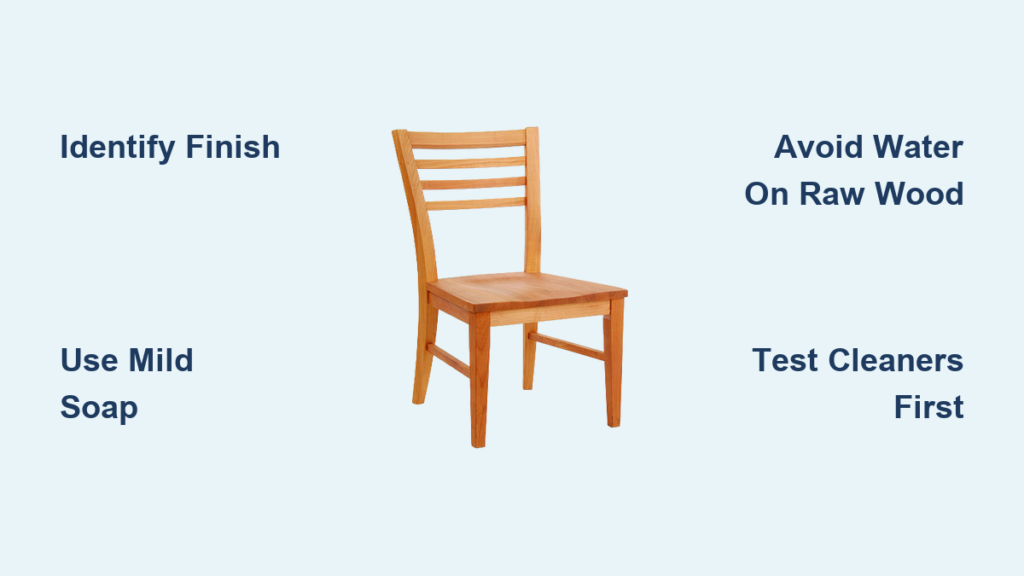
That sticky film coating your dining chairs isn’t just dirt—it’s a stubborn fusion of cooking grease, body oils, and dried food particles that regular dusting can’t touch. Left untreated, this grime penetrates wood pores and dulls finishes, making chairs feel grimy even after wiping. Whether you’re restoring vintage pieces or reviving daily-use dining chairs, this guide delivers field-tested methods to remove years of buildup safely. You’ll learn to match cleaning techniques to your chair’s specific finish while avoiding costly mistakes that strip protective coatings.
Identify Your Chair’s Finish Before Cleaning

Skip this step and you risk permanent damage. Flip your chair upside down and place one drop of water on a hidden spot like the leg bottom. If it beads up like rain on a windshield, you have a sealed finish (polyurethane, varnish, or lacquer). If the wood darkens immediately, it’s unsealed or oil-finished. Test any cleaner on cotton swab first in this area—wait 24 hours to check for cloudiness or discoloration.
Sealed finishes handle tougher cleaners but still require grain-direction wiping. These glossy or semi-gloss surfaces dominate modern chairs. Unsealed/oil finishes need oil-based solutions only—water causes irreversible swelling. They appear matte and feel slightly porous. Painted chairs demand extreme caution; test paint stability by gently rubbing with a damp cloth in a hidden spot. If paint transfers, stick to dry methods only.
Gather These Exact Supplies for Safe Cleaning

Skip the paper towels and vinegar-only myths. For all chair types, you need: mild unscented dish soap, white vinegar, six microfiber cloths (lint-free), a soft-bristled brush, cotton swabs for carvings, and two buckets—one for cleaning solution, one for rinse water. Heavy grime demands mineral spirits (sealed finishes only), baking soda, 0000-grade steel wool, and plastic scrapers. Critical safety gear: rubber gloves, respirator for mineral spirits, and a well-ventilated workspace. Never use metal scrapers or all-purpose cleaners—they strip finishes in seconds.
Remove Light Grime in Under 15 Minutes
Soap and Water Technique for Daily Buildup
Mix 2 drops dish soap with 1 quart warm water. Dip a microfiber cloth, wring until barely damp (excess water warps wood), and wipe with the grain in 6-inch sections. Rinse the cloth in clean water after every swipe—reusing a dirty cloth re-deposits grime. Dry immediately with a second cloth; never let moisture pool in joints. This method dissolves light fingerprints and dust films but fails on baked-on grease.
Vinegar Boost for Greasy Kitchen Chairs
Combine equal parts white vinegar and warm water in a spray bottle. Mist problematic areas lightly—never soak—and wipe with a microfiber cloth using straight strokes (not circles). Vinegar’s acidity cuts through cooking grease without damaging sealed finishes. Follow with a water-rinsed cloth to prevent residue, then dry. Pro tip: For chairs near stoves, repeat monthly to prevent buildup before it hardens.
Erase Medium Grime Buildup Without Scratches
Baking Soda Paste for Stuck-On Food Residue
Create a paste with 2 tablespoons baking soda and 5 drops water. Apply to grime patches using a soft cloth in gentle circular motions—only on sealed finishes. Let sit 5 minutes (no longer, or it dries into a new mess), then wipe off with a damp cloth. Baking soda’s mild abrasion lifts embedded crumbs and sauce splatters without scratching. Rinse thoroughly and dry. Warning: Never use on unsealed wood—baking soda draws moisture deep into the grain.
Commercial Cleaner Strategy for Carved Details
Apply a pH-balanced wood cleaner (avoid silicone-based sprays) to a soft toothbrush. Scrub carved spindles and joints with short, grain-following strokes. The bristles dislodge grime in crevices where cloths can’t reach. Wipe residue with a damp microfiber cloth, then dry. Critical: Test cleaners in hidden areas first—some “wood-safe” products contain ammonia that clouds finishes.
Eliminate Heavy Grease on Sealed Chairs Safely
This method is strictly for sealed finishes—test first!
1. Ventilate your workspace and wear gloves + respirator
2. Dampen 0000 steel wool (the finest grade) with mineral spirits
3. Rub stubborn grease spots with light pressure, following the wood grain
4. Check cloth after every pass—stop if grime stops transferring
5. Replace steel wool when it turns black
6. Wipe clean with fresh mineral spirits on a new cloth
7. Allow 3 hours drying time before conditioning
Why this works: Mineral spirits dissolve grease without penetrating sealed finishes. Steel wool grade 0000 is fine enough to avoid scratches but aggressive enough for baked-on grime. Never use on painted or unsealed wood—it strips coatings instantly.
Special Protocols for Different Chair Types

Antique or Unknown Finish Chairs
Stop immediately if you see cloudiness or color bleeding. Test every product in a hidden spot for 24 hours. Start with dry methods: vacuum crevices with a brush attachment, then wipe with a barely damp microfiber cloth. For stubborn grime, apply mineral oil to soften buildup before wiping. Document original condition with photos—severe cases need professional restoration to preserve value.
Painted Wood Chair Rescue Plan
Old paint can flake with one wrong swipe. Use only mild soap solutions and avoid all solvents. Test paint stability by rubbing a hidden spot with a damp cloth—if paint transfers, skip liquid cleaners entirely. Clean with a dry microfiber cloth first, then a barely dampened one. Touch up chips with matching paint after cleaning. Never use vinegar or baking soda—they degrade paint binders.
Natural/Raw Wood Cleaning Rules
Water is your enemy here. Skip all water-based cleaners. Apply mineral oil directly to grime spots, let sit 20 minutes to dissolve buildup, then wipe vigorously with a clean cloth. Expect temporary darkening as oil penetrates—this fades in 48 hours. Re-oil the entire chair after cleaning to prevent uneven saturation.
Avoid These 5 Chair-Destroying Mistakes
Stop cleaning if you see these warning signs:
– Finish turning cloudy or white (moisture trapped under finish)
– Wood color bleeding onto your cloth (finish breakdown)
– Surface becoming tacky (chemical reaction)
– Paint bubbling (solvent damage)
Never combine vinegar and baking soda—the fizzing reaction creates excess moisture that swells wood. Skip steel wool on unsealed finishes, never use dish sponges (they scratch), and avoid direct sunlight during cleaning—heat accelerates finish damage. Most critical: don’t rush drying. Air-dry for 3+ hours; hair dryers cause cracks.
Post-Cleaning Protection Routine
First 48 hours are critical: Keep chairs in a ventilated area away from direct sunlight. Don’t place hot plates or cold drinks on surfaces—curing finishes are vulnerable to thermal shock. After 24 hours, apply lemon oil to sealed chairs or mineral oil to unsealed wood using a microfiber cloth. Buff to a soft shine with circular motions.
Prevent future grime with these habits:
– Dust weekly with a dry microfiber cloth (no sprays)
– Wipe spills within 5 minutes using a barely damp cloth
– Apply wood conditioner quarterly
– Use felt pads under chair legs to block floor grime
– Place coasters under all glasses—even water rings damage finishes
Fix Common After-Cleaning Problems
White rings? Moisture trapped under the finish. Rub gently with a hair dryer on low heat 12 inches from the surface for 30 seconds. If persistent, apply mayonnaise with a cotton swab, wait overnight, then wipe clean. Sticky residue? You didn’t rinse thoroughly. Re-wipe with a vinegar-water mist followed by immediate drying. Color changes? Oil finishes naturally darken temporarily—sunlight evens it out in 2 weeks. If uneven, consult a refinisher for color matching.
Pro Tip: Always begin with the gentlest method (soap/water) and escalate only when needed. Your chair’s finish has survived decades—don’t undo that legacy with one aggressive cleaning session. For chairs with severe damage or historical value, professional restoration costs less than replacement. Invest 15 minutes monthly in preventative care, and your wood chairs will stay grime-free for generations.


