
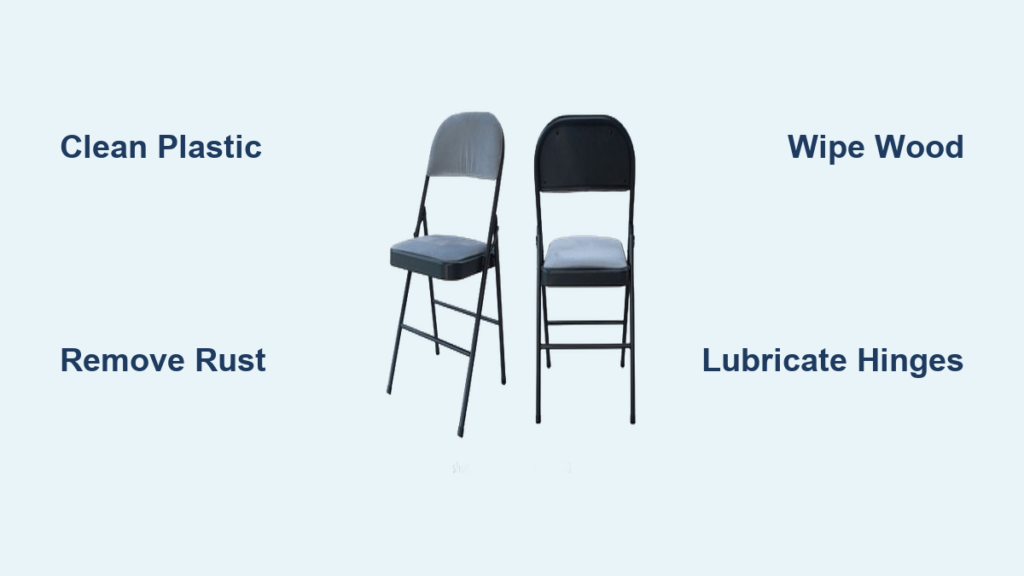
Spilled coffee has dried into your plastic folding chair? Your metal patio chairs look like they’ve weathered a sandstorm? You’re not alone—folding chairs endure constant abuse from outdoor storage, frequent setup/breakdown cycles, and unexpected spills at gatherings. The good news is that with the right cleaning approach, most chairs can look brand-new again using supplies you likely already have at home.
This guide cuts through the guesswork with proven cleaning methods tailored specifically to your chair’s material—whether plastic, metal, wood, or fabric. No more wondering if that vinegar solution will damage your antique wooden folding chairs or if baking soda will scratch your metal frames. You’ll learn exactly what works for each surface type, saving you time, money, and the frustration of trial-and-error cleaning.
Plastic Folding Chair Deep Clean That Restores Shine
Quick Daily Wipe-Down Method for Party Aftermath
When your plastic folding chairs return from a backyard gathering covered in food residue and drink spills, skip the harsh chemicals. Mix 1 gallon warm water with 2 tablespoons mild dish soap in a bucket. Grab a soft-bristled brush and scrub the entire chair surface—including the often-neglected underside where hinges collect debris. Pay special attention to textured surfaces that trap crumbs. Rinse thoroughly with clean water and dry immediately with a lint-free cloth to prevent water spots that make chairs look older than they are.
Stubborn Stain Removal for Mystery Spills
For those mysterious stains that won’t budge after regular cleaning, create a paste using 3 parts baking soda to 1 part water. Slather it on the affected area, let it sit for 15 minutes to break down the grime, then scrub with a soft brush. Mold or mildew growth? Fill a spray bottle with 1 cup white vinegar per gallon of water, mist the affected areas, wait 10 minutes, then scrub away the growth. This natural solution disinfects without damaging the plastic surface like harsher chemicals might.
Metal Folding Chair Rust Removal That Actually Works
Pre-Cleaning Inspection Before You Start
Before applying any cleaning solution, identify your metal type—steel, aluminum, or chrome—by checking manufacturer labels or examining the finish. Steel shows magnetic attraction while aluminum does not. Inspect joints and welds for rust spots, and look for powder coating that’s chipped or wearing thin. This critical step determines your cleaning intensity; aluminum requires gentler treatment than steel, and chrome needs special care to maintain its reflective surface.
Rust Removal Process Without Damaging Your Chair
For light surface rust on steel folding chairs, use 0000-grade steel wool lubricated with mineral oil. Rub gently in circular motions until rust disappears—never use regular steel wool as it’s too abrasive. For heavier rust, apply naval jelly following package instructions (typically 5-10 minutes dwell time), then scrub with a wire brush and rinse thoroughly. After rust removal, immediately apply a thin coat of car wax using circular motions and buff with a clean microfiber cloth to prevent immediate re-rusting.
Wood Folding Chair Cleaning That Preserves Finish

Wood Type Assessment Before Cleaning
Determine your wood species—oak, maple, pine, or beech—by examining grain patterns and color. Oak shows prominent open grain, maple is smoother with subtle grain, pine has visible knots, and beech has a tight, straight grain. Check the finish type (varnish, polyurethane, or oil) by testing a hidden area with a drop of water; if it beads up, it’s likely varnish or polyurethane, while water soaking in indicates an oil finish. This knowledge prevents cleaning disasters like removing protective finishes with inappropriate solutions.
Gentle Cleaning Technique for Delicate Surfaces
Mix 1 teaspoon Murphy’s Oil Soap per quart warm water in a spray bottle. Lightly mist a microfiber cloth (never spray directly on wood), then wipe following the wood grain. For carved details, use a soft toothbrush dipped in the solution. Dry immediately with a separate clean cloth—never let water sit on wood surfaces as it causes swelling and finish damage. For water rings that have already formed, apply a small amount of mayonnaise with a soft cloth, let sit 5 minutes, then wipe clean and dry thoroughly.
Fabric Upholstery Deep Clean Without Shrinkage

Stain Removal Matrix for Common Spills
Food/Drink Spills: Blot immediately with a clean cloth to absorb as much liquid as possible. Mix 1 teaspoon dish soap, 1 teaspoon white vinegar, and 2 cups cool water in a spray bottle. Lightly mist the stain, then gently blot from the outside inward to prevent spreading. Repeat until stain lifts, then rinse by misting with clean water and blotting dry.
Grease Stains: Cover the stain with cornstarch for 30 minutes to absorb oil, then vacuum thoroughly. Apply a small amount of degreaser directly to the stain, let sit 5 minutes, then blot with a clean, damp cloth. Avoid rubbing, which pushes grease deeper into fibers.
Ink Marks: Test rubbing alcohol in a hidden spot first to ensure colorfastness. Dip a cotton swab in alcohol and gently dab the stain, blotting frequently with a clean cloth to lift the ink. Replace the cotton swab as it becomes stained to avoid reapplying ink to the fabric.
Hinge and Mechanism Maintenance That Prevents Squeaks
Quick Lubrication Method for Smooth Operation
- Extend your folding chair fully and lock it in the open position
- Use compressed air to blast out dirt and debris from all hinge points
- Apply a light spray of silicone lubricant (not WD-40, which attracts dust) to all pivot points
- Open and close the chair 10-15 times to work the lubricant into the mechanism
- Wipe away any excess lubricant with a clean cloth to prevent attracting more dirt
Maintenance Schedule for Long-Lasting Chairs
High-use chairs (like those at community centers) need monthly lubrication to maintain smooth operation. Seasonal chairs require lubrication before and after storage periods. Outdoor chairs used regularly need attention every two weeks during the active season. This simple maintenance prevents the grinding sounds that indicate metal-on-metal contact and extends your chairs’ lifespan significantly.
Storage Preparation That Prevents Mold and Damage
Pre-Storage Cleaning Checklist
Complete a full cleaning cycle specific to your chair material before storage. Ensure 100% dryness—any residual moisture creates mold and mildew problems in enclosed storage. Apply protective treatments: car wax for metal frames, wood conditioner for wooden chairs. Inspect for damage and make small repairs now to prevent bigger issues later. Fold chairs properly according to manufacturer instructions to avoid putting stress on mechanisms during storage.
Ideal Storage Conditions for Maximum Longevity
Maintain storage temperatures between 50-80°F with 30-50% relative humidity to prevent material degradation. Store chairs folded to minimize space and reduce joint stress. Use breathable cotton covers—not plastic—which trap moisture and create new problems. Elevate chairs off concrete floors with wooden pallets to prevent moisture wicking from the ground, especially in basements or garages.
Safety Considerations for Effective Chair Cleaning
Chemical Handling Protocol That Prevents Accidents
Always wear nitrile gloves when using cleaning chemicals to protect your skin. Ensure good ventilation for all cleaning processes, especially when working with vinegar solutions or commercial cleaners. Never mix bleach with ammonia or vinegar, as this creates dangerous fumes. Store all chemicals securely away from children and pets, preferably in their original labeled containers.
Post-Cleaning Safety Check Before Use
Test chair stability by applying gradual pressure to all four legs before sitting. Verify locking mechanisms function properly by opening and closing the chair several times. Check for sharp edges or protruding hardware that may have been exposed during cleaning. Allow complete drying time before use to prevent dangerous slipping accidents, especially on plastic and metal surfaces.
Essential Supply Checklist for All Chair Types
Must-Have Tools for Professional Results
- Soft-bristled brushes in various sizes for different materials
- Minimum 12 microfiber cloths (lint-free and highly absorbent)
- Soft toothbrush for detailed cleaning around hinges and crevices
- 3-4 spray bottles for different cleaning solutions
- 2-3 gallon buckets for mixing solutions and rinsing
Cleaning Solutions to Stock in Your Supply Kit
- Mild dish soap (Dawn or equivalent for cutting grease)
- White vinegar (natural disinfectant and deodorizer)
- Baking soda (gentle abrasive for stubborn stains)
- Rubbing alcohol (for ink removal and disinfection)
- Murphy’s Oil Soap (safe for wood surfaces)
- Silicone lubricant spray (for hinges without attracting dirt)
Bottom Line: Your folding chairs can last decades with proper cleaning and maintenance. Start with the gentlest approach first—you can always escalate if needed—but never skip the critical step of matching your cleaning method to your chair’s specific material. The time you invest in proper chair care pays off in extended furniture life, improved appearance at events, and significant savings compared to frequent replacements. For the best results, establish a regular cleaning schedule based on use frequency rather than waiting until chairs look visibly dirty.


