
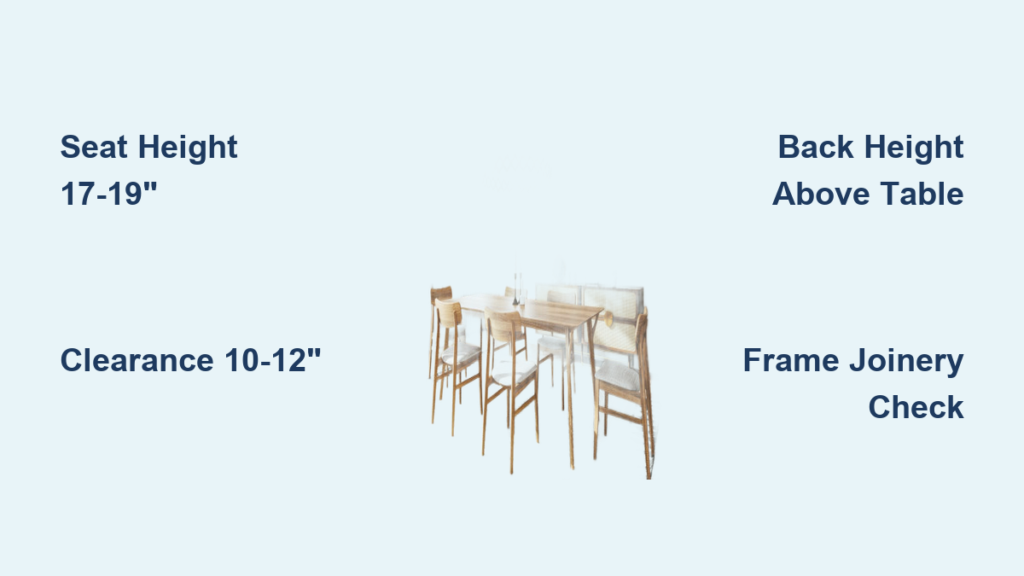
Few things derail a dinner party faster than chairs that pinch, wobble, or clash with your table. The right seats invite lingering conversations, while the wrong ones send guests scrambling for the sofa. In the next ten minutes you’ll learn the exact measurements, materials, and style tricks designers use to nail the perfect match—no guesswork, no returns. Master how to choose dining room chairs that blend comfort with style while surviving daily chaos from spilled wine to homework marathons.
Measure Twice, Order Once

Skipping precise measurements guarantees mismatched chairs that won’t slide under your table or leave guests hunched. Avoid costly returns by starting with your table’s vital stats before browsing showrooms.
Seat Height That Fits Your Table
Your chair’s seat height must create 10–12 inches of clearance between the seat top and tabletop underside. Most dining tables sit 28–31 inches high, so target chairs with 17–19 inch seat heights. If choosing upholstered seats, sit on the chair while measuring—thick cushions can compress up to an inch, stealing crucial clearance space. Pro tip: Place a ruler vertically from your table’s underside to the floor; subtract your ideal clearance (12 inches) to get your max seat height.
Width Rules for Table Shape
Rectangular tables need 18–20 inches per chair to prevent elbow collisions during meals. Round tables require slimmer 16–18 inch profiles so guests don’t bump shoulders in the circular flow. For extendable tables, prioritize lightweight or stackable chairs—you’ll thank yourself when adding leaves for holiday dinners. Always leave 2-inch gaps between adjacent seats to avoid cramping.
Back Height for Visual Balance
Chair backs should tower at least 2 inches above your tabletop; otherwise, the setting looks stubby and unfinished. Tall statement chairs work beautifully if they still slide fully beneath your table apron. Measure from the floor to the chair back’s highest point, then confirm it clears your table’s underside by at least 7 inches when pushed in.
Comfort That Lasts Past Dessert

Dining chairs endure marathon sessions—from brunch to board games. Prioritize ergonomics that prevent numb legs and back strain after 30 minutes.
Seat Depth & Angle
Aim for 16–18 inch seat depths. Sit against the backrest: your knees should align with the seat edge without pressing against it. Backrests angled between 100–110° let you sit upright yet relaxed through long meals. Avoid seats sloping forward—they’ll launch you toward your soup bowl during Zoom calls. Warning: Test chairs in-store; shallow seats (<15 inches) cut off circulation during extended dinners.
Cushion Density & Fabric
Foam density is non-negotiable: choose 1.8–2.5 lb high-resilience foam that rebounds after repeated use. For fabric, demand ≥30,000 double-rub Wyzenbeek ratings—this withstands daily abrasion from jeans and pet claws. Spill-prone households should grab solution-dyed acrylic or Crypton fabrics; they repel red wine and tomato sauce with one wipe. Pro tip: Run your hand over upholstery samples—rough textures snag clothing, while ultra-smooth fabrics feel sticky in summer.
Arm or Armless?
Armchairs at table ends create hierarchy but require 7 inches of clearance below the apron to tuck in fully. In tight spaces, armless chairs save precious inches—they slide flush under tables and allow easier movement. If choosing arms, ensure they’re upholstered with stain-resistant coatings; bare wood arms show every coffee ring.
Pick Materials for Real Life
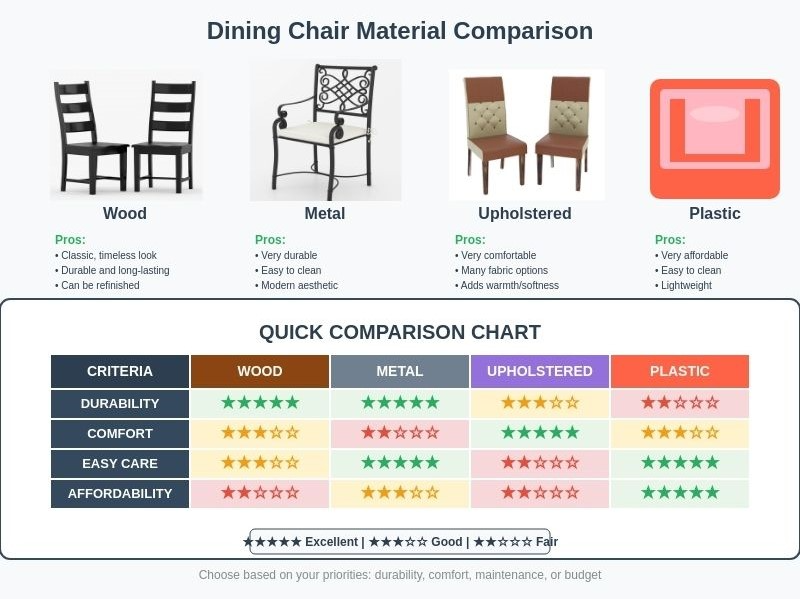
Your lifestyle dictates material survival. Skip delicate wicker if toddlers rule your home, or avoid light fabrics with shedding pets.
Kid-Proof & Pet-Proof
Wood: Oak, ash, or beech wipe clean with a damp cloth—no scratches from sticky fingers. Metal: Powder-coated steel shrugs off crayon marks and won’t snag cat claws. Leather: Semi-aniline protected leather feels luxurious yet survives paws and crayons. Darker fabrics or textured weaves hide pet fur between vacuum sessions.
Warmth vs. Weight
Rattan and cane add coastal texture but demand humidity control to prevent brittleness. If you rearrange furniture weekly, keep chairs under 20 pounds—lightweight designs won’t strain your back. Heavy hardwood chairs (like solid oak) stay put during lively dinners but resist frequent moves.
Maintenance Checklist
Weekly: Dust wood with microfiber cloths; vacuum upholstery crevices. Monthly: Tighten loose screws and rotate chairs quarterly for even wear. Spills: Blot immediately—never rub—and use only manufacturer-approved cleaners to avoid voiding warranties. Pro tip: Apply fabric protector spray to new upholstery; it creates an invisible shield against stains.
Match Style Without Overmatching
Clashing chairs ruin cohesion, but matching sets feel sterile. Designers mix styles strategically for depth.
Anchor With One Statement Piece
Place upholstered wingbacks at the head and foot positions, then flank them with simpler side chairs. Unify the mix through consistent leg finishes (e.g., all black metal) or matching stitching details on upholstery. This creates hierarchy without chaos.
Coordinate Undertones
Warm walnut table stains pair with cognac leather chairs; cool gray-washed oak tables harmonize with charcoal or navy fabrics. Repeat metal tones—brushed brass in chair legs should echo your light fixtures. Warning: Mixing warm and cool undertones (like cherry wood chairs with a cool gray table) creates visual tension.
Echo Shapes
Round tables love curved-back chairs that mirror their organic lines; square tables balance perfectly with geometric or spindle-back silhouettes. Extend cohesion into open-plan areas by repeating wood tones in bar stools—this ties your kitchen and dining zones together seamlessly.
Decode Table Compatibility
| Table Shape | Best Chair Style | Seats Typical Table |
|---|---|---|
| Rectangular | 18–20″ armless on sides, slim arms at ends | 6–8 |
| Oval | Curved-back chairs mirror table edge | 6–8 |
| Round | 16–18″ armless, compact designs | 4–6 |
| Square | Geometric spindle-backs soften sharp angles | 4–8 |
| Extendable | Lightweight stackables with open legs | Varies with leaf |
Critical check: Ensure chairs slide fully under your table without hitting legs, pedestals, or trestle bases. Test this by pushing chairs in completely—gaps indicate poor fit.
Spot Quality Before You Buy
Discount chairs wobble after six months. Invest in frames that outlast trends by checking hidden construction details.
Frame & Joinery
Flip chairs upside down. Look for mortise-and-tenon or dowel joints plus triangular corner blocks—these distribute weight evenly for 10+ year lifespans. Kiln-dried hardwood frames resist warping when spills happen. Warning: Stapled or glued joints fail quickly; avoid them.
Surface Protection
Non-marking glides protect hardwood floors from scratches. UV-resistant coatings prevent fading near sunny windows. Moisture-sealed lacquers block swelling from steamy dishwashers—run your fingernail along edges; rough spots indicate poor sealing.
Warranty Reality Check
Solid frames should carry 5–10 year warranties; upholstery covers 1–3 years. Ask about replacement cushions or re-upholstery programs—this lets you refresh chairs instead of replacing them entirely. Red flag: Warranties under 2 years signal flimsy construction.
Test Sit Like You Mean It
Showroom lighting hides flaws. Mimic real-life use with these in-store tests.
In-Store Trial
Bring a tape measure and your table height notes. Sit for 5–10 minutes—shift positions to check lumbar support. Press your palm into cushions; they should rebound instantly. Ensure seat edges don’t dig into thighs and backs don’t slope forward. Pro tip: Wear your thinnest jeans to test fabric abrasion resistance.
Lifestyle Filters
Kids: Prioritize rounded edges (no sharp corners) and wipe-clean surfaces. Pets: Choose textured weaves that hide fur or dark fabrics that mask paw prints. Work-from-home: Opt for high-density foam that won’t pancake after daily Zoom marathons. Elderly guests: Select chairs with arms for easier standing.
Quick Reference Checklist
- [ ] Seat height 17–19″; 10–12″ clearance to table underside
- [ ] 24″ width per person; 2″ gaps between adjacent seats
- [ ] Back height ≥2″ above tabletop for visual balance
- [ ] Fabric ≥30,000 double-rub rating for daily wear
- [ ] Mortise-and-tenon joints + corner blocks for frame strength
- [ ] Undertones match table (warm/cool) and room palette
- [ ] Chairs slide fully under table without hitting legs
- [ ] Warranty covers frame 5–10 years, upholstery 1–3 years
Nail these details and your dining chairs will look custom-made, feel cloud-level comfy, and survive everything from Thanksgiving dinners to homework marathons—no returns required. Remember: how to choose dining room chairs isn’t about picking the prettiest option—it’s about matching your table’s physics, your family’s chaos, and your design vision into one seamless seating solution. Test rigorously, measure twice, and invest in quality where it counts: your frame and joinery. Your future self will thank you when these chairs outlast three kitchen remodels.


