
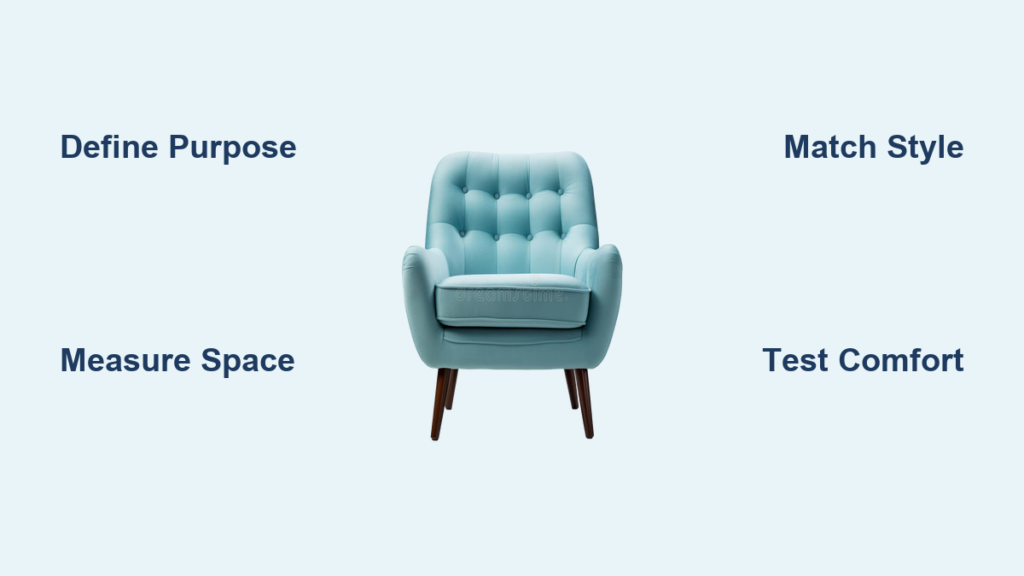
That empty corner in your living room isn’t just unused space—it’s a glaring gap in your home’s personality. Your sofa anchors the room, your rug ties everything together, but without the right accent chair, your space feels unfinished, like an outfit missing its statement necklace. Whether you’re hunting for a bold conversation starter or a cozy reading companion, how to choose accent chairs that elevate your decor—not clash with it—is the make-or-break factor. With overwhelming options flooding showrooms and e-commerce sites, this guide cuts through the noise with actionable steps to find your perfect match. You’ll learn exactly how to select chairs that harmonize with your lifestyle, budget, and existing furniture while avoiding costly mistakes that turn dream purchases into regretful returns.
Pinpoint Your Chair’s True Purpose
Before falling for velvet textures or sculptural silhouettes, define exactly how this chair will earn its place in your home. Your answer dictates every subsequent decision—from fabric durability to ergonomic needs. A chair for nightly reading demands lumbar support and high arms, while decorative-only pieces prioritize visual impact over comfort. For pet owners, rounded edges and stain-resistant performance fabrics prevent shredded upholstery disasters. In small apartments, lightweight frames with exposed legs create breathing room, whereas spacious rooms benefit from symmetrical pairs flanking a fireplace. Rank your needs: if daily use trumps aesthetics, prioritize cushion resilience and seat depth; if it’s purely for visual interest, go bold with color or shape. Never assume one chair serves all purposes—your “guest seating” chair should never sacrifice comfort for style if it doubles as a TV-watching spot.
What Your Lifestyle Reveals About Material Needs
- Families with kids/pets: Crypton or Sunbrella performance fabrics withstand spills and claws
- Frequent entertainers: Leather or wipe-clean vinyl for easy maintenance after parties
- Book lovers: Wingback chairs with 32+ inch seat depth for proper leg extension
- Minimalists: Monochromatic slipper chairs that visually recede into the space
Measure Twice, Buy Once

Nothing ruins the thrill of a new chair like discovering it blocks your doorway or dwarfs your coffee table. Start by measuring your sofa’s seat height—typically 16-18 inches—and ensure your accent chair sits within 4 inches for comfortable conversation flow. Use painter’s tape to map the chair’s footprint on your floor, checking critical clearances: maintain 14-18 inches between chair and coffee table for legroom, and 32+ inches in main walkways to avoid squeeze zones. For visual balance, the chair’s overall height should equal or slightly undercut your sofa’s back. In tight spaces, prioritize chairs with exposed legs—they create the illusion of space by allowing light to pass underneath. Always measure doorframes and stairwells before ordering online; nothing’s more frustrating than a chair that won’t fit through your entryway.
Master the Art of Visual Harmony

The most stunning accent chair fails if it visually battles your existing furniture. Successful styling walks the tightrope between complementing and cloning—select one or two unifying elements while allowing dramatic contrast elsewhere. Pair a structured leather sofa with a rattan chair for warmth against sleekness, or soften a boxy sectional with a curved barrel chair. Color strategies make or break cohesion: layer monochromatic shades (e.g., charcoal sofa with slate gray chair), add a muted pop (beige sofa with forest green chair), or go bold only if repeating the color elsewhere in pillows or art. Crucially, avoid matching chairs exactly to your sofa—it creates visual monotony. Instead, echo leg finishes or subtle undertones while letting fabrics or shapes contrast intentionally.
Material Pairing Pro Tips
- Velvet sofa + leather chair = instant luxury with edge
- Linen sectional + bouclé armchair = textured coastal calm
- Dark wood frames + metal-accented chair = modern warmth
- Always carry one material (like brass legs) through multiple pieces
Size and Proportion Decoded

Scale mistakes scream amateur design. A delicate slipper chair disappears against a massive sectional, while an oversized club chair swallows small spaces. Target 25-35 inch widths for most living rooms, with seat depth matching or slightly undercutting your sofa to avoid visual bulk. In rooms under 200 square feet, choose chairs under 30 inches wide with slender legs—skirted bases add visual weight that overwhelms. For symmetry in large spaces, deploy two matching chairs opposite the sofa, but never pair more than two in small rooms. Test visual weight by comparing leg styles: open-back designs feel airier than solid skirted versions. Remember—the chair should enhance your sofa, not compete with it for attention.
Material Matters: Choose Your Fighter
Your lifestyle—not Instagram trends—should dictate upholstery. White bouclé chairs transform into disaster zones with toddlers, while leather develops character with daily use. Performance fabrics like Crypton offer kid/pet-proof durability with surprising softness, while velvet requires careful placement away from high-traffic zones. Always inspect frame construction: solid hardwood (oak, walnut) outlasts engineered wood, and mortise-and-tenon joints beat staples. For long-term value, prioritize chairs with removable, washable covers in family spaces. Never skip the cleaning code check—look for “W” (water-safe) or “WS” (water/solvent) labels for easy maintenance. In sun-drenched rooms, avoid leather near windows to prevent cracking, and rotate cushions quarterly to even out wear.
Budget Reality Check
Accent chairs range from $150 impulse buys to $2,500 investment pieces, but price rarely predicts satisfaction. Entry-level ($150-400) chairs offer trendy looks but sacrifice frame durability and cushion resilience—ideal for style experiments in low-traffic areas. The sweet spot ($400-900) delivers hardwood frames, quality foam, and stain-resistant fabrics perfect for daily use. True investment pieces ($900+) feature designer silhouettes and lifetime frames worth considering for forever homes. Maximize value by shopping holiday sales for 20-30% discounts, snagging floor models for 50% off, and ordering fabric swatches to avoid color mismatches. Crucially, verify return policies—freight-paid returns save hundreds if the chair doesn’t meet expectations in your space.
Placement Perfection
The right chair in the wrong spot ruins everything. For conversation flow, angle chairs 15-30 degrees toward sofas instead of parallel placement. Create reading nooks by pairing wingbacks with adjustable floor lamps in window corners, ensuring 18 inches between chair and wall for lamp placement. In open-concept spaces, define zones by placing both sofa and chair front legs on the same area rug—this anchors the seating cluster visually. Never force chairs into awkward corners; if traffic flow requires repositioning, choose lightweight swivel models. In bedrooms, position slipper chairs at the foot of beds for dressing, or tuck compact armchairs into window bays for morning coffee rituals. Always test sightlines—ensure the chair doesn’t block key views or pathways.
Test Drive Before Committing
Online convenience demands in-store reality checks. When sitting, verify three critical factors: feet should touch the floor without straining (indicating proper seat depth), armrests should hit mid-forearm when elbows rest naturally, and cushions should spring back within 10 seconds of standing. Rock gently—any creaking or wobble reveals weak joints. For online orders, demand 30+ day return windows with prepaid shipping labels, and measure packaged dimensions against stairwells and doorframes. Order fabric swatches to check color accuracy under your home’s lighting—dye lots vary significantly across performance fabrics. Read verified reviews specifically mentioning “cushion sag” or “frame squeak” for real-world durability clues most listings omit.
Maintenance and Longevity
Preserve your investment with simple routines. Flip and rotate cushions every 3-6 months to prevent uneven wear—set phone reminders if needed. Immediately treat spills on performance fabrics with water-based cleaners (check “W” codes), but never saturate velvet or leather. Apply fabric guard spray to light-colored upholstery before first use, and condition leather every 6 months with pH-balanced products. Keep all chairs 12+ inches from direct sunlight to prevent fading, and vacuum caning/rattan weekly to avoid dust buildup. For immediate stain response, blot (never rub) and use club soda on most fabrics—keep a small bottle under your coffee table for emergencies.
Your Decision Roadmap
Cut through paralysis with this 8-step sequence: First, define the chair’s role (decorative vs. daily use). Second, measure seat height, width, and clearances. Third, choose color strategy—complement with monochromatic layers or contrast with bold accents. Fourth, select material based on traffic level (performance fabrics for kids/pets). Fifth, match scale to your sofa (height ≤ sofa back). Sixth, set budget tiers ($400-900 is the durability sweet spot). Seventh, test sit or order with verified return policies. Eighth, style with coordinating pillows and task lighting. The perfect accent chair isn’t just furniture—it’s the exclamation point that makes your space feel intentional. Trust measurements over emotions, prioritize your lifestyle needs, and remember: the best chair sparks joy every time you walk into the room.


