
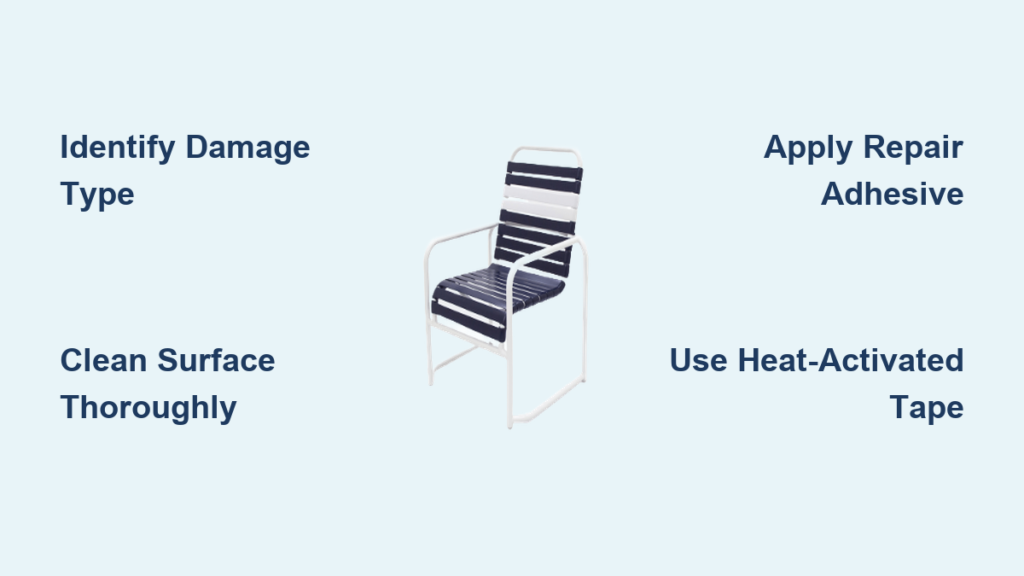
Nothing ruins a relaxing afternoon on the patio like discovering tears in your favorite vinyl chairs. Whether it’s a small puncture from a pet’s claw or extensive UV damage after years of sun exposure, damaged vinyl doesn’t have to mean replacing expensive outdoor furniture. Learning how to repair vinyl patio chairs properly saves you hundreds compared to buying new sets while extending your furniture’s life for years. With the right techniques and materials, you can restore your chairs to like-new condition for a fraction of replacement cost, regardless of damage severity.
This comprehensive guide walks you through proven repair methods for every type of vinyl damage, from tiny punctures to complete section replacements. You’ll discover which repair approach works best for each scenario, how to match colors seamlessly, and the maintenance secrets that prevent future problems. Most repairs take less than two hours with basic tools, making how to repair vinyl patio chairs an essential skill for any homeowner.
Identify Your Vinyl Damage Type Correctly
Before grabbing any repair materials, you need to identify exactly what you’re dealing with. Different damage types require specific approaches, and using the wrong method can make problems worse or create visible repairs that stand out.
Recognize Common Vinyl Failure Patterns
Surface cracks appear as fine hairline fractures that haven’t broken through the vinyl layer. These often feel rough to the touch but don’t expose underlying foam. Complete tears are full-thickness splits you can see through, exposing the chair’s interior foam or frame. Delamination shows as bubbling or separation between vinyl and backing material, creating soft, squishy areas.
UV damage manifests as brittle, powdery, or severely faded areas—typically on chair backs and arms that face direct sunlight. Chemical damage creates distinct spots where pool chemicals, harsh cleaners, or other substances have broken down the vinyl’s protective coating. This type often appears as discolored patches with a sticky or tacky surface.
Document Damage Locations and Sizes
Take photos of each damaged area under bright light to track progress. Note the size of tears using a measuring tape—this determines whether you’ll patch (under 2 inches) or replace sections (over 2 inches). Pay special attention to stress points: seams, corners where vinyl wraps around frames, and areas where people typically sit or rest their arms. These high-wear zones require reinforced repairs to prevent immediate re-damage.
Select the Right Repair Materials for Your Chair

Choosing the right materials makes the difference between repairs that last months versus years. Skip the generic hardware store options and invest in quality supplies designed specifically for outdoor vinyl.
Match Patches and Adhesives to Your Damage
Self-adhesive vinyl patches come in pre-cut sizes (2×2, 4×4, and 6×6 inches) and rolls. These work best for small to medium tears under 2 inches and require minimal preparation. Heat-activated repair tape needs 250-300°F activation using a household iron or heat gun—perfect for curved surfaces where standard patches won’t adhere properly. Liquid vinyl compound creates flexible, paintable repairs that blend seamlessly with original material, ideal for surface cracks and small punctures.
For adhesives, use vinyl-specific contact cement with UV resistance for outdoor applications. Marine-grade vinyl adhesive offers superior weather resistance—essential for poolside chairs exposed to chlorine and moisture. Always check the temperature requirements: most adhesives need 65-85°F surface temperature for proper bonding, so avoid repairing in direct sunlight or extreme temperatures.
Fix Small Punctures Under 1/4″ in Under 30 Minutes
Small punctures from pet claws or sharp objects are the easiest repairs and often completely invisible when done correctly. This quick fix takes less than 30 minutes with basic household items.
Properly Clean and Prep the Area
Start by cleaning the damaged area with 70% isopropyril alcohol and lint-free cloths. Remove all dirt, sunscreen residue, and oxidation—any contamination prevents proper adhesion. Let the area dry completely for minimum 30 minutes at 70°F. Rushing this step causes most repair failures. For textured vinyl, use a soft-bristled toothbrush to work cleaner into the pattern without damaging the surface.
Apply Clear Repair Adhesive Correctly
Using a toothpick or small brush, apply tiny amounts of clear vinyl repair adhesive to the puncture. Work from the center outward to prevent air bubbles. Cover with transparent repair film (included in most kits) and apply firm pressure using a roller tool or smooth spoon handle. The key is consistent pressure—don’t press harder in the center than the edges. Cure for 24 hours before using the chair. Test the repair by gently pressing around the puncture—properly fixed areas feel solid with no give.
Repair Medium Tears 1/4″ to 2″ with Professional Results
Medium tears require patches but remain manageable for DIY repairs. The key is creating clean edges and proper patch placement to prevent premature lifting.
Create Perfect Patch Edges
Trim loose or ragged edges using sharp scissors or a razor blade. Create straight, clean tear lines—jagged edges cause patches to lift prematurely. Cut a vinyl patch extending 1 inch beyond the tear on all sides, rounding corners to prevent peeling corners. For curved areas, use a template made from cardboard to ensure perfect patch shape before cutting your vinyl.
Apply Patch with Professional Technique
Apply vinyl adhesive to both the patch backing and chair surface. Wait 5-10 minutes until adhesive becomes tacky—this varies by product, so check instructions carefully. Align the patch starting from one end, smoothing progressively to eliminate air pockets. Use a seam roller, applying firm pressure along the entire patch perimeter. Work slowly—repositioning after contact damages the adhesive bond. For best results, apply a thin layer of liquid vinyl compound over the patch edges to seal and blend with the original surface.
Replace Large Vinyl Sections Over 2″ Effectively
When damage exceeds 2 inches or involves multiple tears, section replacement provides better long-term results than extensive patching. This advanced repair requires careful measurement but delivers professional results.
Remove Damaged Vinyl Sections Safely
Cut along existing seams using a seam ripper or sharp utility knife. Remove the damaged vinyl without cutting into the underlying foam or frame. Measure the removed section precisely, adding 1/2 inch seam allowance on all sides. Create paper templates for curved sections—never try to cut complex curves freehand. For intricate patterns, photograph the area and print the image at actual size to use as your template.
Install New Vinyl with Proper Technique
Select matching vinyl from the same manufacturer when possible. Marine-grade vinyl (0.06-0.08 inches thick) works for most patio chairs. Use heavy-duty outdoor thread and UV-resistant thread when sewing. Maintain original seam locations for proper fit—changing seam placement creates stress points that fail prematurely. Before final stitching, do a dry fit to ensure proper tension—vinyl should be taut but not stretched. For non-sewn repairs, use heat-activated tape along the edges for a seamless appearance.
Prevent Future Damage with Proper Maintenance
Proper maintenance prevents 90% of vinyl damage before it starts. Implement these protocols immediately after completing repairs to maximize your chair’s lifespan.
Apply Protective Treatments Regularly
Use vinyl protectant containing UV inhibitors and moisturizers. Apply every 60-90 days during regular use periods. In harsh UV environments (desert, beach), increase frequency to every 30 days. Apply with lint-free cloths, ensuring complete coverage without pooling in seams. For best results, clean chairs with mild soap and water before applying protectant to remove dirt that could get sealed in.
Store Chairs Correctly During Off-Season
For extended non-use periods, clean thoroughly and apply protective treatment. Store in dry locations away from direct sunlight. Use breathable furniture covers—plastic tarps trap moisture and promote mildew. Elevate chairs slightly off ground level to prevent moisture absorption through frame contact. For metal frames, place a barrier like cardboard between chair legs and storage surface to prevent rust transfer.
Essential Tools Checklist for Every Repair

Build a complete repair kit before starting—missing tools mid-repair causes rushed work and poor results. A basic kit costs under $50 but pays for itself after your first repair.
Must-Have Basic Repair Tools
- Sharp scissors and utility knife with fresh blades for clean cuts
- Seam roller and plastic squeegee for bubble-free adhesive application
- 70% isopropyl alcohol and lint-free cloths for proper surface prep
- Flexible measuring tape and marking pens for accurate measurements
- Small paintbrushes for precise adhesive application in tight spots
Professional Results with Advanced Equipment
- Variable temperature heat gun with precision nozzles for heat-activated repairs
- Heavy-duty sewing machine for major section replacements (optional but recommended)
- Bar clamps for maintaining pressure during curing of large patches
- Silicone texture pads to match original vinyl patterns for seamless repairs
Quality vinyl repairs restore both function and appearance to your patio chairs. While small punctures take under an hour, major section replacements might require a weekend. The investment in proper materials and techniques pays dividends in extended furniture life and maintained aesthetic appeal. Start with small repairs to build confidence, then tackle larger projects as your skills develop.
When executed correctly, your repaired chairs will withstand normal use for 2-5 years before requiring touch-ups. Test repairs after 24 hours by applying gradual pressure—start with light weight and increase incrementally to ensure durability. Keep your repair kit stocked with essential materials so you can address new damage immediately before small issues become major problems. Following these proven methods for how to repair vinyl patio chairs ensures your outdoor furniture remains comfortable, attractive, and functional for seasons to come.


