
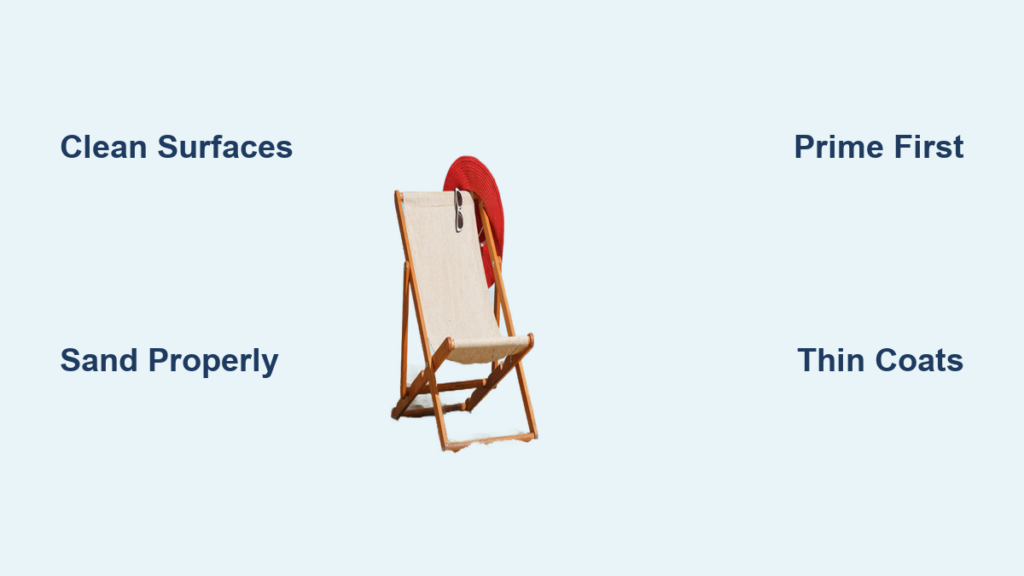
Your deck chairs have endured seasons of sun, rain, and wind, leaving them faded and peeling—the perfect candidates for a paint transformation. Instead of replacing these outdoor essentials, a strategic approach to painting deck chairs can restore both beauty and protection. Whether you’re working with weathered wood Adirondack chairs or corroded metal bistro sets, the right technique turns tired furniture into vibrant focal points that withstand the elements.
This guide delivers exactly what you need to know about painting deck chairs successfully. You’ll discover material-specific preparation methods that ensure paint adhesion, learn which weather-resistant finishes actually deliver on their promises, and master application techniques that prevent premature peeling and cracking. Most importantly, you’ll gain confidence that your painted deck chairs will look great for seasons to come.
Eliminate Surface Contaminants Before Painting Deck Chairs

Remove All Dirt and Mildew from Chair Surfaces
Start your painting deck chairs project by thoroughly cleaning all surfaces. Mix warm water with a few drops of mild dish soap and use a stiff nylon brush to scrub every inch, including hard-to-reach crevices where grime accumulates. Pay special attention to areas beneath armrests and between slats where moisture and dirt combine to create stubborn stains.
For persistent mildew, create a gentle cleaning paste using equal parts baking soda and water. Apply this mixture with a soft cloth, let it sit for 15 minutes to break down the mildew, then rinse thoroughly with clean water. Never reach for bleach when preparing wooden deck chairs—it weakens wood fibers and creates long-term adhesion problems for your paint job.
Sand Chair Surfaces to Create Paint-Gripping Texture
Proper sanding makes or breaks your painting deck chairs results by creating the microscopic texture paint needs to bond permanently. For wooden chairs, begin with 120-grit sandpaper to remove rough spots and old finish, then switch to 220-grit for a smooth final surface. Always sand parallel to the wood grain to avoid creating visible scratches that show through your paint.
Metal deck chairs require a different sanding approach. Start with coarse 80-grit paper to remove rust and flaking paint, then progress to 150-grit for a uniform surface. After sanding, wipe away all dust using tack cloths or microfiber towels slightly dampened with mineral spirits—this critical step prevents trapped debris from creating a rough finish under your new paint.
Fix Structural Damage Before Applying Paint
Address any cracks, holes, or deep scratches before you start painting deck chairs. For wooden chairs, fill imperfections with exterior-grade wood filler, pressing it firmly into the damaged areas. Metal chairs need epoxy-based fillers specifically designed for outdoor metal surfaces. Allow all repairs to cure completely—typically 2-4 hours—before lightly sanding them flush with surrounding surfaces.
Replace any corroded hardware before painting. Rusty bolts and screws will continue deteriorating beneath your new paint, eventually bleeding through and ruining your finish. Upgrade to stainless steel hardware that won’t compromise your painting deck chairs project over time.
Select the Right Paint for Outdoor Deck Chairs

Match Paint Type to Chair Material for Maximum Durability
When painting deck chairs, choosing the appropriate paint type based on material is non-negotiable for lasting results. For wooden chairs, select exterior acrylic latex paint with built-in primer—this combination provides excellent adhesion while allowing wood to breathe, preventing trapped moisture that causes peeling. High-quality brands like Behr Premium Plus offer 25-year fade resistance warranties you can trust.
Metal deck chairs require direct-to-metal (DTM) paints or oil-based enamels specifically formulated for outdoor use. Rust-Oleum Protective Enamel creates a durable, rust-preventative barrier that withstands temperature fluctuations. Always choose gloss or semi-gloss finishes for painted deck chairs—they resist moisture better and make cleaning easier than matte finishes.
Strategize Your Color Choices for Function and Style
When painting deck chairs, consider both aesthetics and practicality in your color selection. Light colors like white, beige, and light gray reflect heat and stay cooler to the touch—essential for metal chairs in sunny climates. Darker shades like navy or forest green hide dirt better but absorb heat, potentially becoming uncomfortable during peak sun hours.
Coordinate your painted deck chairs with your existing outdoor color scheme. Coastal settings shine with crisp whites and ocean blues, while rustic environments benefit from earthy greens and warm browns. For maximum versatility, choose neutral base colors for your chairs and add pops of color through cushions and accessories that you can change seasonally.
Calculate Exact Paint Quantities to Avoid Shortages
A single deck chair typically requires about 1/4 quart of paint for complete coverage, including primer. However, purchasing a full quart ensures you have enough for touch-ups and potential second coats. Always buy 10-15% more paint than your initial calculation to account for surface texture variations and unexpected absorption.
For multiple chairs, calculate total surface area by measuring each major section’s length and width. One quart of paint covers approximately 100 square feet with two coats. This precise calculation prevents frustrating mid-project shortages while avoiding excessive leftover materials that may not match perfectly during future touch-ups.
Master the Painting Process for Flawless Results
Apply Primer Specifically Formulated for Your Chair Material
Never skip priming when painting deck chairs—this step doubles your paint job’s lifespan. Use exterior wood primer for wooden chairs and rust-inhibiting metal primer for metal frames. Apply primer with smooth, even strokes following the wood grain or maintaining consistent direction on metal surfaces.
Allow primer to cure completely before applying topcoats—typically 2-4 hours for water-based primers and 8-12 hours for oil-based versions. Lightly sand between coats using 220-grit paper to remove any raised grain or brush marks, creating an ultra-smooth foundation that prevents visible imperfections in your final paint job.
Perfect Your Brush Technique for Professional Application
Load your brush with enough paint to cover 2-3 inches of surface area, avoiding the temptation to overload it. Start painting from the top of the chair and work downward, allowing gravity to help you catch drips. Use long, smooth strokes in the same direction to maintain a wet edge and prevent lap marks.
For intricate areas like spindles or decorative elements, switch to a smaller brush with light pressure. Work methodically around each detail, ensuring complete coverage without excessive paint buildup that leads to drips. Immediately wipe away any drips with a dry brush or cloth—don’t try to brush them out once they begin forming.
Apply Multiple Thin Coats for Superior Protection
When painting deck chairs, two thin topcoats always outperform one thick coat. Thin coats dry faster, level better, and resist cracking through seasonal temperature changes. Plan your application sequence: paint chair backs first, then seats, followed by legs and support structures—this prevents accidentally touching freshly painted areas while reaching other sections.
Allow 4-6 hours between coats for water-based paints, or a full 24 hours for oil-based formulations. Sand lightly between coats only if needed to remove minor imperfections. This patience pays off with a smooth, professional finish that withstands years of outdoor exposure.
Extend the Life of Your Painted Deck Chairs
Establish a Simple Seasonal Maintenance Routine
Inspect your painted deck chairs each spring for signs of wear, particularly on sun-exposed surfaces and high-contact areas. Clean with mild soap and water to remove winter grime before the busy season begins. Apply marine-grade paste wax annually to create an invisible barrier against UV rays and moisture—this 30-minute task can double your paint’s lifespan.
Address small chips or scratches immediately with touch-up paint rather than waiting for damage to spread. Keep a dedicated touch-up kit with leftover paint and small brushes stored in a cool, dark place for quick repairs throughout the season.
Store Painted Deck Chairs Properly During Off-Seasons
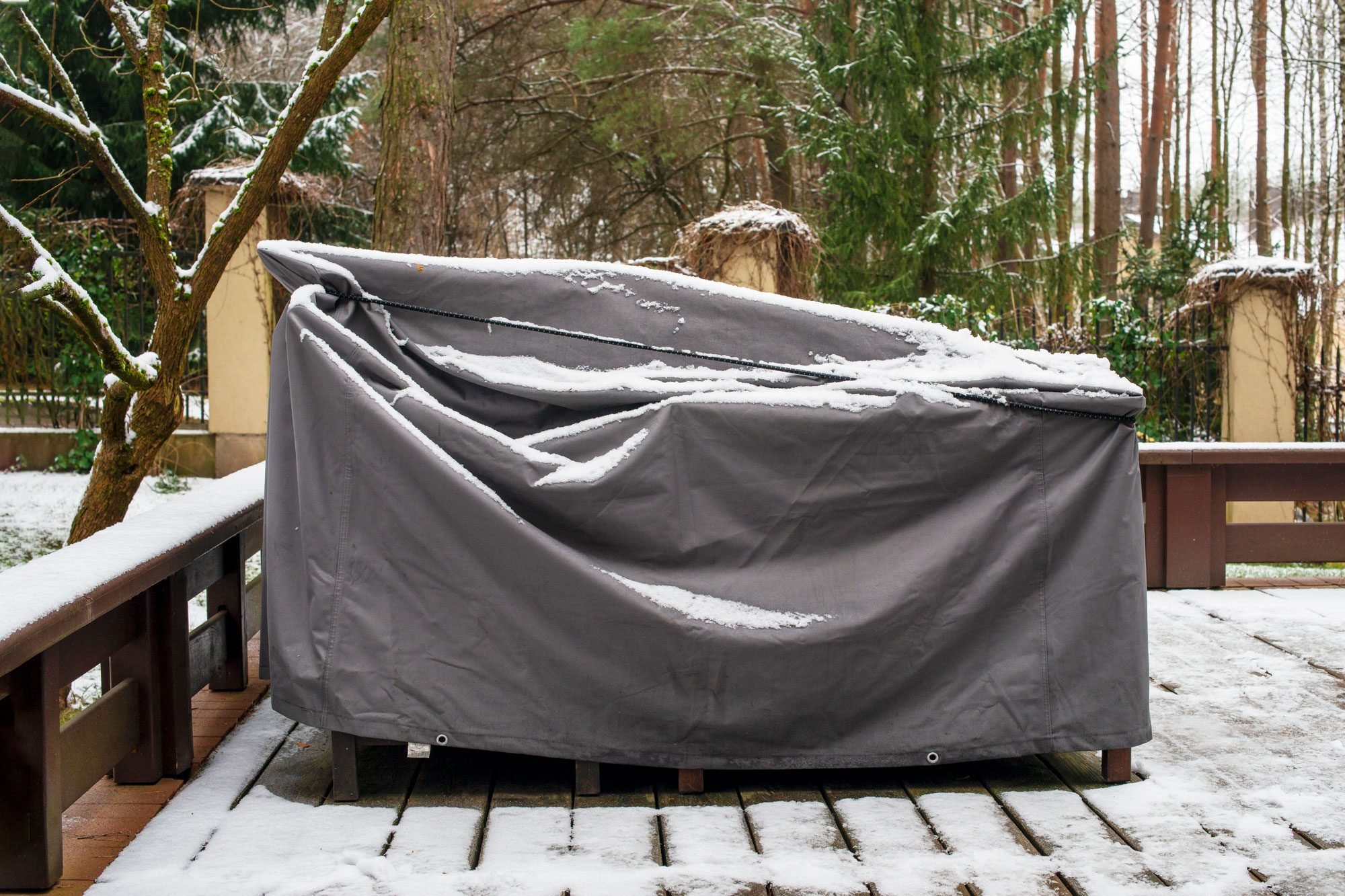
During harsh weather months, store painted deck chairs in dry, protected areas whenever possible. If indoor storage isn’t an option, use breathable furniture covers that prevent moisture buildup while allowing air circulation. Elevate chairs slightly off ground level to avoid standing water damage to painted surfaces.
Never stack freshly painted chairs for at least 30 days—paint continues curing even when dry to the touch. When stacking becomes necessary, place soft cloths between contact points to prevent scratching or paint transfer between chairs.
Transforming your deck chairs through proper painting techniques creates beautiful outdoor furniture that withstands seasons of use while reflecting your personal style. By following these systematic approaches—from thorough preparation to ongoing maintenance—you’ll enjoy stunning results that enhance your outdoor living space for years to come. The investment of time in correctly painting deck chairs pays dividends in longevity, appearance, and continued enjoyment of your outdoor sanctuary.


