
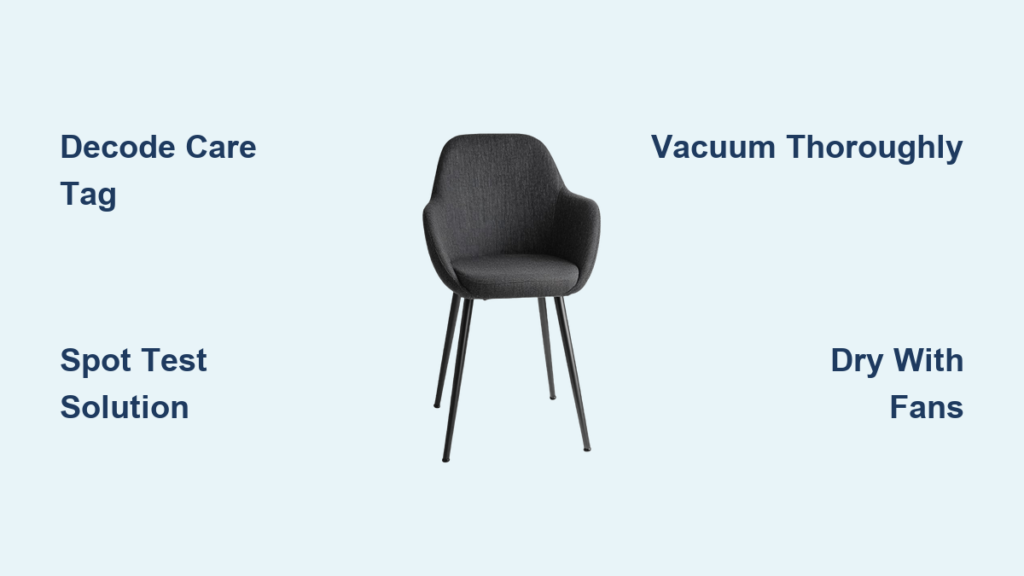
That sticky ring around your morning coffee mug just migrated to your favorite armchair. Or maybe your toddler decided your cream sofa was the perfect canvas for grape juice art. Before you panic or book a $150 professional cleaning appointment, know this: 90% of fabric chairs can be safely cleaned at home with the right method. The critical mistake most people make? Ignoring fabric care codes and dousing everything with water. This guide reveals exactly how to wash fabric chairs using techniques approved by upholstery specialists—saving you money while preventing costly damage. You’ll learn to decode hidden care tags, eliminate stubborn stains like pet accidents and ink, and dry chairs in half the time without water rings.
Decode Your Chair’s Hidden Care Tag Before Cleaning

Find and Interpret Cleaning Codes Correctly
Flip your chair upside down and feel along the bottom rail or under seat cushions for a small fabric tag. These codes dictate your entire cleaning approach—ignore them and you risk permanent damage:
- W: Water-based cleaners safe (most common for modern microfiber)
- S: Solvent cleaners ONLY (typical for silk or delicate blends)
- WS: Water or solvent options (common for polyester blends)
- X: Professional cleaning required (vintage fabrics, some velvets)
Critical action: If you can’t locate a tag, perform the water drop test. Dampen a white cloth with cool water and press firmly on a hidden area for 30 seconds. If color transfers to the cloth, your fabric is not water-safe—use solvent methods only.
Spot Test Like a Professional
Even with a “W” code, always test solutions on your chair’s bottom corner:
1. Apply 1 tsp of your cleaning mix to a white cloth
2. Press firmly for 10 seconds (don’t rub!)
3. Check for color bleeding or texture changes
Red flag: If the cloth shows dye transfer, switch to a milder solution or solvent method immediately.
Essential Pre-Cleaning Steps Most People Skip

Vacuum Like Your Chair Depends on It (It Does)
Start with a dry vacuum pass using these targeted techniques:
– Crevice tool along seams to extract embedded crumbs
– Upholstery brush attachment in slow overlapping strokes
– Lift cushions to vacuum underneath seat frames
Pro check: Run your palm across the fabric after vacuuming. If you feel grit, repeat—scrubbing dirty fabric scratches fibers permanently.
Set Up a Damage-Free Workspace
Move chairs outdoors if possible. Indoors? Lay down plastic sheeting (not newspaper—it bleeds ink) and position fans before cleaning. Remove all cushions and label them with tape (“Left Back,” “Seat”) to avoid reassembly errors.
Water-Safe Cleaning Method for W/WS Fabrics
Mix the Perfect No-Ring Solution
Combine in a spray bottle:
– 1 quart cool water (hot water sets stains)
– 1 tsp clear dish soap (Dawn Platinum works best)
– 1 tbsp white vinegar (boosts stain lifting)
Application secret: Spray solution onto a microfiber cloth, not directly on fabric. Work in 12″x12″ sections using clockwise circles with medium pressure. Stop when the cloth shows visible dirt—over-scrubbing frays fibers.
Rinse and Dry to Prevent Musty Odors
After cleaning each section:
1. Wipe with a clean water-dampened cloth (no soap!)
2. Press with dry white towels until no moisture transfers
3. Position two box fans at 45-degree angles to the chair
4. Rotate chair every 2 hours for even drying
Critical timing: Most chairs dry in 6-8 hours with fans. If still damp after 12 hours, sprinkle baking soda on cushions to absorb moisture overnight.
Solvent Cleaning for S-Code Delicate Fabrics
Apply Dry Cleaning Fluid Without Rings
For silk, rayon, or vintage fabrics:
1. Dampen a lint-free white cloth with dry cleaning solvent
2. Blot stains from the edge inward (never rub!)
3. Flip cloth to a clean section after each pass
4. Wipe entire area with a dry cloth to remove residue
Ventilation rule: Open two windows with fans creating cross-breeze. If you smell solvent after 2 hours, the area isn’t ventilated enough—move outdoors immediately.
Target Stains Before They Set Permanently

Coffee and Red Wine Emergencies
Fresh spill: Blot with paper towels, then apply club soda with upward strokes. The carbonation lifts stains without spreading.
Dried stain: Mix 1 tbsp hydrogen peroxide + 1 tbsp dish soap. Apply for 5 minutes max, then rinse thoroughly. Never use on silk!
Pet Accidents That Smell Like Failure
For urine or vomit:
1. Blot excess with paper towels
2. Cover stain with baking soda for 15 minutes (neutralizes acid)
3. Vacuum completely
4. Spray enzyme cleaner (like Nature’s Miracle) and wait 10 minutes
Warning: Heat from steam cleaners bonds proteins to fibers—use only cold methods.
Deep Clean Chairs in 3 Phases (No Rental Machine Needed)
Phase 1: Pre-Treat Like a Pro
- Spray 1:1 vinegar-water mix on all visible stains
- Let sit 7 minutes (time it—longer damages fibers)
- Take “before” photos for motivation
Phase 2: Systematic Section Cleaning
Work top-to-bottom in this order:
1. Backrest top (dripping won’t affect cleaned areas)
2. Seat back
3. Seat cushion
4. Arms and base
Pro move: Use a soft-bristled toothbrush for tufted buttons and seams.
Phase 3: Residue-Free Drying
After final rinse:
– Roll a dry towel over fabric to absorb moisture
– Place folded towels under cushions overnight
– Run ceiling fan on low for 24 hours
Test dryness: Press white cloth firmly against fabric. Any dampness means wait 4 more hours.
Avoid These 3 Costly DIY Mistakes
Over-Wetting That Causes Water Rings
How it happens: Spraying too much solution or reusing dirty rinse water.
Fix: After cleaning, place dry towels under stained areas and apply weight (like heavy books) to wick moisture out.
Sticky Residue From Dish Soap Overuse
Signs: Chair attracts dirt faster than before cleaning.
Solution: Mix 1 cup cool water + 1 tsp white vinegar in a spray bottle. Mist affected areas and blot immediately.
Color Bleeding From Wrong Solutions
Prevention: Always check if fabric is colorfast during spot testing. If dye runs, use only dry solvent methods.
Professional Cleaning vs. DIY: When to Call Experts
DIY Success Checklist
- Your chair has W or WS codes
- Stains are smaller than a credit card
- You caught spills within 24 hours
- You own a portable cleaner like Bissell Little Green
Call a Pro Immediately If:
- Fabric shows code X or no tag (risk of shrinkage)
- Stains cover over 30% of the chair
- You smell persistent odors after cleaning
- Chair is antique or has embroidery/details
Safety Steps That Prevent Health Risks
Chemical Handling Protocol
- Wear nitrile gloves (latex reacts with solvents)
- Keep windows open with fans blowing outward
- Store cleaners in original containers with child locks
- Never mix vinegar and hydrogen peroxide—creates corrosive acid
Emergency Response
If you feel dizzy during cleaning:
1. Step outside immediately
2. Rinse skin with cool water for 5 minutes
3. Call Poison Control (1-800-222-1222)
Maintain Fresh Chairs With 5-Minute Habits
- Daily: Vacuum arms and seat with handheld attachment
- Weekly: Blot spills within 60 seconds using paper towels
- Monthly: Rotate cushions to distribute wear evenly
- Every 6 months: Spray Scotchgard Fabric Protector
Your fabric chairs don’t need expensive professional cleanings to stay fresh. By decoding care tags first, using targeted stain treatments, and drying strategically, you’ll extend their life by years. Remember: Water rings form from improper rinsing—not the cleaning itself. If you followed just one tip from this guide, let it be the 10-minute spot test—it prevents 95% of DIY disasters. For code X fabrics or stubborn pet odors, a $75 professional consultation beats a ruined heirloom chair. Now go rescue that coffee-stained armchair—you’ve got this.


