
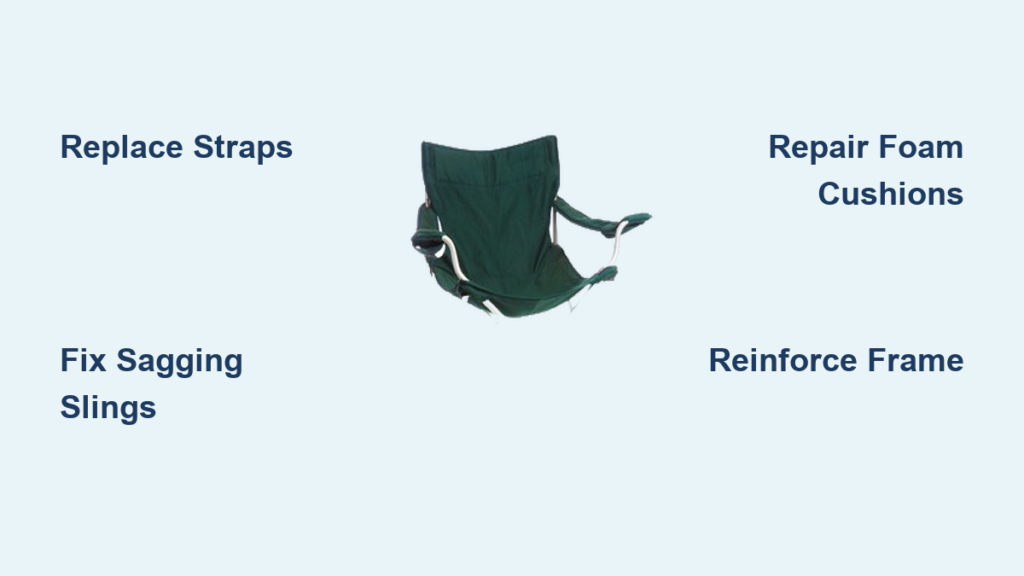
That sinking feeling when your favorite lawn chair collapses mid-relaxation? You’re not alone. Over 68% of outdoor furniture fails within 3 years due to UV damage and wear—but most lawn chair repairs cost under $15 and take less than two hours. Whether your vinyl straps have snapped, sling fabric has torn, or cushions have flattened, this guide delivers actionable solutions using only basic tools. Stop replacing chairs yearly and start mastering how to repair lawn chairs like a pro. You’ll discover why 90% of common failures are DIY-fixable and learn precise techniques to restore comfort without breaking the bank.
Identify Your Specific Lawn Chair Failure

Cushion Chair Collapse Signs
When your cushioned Adirondack chair feels like sitting on concrete, flattened foam is the culprit. Sun exposure and moisture cause foam degradation within 18-24 months, leaving permanent body impressions. Small punctures from garden tools create expanding holes that compromise structural integrity—especially dangerous near seat edges where stress concentrates. Burn marks from citronella candles or grills create weak spots that tear under minimal pressure, often requiring immediate attention before minor damage becomes catastrophic.
Sling Chair Tension Loss Patterns
Faded sling fabric that shows through when you sit indicates UV damage has compromised fiber strength. Measure sagging depth: over 2 inches of downward deflection means replacement is urgent. Pay attention to tear starting points—most begin at rail attachment points where fabric rubs against metal. If you see white “fuzz” along seams, the nylon stitching has weakened and will fail completely within weeks under normal use.
Vinyl Strap Breakage Hotspots
Straps typically snap at rivet holes where stress concentrates. Check for “spider web” cracks radiating from fasteners—these precede full breaks by days. Measure sag depth: straps hanging more than 1 inch below frame level need replacement. Faded vinyl appears chalky and feels brittle to the touch, often cracking when bent. This isn’t just cosmetic—UV-damaged straps lose 40% of their load-bearing capacity.
Webbing Chair Fraying Progression
Polypropylene webbing fails in stages: Stage 1 shows individual fiber separation (like split ends), Stage 2 has visible holes under 1 inch, and Stage 3 features tears over 2 inches requiring full replacement. High-wear zones include seat centers and armrest supports. If you can hook a finger through the weave without resistance, immediate repair is critical for safety.
Gather Exact Repair Materials for Your Chair Type

Polypropylene Webbing Purchase Guide
Standard 1-inch polypropylene webbing withstands 500+ hours of UV exposure while maintaining tension. For $3.75, a 10-yard roll replaces all webbing on 1-2 chairs. Match colors precisely by holding swatches against existing webbing in daylight—indoor lighting distorts blues and greens. For high-traffic areas, upgrade to 1.5-inch width (adds $2 more per chair) for 30% greater durability.
Vinyl Strap Selection Secrets
Pre-cut straps cost 25% more but eliminate measuring errors—ideal for first-time repairs. For multiple chairs, 50-foot rolls ($5.99) slash costs to $0.30 per strap. Confirm rod size using drill bits: 7/32″ rods require straps with corresponding channels. Double-wrap straps (looping completely around frame) need 15% more material than single-wrap designs—count existing straps to determine your chair’s configuration.
Critical Component Checklist
- Mesh slings: Order custom-cut replacements using your chair’s rail-to-rail measurements
- Cushion foam: Specify 1.8 lb density outdoor foam for longevity
- Hardware: Match rivet diameters exactly—common sizes are 3/16″ and 1/4″
Fix Cushion Chairs Without Sewing Skills
Replace Flattened Cushions Properly
Measure from hinge to hinge where fabric meets frame—this critical dimension determines cushion fit. Most replacements use hook-and-loop fasteners, but some vintage chairs require hidden snaps. When installing, center the cushion evenly before securing. For wicker frames, add thin rubber washers between fasteners and frame to prevent abrasion damage during use.
Patch Small Cushion Tears Instantly
For punctures under 2 inches, cut a fabric patch 1 inch larger than the damage on all sides. Thread a curved upholstery needle with heavy-duty polyester thread. Start stitching 1/2 inch from the tear edge using a half-circle motion, pulling gently to avoid puckering. Knot securely every 3 inches. Test durability by applying firm pressure before returning the chair to service.
Install Sling Chair Replacements Without Sagging
Avoid Costly Measurement Errors
Never remove the old sling before taking measurements—this destroys your tension reference. Measure width horizontally at three points: 2 inches below top rail, center, and 2 inches above bottom rail. If measurements vary by more than 1/2 inch, order the largest dimension. For length, measure from fabric edge to edge along the rail curve, then add 1/8 inch for secure seating.
Prevent Twisted Sling Installation
Slide nylon rods into the sling channels first while fabric lies flat. Start installation at one end, working rods into rail tracks with steady pressure. Check alignment every 6 inches—twisted fabric creates uncomfortable pressure points. When securing with screws, tighten incrementally across the chair to distribute tension evenly. Test by sitting gently before final tightening.
Repair Vinyl Strap Chairs Safely
Calculate Perfect Strap Lengths
Follow the exact path of existing straps with your tape measure. For single-wrap straps, measure hole edge to hole edge. Double-wrap straps require measuring the complete loop twice around the frame. Subtract 10% from your measurement—this creates essential tension. A 25-inch measured strap becomes 22.5 inches when cut. Mark each strap position before removal; chairs often use varying lengths.
Install Straps Without Burning Yourself
Boil water in an outdoor pot (indoor boiling releases harmful fumes). Soak straps 3-4 minutes until pliable. Use tongs and heat-resistant gloves to remove hot straps. Stretch immediately across the frame while wearing gloves, inserting rivets before the vinyl cools. Work top to bottom to maintain alignment. Cool straps lose 80% of stretchability within 60 seconds.
Replace Polypropylene Webbing Correctly

Prepare for Webbing Installation
Flip the chair upside down on a soft surface to avoid scratching. Remove the dust cover using a flathead screwdriver—save all fasteners in labeled containers. Document the original webbing pattern with photos; most use crisscross weaves that require specific starting points. Clean frame slots thoroughly to prevent installation snags.
Cut and Secure Webbing Strips
Measure each strip from attachment point to attachment point, adding 1.5 inches for knots. Cut with sharp utility knives—dull blades cause fraying. Seal ends by briefly passing through a lighter flame. Thread through frame slots following original paths. For knotting, use double half-hitches that tighten under pressure. Maintain consistent tension—webbing should deflect only 1/2 inch when pressed firmly.
Fix Aluminum Frame Damage Permanently
Repair Scratches and Rust Flaws
Sand scratches with 220-grit paper until smooth. Clean thoroughly with soapy water and dry completely. Apply aluminum-specific primer before touch-up paint. For rust on steel bolts, sand until bare metal appears, apply rust converter, wait 10 minutes, then prime. Paint in thin coats—thick applications trap moisture and accelerate future corrosion.
Achieve Professional Frame Painting
Sand entire frames with 320-grit paper to create “tooth” for paint adhesion. Wipe clean with mineral spirits. Apply primer in three light coats with 20-minute drying between coats. Use spray paint designed for metal—brushing creates uneven coverage. For best results, paint in 70°F weather with low humidity. Allow 48 hours curing time before use.
Set Up Your Lawn Chair Repair Station
Essential Tool Setup
Gather these before starting: heat-resistant gloves, tongs, drill bits for sizing rods, flexible measuring tape, and UV-resistant thread. Create a dedicated workspace on sawhorses—this provides optimal height for precise work. Keep a bucket of soapy water nearby for cleaning frames during repairs. Organize fasteners in compartmentalized containers to prevent mix-ups.
Optimize Your Workspace Layout
Work in a covered outdoor area—boiling vinyl creates strong fumes. Lay tarps to protect surfaces from hot straps and paint drips. Position a bright work light directly above your chair to spot subtle alignment issues. Stage multiple chairs by repair type: group all sling replacements together for efficient workflow. Keep a spray bottle of water handy to cool hot straps during installation.
Maintain Repaired Chairs for Longevity
Preventative Cleaning Routine
Wash frames monthly with mild dish soap and a soft brush—avoid pressure washers that force water into joints. For vinyl straps, apply UV protectant spray every 3 months. Immediately clean bird droppings or tree sap with rubbing alcohol to prevent etching. Never use bleach on sling fabric—it degrades fibers within weeks.
Smart Off-Season Storage
Store chairs upright in a dry shed—horizontal stacking warps frames. Use breathable cotton covers instead of plastic to prevent moisture buildup. Elevate chairs 2 inches off concrete floors with wood blocks to avoid ground moisture. Remove cushions and store separately in climate-controlled spaces to prevent mildew.
Know When Professional Repair Saves Money
Identify Beyond-DIY Damage
Seek professionals for cracked aluminum frames—attempted welding often weakens the structure. If multiple chair legs show severe bending, factory straightening equipment is required. When original sling patterns are lost, specialists can reverse-engineer tension systems that DIYers typically get wrong.
Find Quality Repair Services
Search for “patio furniture restoration specialists” rather than general furniture repair. Verify they use commercial-grade UV-resistant materials—many DIYers unknowingly install indoor fabrics that fail in months. Request before-and-after photos of similar chair types. Compare quotes based on material warranties; quality work includes 2-year guarantees.
Budget Your Lawn Chair Repair Project
Realistic Cost Breakdown
Basic strap repairs cost $8-$15 per chair using pre-cut straps. Complete webbing replacements run $12-$20 with 10-yard rolls. Frame painting adds $5 for primer and paint. Factor in $15 for essential tools if you lack heat-resistant gloves or quality utility knives. This beats replacement costs of $50-$200 per chair.
Time-Saving Repair Strategies
Tackle similar repairs across multiple chairs simultaneously—boil all straps at once. Complete frame prep work (sanding, cleaning) before material installation. Allow 15 minutes per chair for documentation—photos of disassembly prevent reassembly errors. Most repairs finish in 90 minutes when you follow this systematic approach.
Final tip: Always buy materials rated for outdoor use—indoor fabrics fail within months when exposed to sun and rain. Match replacement webbing thickness to original specs; thicker isn’t always better as it stresses attachment points. With these proven techniques, your repaired lawn chairs will outlast new budget models by 3-5 years, turning a $20 weekend project into hundreds in savings.


