Your new leather chair shouldn’t crack after a year or peel like cheap wallpaper. Yet most buyers don’t realize that “leather chair” covers everything from heirloom-quality full grain to disposable bonded leather that disintegrates within months. Understanding the types of leather chairs available is your only defense against costly mistakes. This guide reveals exactly what you’re buying—so you can choose seating that ages gracefully instead of becoming landfill. You’ll discover how top grain leather handles coffee spills better than full grain, why bonded leather is a ticking time bomb, and which leather type actually saves you money over 10 years.
Full Grain Leather Chairs: The Heirloom Standard
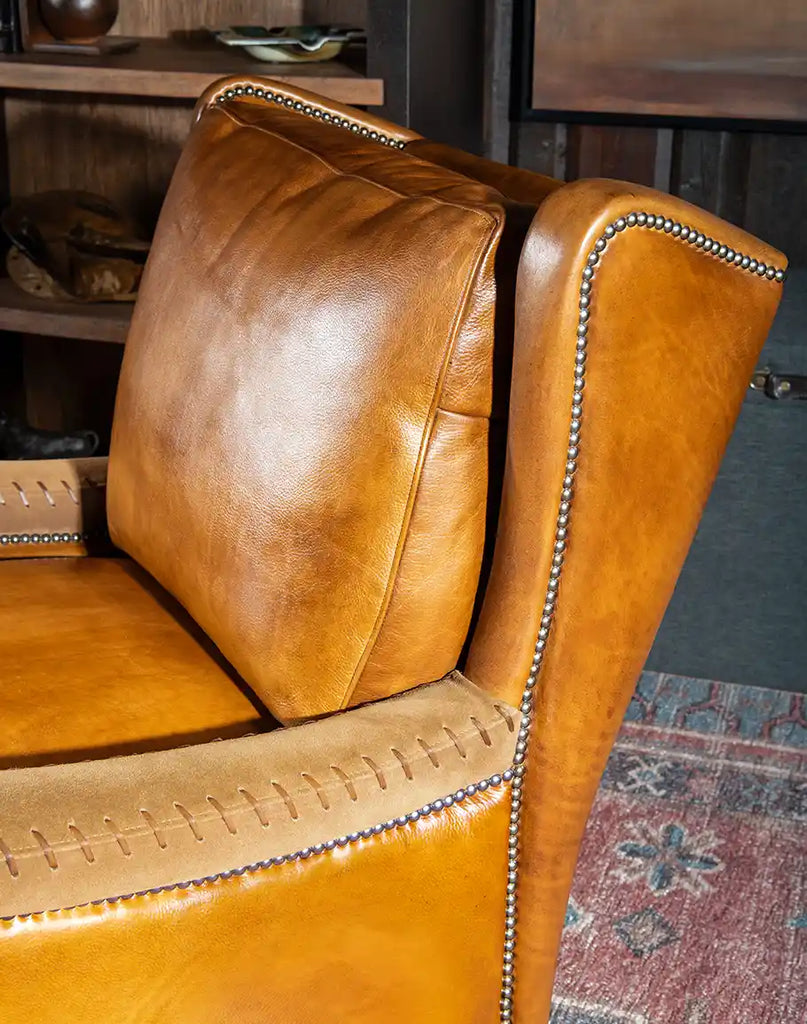
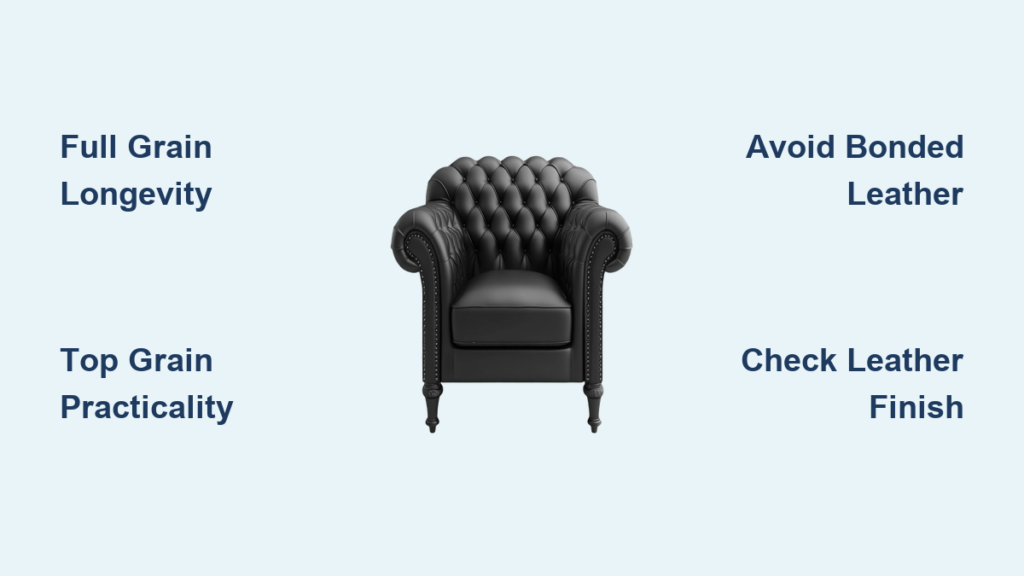
Full grain leather chairs represent the undisputed champion of longevity in types of leather chairs. Manufacturers use the hide’s complete top layer with only hair removal and natural dye application—preserving every scar, wrinkle, and grain variation. This minimal processing creates leather thick enough to withstand decades of use while developing a rich patina that tells your story. Unlike cheaper alternatives, full grain breathes naturally to prevent moisture buildup that causes cracking.
Why full grain outperforms other leather chair types:
– Natural texture variations prove authenticity (run your fingernail across it—you’ll feel unique ridges)
– Highest tensile strength among all leather chair types, resisting tearing from daily use
– Initial stiffness molds perfectly to your body within 6-12 months
– Develops buttery softness impossible in corrected grains
– Spills absorb slowly, reducing water damage risk
Choose full grain for executive office chairs or recliners where 20+ years of use justifies the $1,500-$8,000 investment. Avoid it in high-spill environments—its lack of protective coating means stains become permanent character marks.
Top Grain Leather Chairs: The Practical Powerhouse
Top grain leather chairs dominate the sweet spot between luxury and daily practicality among types of leather chairs. By sanding the hide’s surface to remove imperfections, manufacturers create uniform texture while preserving 90% of the leather’s natural strength. The result? Immediate comfort without full grain’s break-in period, plus options for protective finishes that repel real-world hazards.
Critical top grain variations for chair buyers:
– Semi-aniline top grain: Light protective coating maintains natural feel while resisting light stains (ideal for dining chairs)
– Protected top grain: Heavy polymer finish creates wipe-clean surfaces perfect for home offices
– Nubuck: Sanded surface delivers velvet-like luxury but requires obsessive maintenance (avoid for daily drivers)
With 10-15 year lifespans and prices 20-30% below full grain ($800-$3,000), top grain leather chairs suit most households. Look for “corrected grain” labeling—it indicates artificial embossing that masks the leather’s true quality.
Corrected Grain & Split Leather: The Budget Compromise
When full or top grain exceeds your budget, corrected grain and split leather chairs offer genuine leather benefits at accessible prices. Corrected grain starts as top or split leather sanded smooth, then embossed with artificial grain patterns for uniform appearance. Split leather uses the hide’s fibrous lower layer after top grain removal, creating naturally suede-like textures.
Real-world tradeoffs:
– Corrected grain ($400-$1,500) hides flaws but feels less supple than top grain
– Split leather ($300-$1,200) provides softness at lower cost but lacks top grain’s durability
– Both resist stains better than full grain due to protective finishes
– Avoid split leather on high-friction seating surfaces—it wears faster
These types of leather chairs work well for occasional-use accent chairs but won’t withstand 8-hour office days. Always verify the backing—genuine split leather shows a fibrous suede underside, while bonded leather reveals uniform plastic.
Bonded Leather vs Faux Leather: The Durability Divide

Bonded leather chairs represent the most dangerous trap in types of leather chairs. Made from 10-20% leather scraps glued to fiber backing and coated in polyurethane, they peel within 2-5 years as the synthetic layer separates. Spot them by their unnaturally uniform grain, plastic-like backing, and prices under $300 for “leather” office chairs. Once bonded leather cracks, repair is impossible—replacement is your only option.
Modern faux leather alternatives have evolved:
– PU-based vegan leather: Flexible enough for daily chair use (5-8 year lifespan)
– Microfiber leather: Mimics top grain’s breathability at mid-range prices
– PVC leather: Waterproof but stiff—best for spa chairs, not living rooms
While faux leather won’t develop patina, high-quality versions ($500-$1,000) outperform bonded leather long-term. For ethical buyers, PU microfiber offers the closest experience to real leather without animal products.
Nubuck & Royalin: Luxury’s Fragile Darlings
Nubuck leather chairs deliver cloud-like comfort through a unique sanding process that creates velvety surfaces from top grain leather. But this luxury comes with brutal maintenance demands—spills must be blotted instantly, weekly brushing prevents matting, and monthly waterproofing is non-negotiable. Expect a 5-10 year lifespan only with obsessive care. Skip nubuck if you have pets or kids; its delicate nap shows every scratch.
Royalin leather chairs (exclusive to Ekornes) offer a fascinating alternative: natural pebbled grain with visible markings preserved through minimal processing. Though requiring quarterly moisture treatments, Royalin develops exceptional comfort in ergonomic chairs. Its $2,000+ price reflects rarity—this specialty leather appears only in high-end Scandinavian furniture.
Leather Finishes: Your Chair’s Lifespan Decider
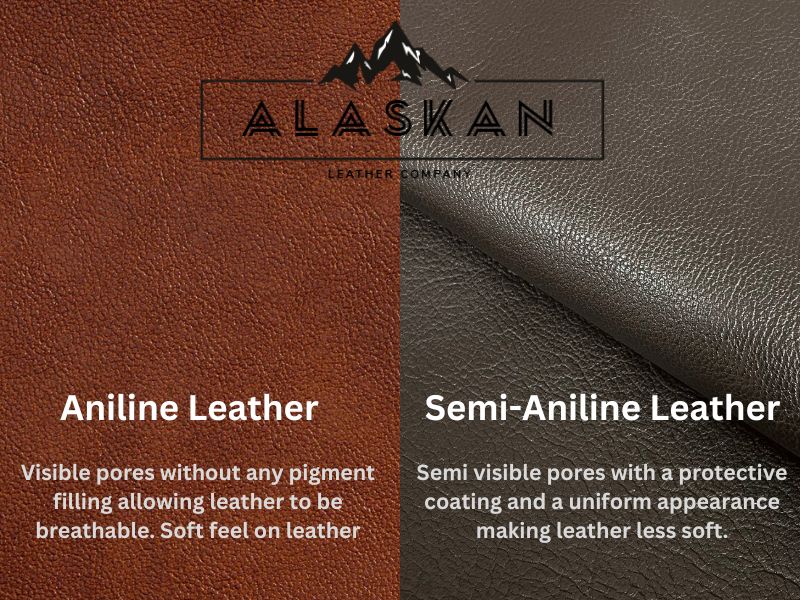
The finish applied to types of leather chairs matters more than the base leather grade for daily usability. Aniline-dyed chairs ($1,800+) showcase raw beauty but stain permanently—best for formal living rooms. Semi-aniline chairs ($1,200-$2,500) add light protection while maintaining natural feel, making them ideal for family rooms. Protected/pigmented finishes ($900-$2,000) create wipe-clean surfaces perfect for home offices through heavy polymer coatings.
Critical finish comparison:
– Aniline: Warm, porous, develops fastest patina (high maintenance)
– Semi-aniline: Balanced protection—resists light spills without plastic feel
– Protected: Cool-to-touch surface repels coffee but feels less “leathery”
For most households, semi-aniline top grain delivers the optimal blend of aesthetics and practicality among types of leather chairs.
Leather Match Construction: The Smart Budget Hack

Leather match chairs solve the cost-quality dilemma by using genuine leather only on high-contact areas (seat, back, arms) with color-matched vinyl on sides and back panels. This construction slashes prices 25-40% while preserving leather comfort where it matters. Quality versions hide seams at natural transition points and maintain <5% color variance.
Spot quality leather match chairs:
– Leather portions warm to your touch; vinyl stays cool
– Seams align with chair contours (not random stitching)
– No visible texture mismatch at transition zones
– Vinyl feels substantial, not flimsy
At $600-$1,800, these types of leather chairs deliver 80% of full-leather luxury for half the price—ideal for home theater seating.
Avoid These 3 Leather Chair Buying Traps
Most leather chair failures stem from these preventable mistakes:
1. The “genuine leather” myth: This label often means low-grade split leather, not premium material. Always ask for the specific grade.
2. Italian leather obsession: Origin doesn’t guarantee quality—focus on finish and thickness instead of country of origin.
3. Maintenance-free assumptions: Even protected leather needs quarterly conditioning. Bonded leather’s “easy care” claims hide its inevitable disintegration.
When testing chairs, perform the water drop test: real leather absorbs slowly while protected finishes bead liquids. If the salesperson refuses this demo, walk away.
Your Perfect Leather Chair Match
Choosing among types of leather chairs starts with your reality—not aspirations. For 8-hour office use, protected top grain withstands daily wear better than delicate full grain. Pet owners should prioritize split leather’s scratch resistance over nubuck’s fragility. Families need semi-aniline finishes that wipe clean after juice spills.
Remember: a $1,000 corrected grain chair properly maintained will outlast a neglected $3,000 full grain chair. Measure your lifestyle honestly—your chair should enhance your home, not become another chore. Invest in types of leather chairs that match how you actually live, and you’ll enjoy decades of comfort instead of years of regret.