
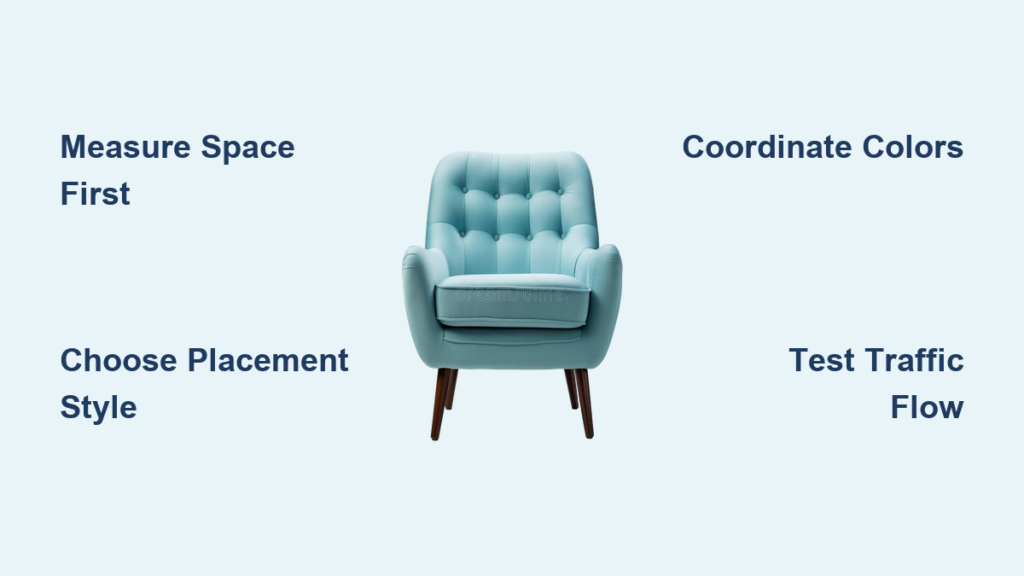
You’ve finally found that perfect pair of accent chairs—the ones that make your heart skip a beat every time you walk past them. But now you’re standing in your living room, tape measure in hand, wondering exactly where to place them without disrupting your carefully curated space. Sound familiar? You’re not alone. Decorating with two accent chairs transforms ordinary rooms into designer-worthy spaces when done right. These strategic seating additions create conversation zones, balance your layout, and give your home that intentional, collected look you’ve been craving. Let’s dive into the exact steps to make your two accent chairs work harmoniously in any room.
Measure Your Space First
Before you drag those chairs across your hardwood floors, grab your measuring tape and get serious about dimensions. Getting the spacing wrong turns what should be a cozy conversation area into an awkward furniture obstacle course that nobody wants to navigate.
Room Assessment Checklist
Start with these critical measurements that separate amateur arrangements from professional-looking setups:
– 30-36 inches minimum between chair centers for comfortable conversation (anything less feels cramped)
– 18-24 inches from chair fronts to coffee tables or ottomans (close enough for easy access, far enough to prevent tripping)
– 8-10 feet from chairs to main sofa in living rooms (maintains intimate conversation distance)
– 36-inch clearance for natural walking paths in bedrooms (prevents that frustrating sideways shuffle)
Traffic Flow Testing
Walk through your intended chair placement area as if you’re carrying a tray of drinks. Can you move naturally between doorways and existing furniture without contorting your body? If you’re doing the sideways shuffle just to get around your chairs, they’re too close to pathways. Mark potential spots with painter’s tape—this visual guide saves you from furniture-moving fatigue and multiple rearrangements.
Choose Your Chair Placement Style

Here’s where your two accent chairs transform from mere seating to powerful design elements. The right placement creates entirely different vibes depending on your room’s purpose and your personal style.
Symmetrical Arrangements
Classic Face-to-Face: Position identical chairs directly across from each other with a small table or ottoman centered between them. This creates instant formality—perfect for traditional spaces or when you want that boutique hotel sophistication. The key is maintaining perfect alignment; even a slight angle throws off the symmetry that makes this arrangement so visually pleasing.
L-Shape Configuration: Place both chairs perpendicular to your sofa, forming an L-shape. This setup encourages conversation while maintaining an open feel in smaller rooms. Keep the angle between chairs and sofa at 90-120 degrees for optimal flow—anything sharper creates a cramped feeling, while wider angles disconnect the seating area.
Asymmetrical Layouts
Mixed Styles, Balanced Weight: Pair different chair styles that share similar visual weight. Think: a chunky leather club chair with a streamlined linen barrel chair. Position one angled toward your sofa and the other near a window or fireplace. The secret here is ensuring both chairs have comparable visual impact—don’t pair a delicate slipper chair with an oversized wingback.
Purposeful Imbalance: Create intentional visual interest by placing one chair as a reading corner and the other as part of your main seating group. This works especially well in eclectic or contemporary spaces where strict symmetry feels too rigid. Add a connecting element like matching pillow colors or similar wood tones to tie the disparate pieces together.
Color and Pattern Coordination
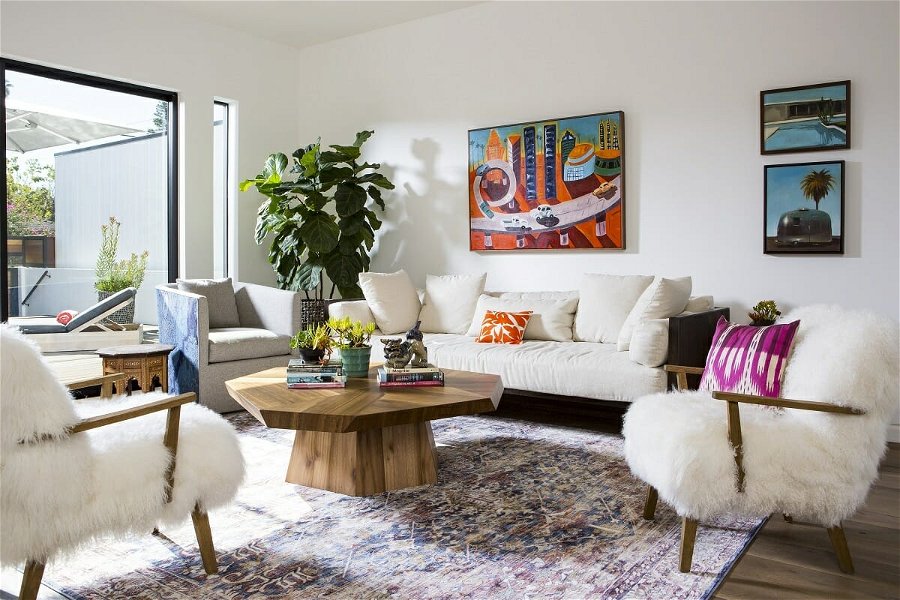
Your chairs don’t need to match exactly, but they should feel intentionally coordinated rather than randomly selected. This is where many homeowners trip up when decorating with two accent chairs.
Monochromatic Schemes
Select chairs in the same color family but different textures. Picture this: a navy velvet barrel chair paired with navy linen wingback. The color unites them while the texture creates depth. Ensure at least two other room elements share this color—maybe your rug and artwork—to maintain cohesion without looking matchy-matchy. This approach creates sophisticated depth that evolves as light changes throughout the day.
Complementary Color Strategies
Choose colors opposite on the color wheel for maximum impact. Burnt orange and teal chairs create stunning contrast, but balance these bold choices with neutral surroundings. Introduce both colors through smaller accessories—throw pillows, artwork, or a patterned rug—to tie everything together without overwhelming the space. The trick is using one color as dominant (70%) and the other as accent (30%) to prevent visual competition.
Room-Specific Placement Strategies
Living Room Layouts
Conversational Grouping: Create a U-shape with your sofa and two chairs, using a coffee table as anchor. Maintain 18 inches between chair arms and sofa arms for visual breathing room. Position chairs 10-15 degrees toward the sofa rather than directly perpendicular—this subtle angle feels more natural for conversation.
Fireplace Flanking: Place identical chairs on either side of your fireplace, angled 10-15 degrees toward each other. This creates natural balance while drawing attention to your fireplace as the room’s focal point. Add small side tables between chairs and fireplace for functional balance without blocking the hearth.
Window Framing: Position chairs to capture a view, angled toward each other with a shared ottoman. Ensure chair backs don’t exceed window sill height—nothing ruins a gorgeous view like chair backs cutting through your sightlines. This arrangement works especially well in rooms with garden views or cityscapes.
Bedroom Applications
Reading Nook Creation: Position two chairs near a window with a small round table between them. Add floor lamps behind each chair for task lighting. Ensure 24-inch clearance from your bed’s footboard for comfortable movement. For smaller bedrooms, select armless chairs that tuck neatly under the table when not in use.
Dressing Area Enhancement: Place chairs at your bed’s foot or in a corner to create a dressing area. Choose chairs with arms—they provide clothing support and feel more substantial than armless options. Opt for chairs with washable fabrics since they’ll likely hold dirty clothes before laundry day.
Styling and Accessorizing
Pillow and Throw Coordination
Use the 60-30-10 rule for pillows: 60% solid colors from your room’s palette, 30% subtle patterns, 10% bold accent patterns. Size matters—18-inch squares for standard chairs, 20-22 inches for oversized pieces. Drape throws casually over one chair arm, ensuring they complement but don’t match pillows exactly. For year-round versatility, select neutral chair upholstery and change pillows/throws seasonally.
Lighting Considerations
Position floor lamps 58-64 inches tall behind chairs for optimal reading light. For pairs, use matching lamps for symmetry or coordinating styles for a collected look. Lamp shades shouldn’t exceed chair back width by more than 2 inches on each side—this prevents the “headlight effect” that distracts from conversation.
Avoid Common Decorating Mistakes
Scale Disproportion Problems
Test visual weight by stepping back—do your chairs feel substantial enough to anchor their space without overwhelming it? Avoid pairing oversized chairs with delicate furniture or vice versa. When in doubt, photograph your arrangement and assess the proportions objectively. A common mistake is selecting chairs that are too small for the room, making the space feel disjointed.
Traffic Flow Disruption
Maintain 30-inch walkways between chair arrangements and doorways. Avoid blocking natural light from windows or creating awkward navigation patterns. If family members instinctively take detours around your chairs, they’re in the wrong spot. Remember that furniture placement should enhance how you live in the space, not restrict it.
Budget-Friendly Styling Solutions
High-Low Mixing
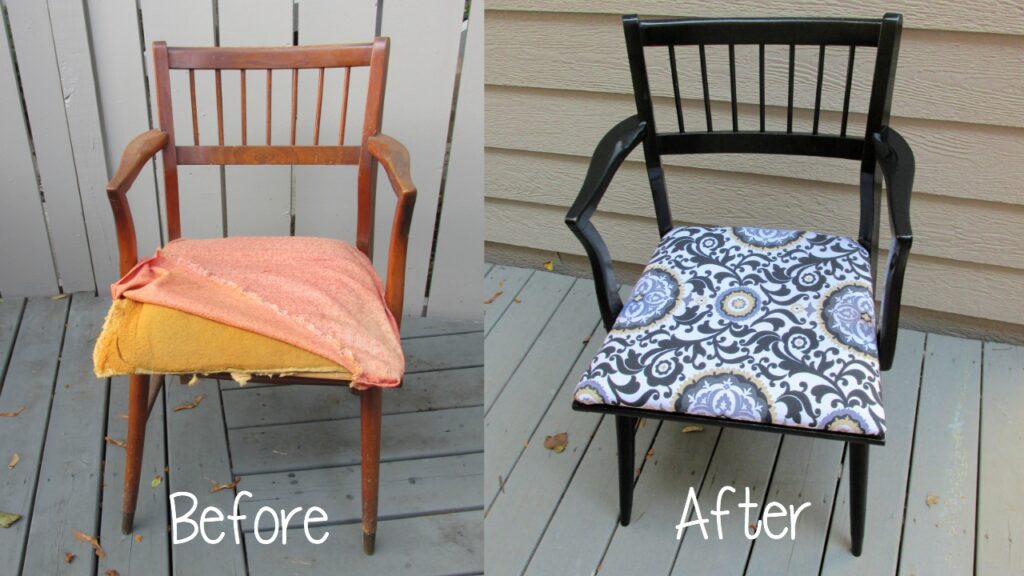
Invest in one quality chair and pair with a budget find painted or reupholstered to coordinate. Thrift store finds become stunning accent chairs with professional reupholstering ($200-400 per chair). Use slipcovers to update existing chairs seasonally—this lets you experiment with bold colors without permanent commitment. For high-traffic areas, select performance fabrics that mimic luxury materials at a fraction of the cost.
DIY Enhancement Hacks
Add nailhead trim to plain chairs for custom appearance. Replace basic legs with turned wood or metal options. Create custom pillow covers using high-end remnant fabrics for luxury appearance at fraction of cost. A weekend project can transform a basic chair into a designer piece that looks like it belongs with its more expensive partner.
Final Placement Checklist
Before declaring your arrangement complete, run through this quick test:
– Can you walk naturally around both chairs without adjusting your path?
– Do the chairs create a conversation-friendly distance (30-36 inches between centers)?
– Are they positioned to take advantage of room’s best features (fireplace, view, etc.)?
– Do they feel balanced with your other furniture when viewed from multiple angles?
– Can you access side tables without awkward reaching or standing up?
Live with your arrangement for one week, then adjust angles and spacing based on actual use. Sometimes the perfect spot reveals itself only after you’ve spent time in the space. Take photos at different times of day to see how lighting affects the visual balance.
Your two accent chairs are more than extra seating—they’re design opportunities that can define your entire room’s personality. Position them thoughtfully, style them intentionally, and they’ll become the pieces everyone gravitates toward. When you master how to decorate with two accent chairs, you create spaces that feel both inviting and intentionally designed, transforming ordinary rooms into conversation-worthy spaces that reflect your unique style.


