
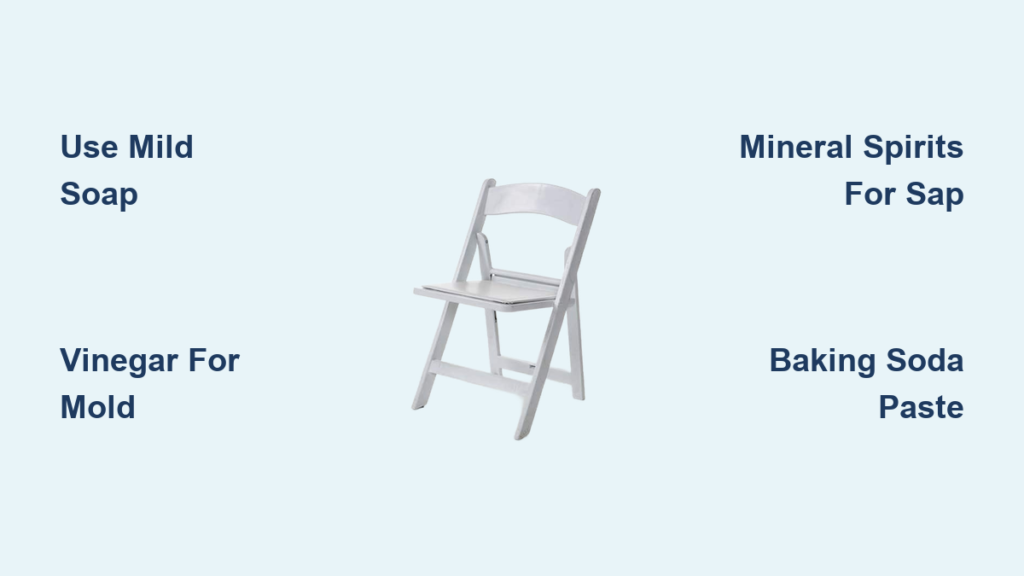
Resin chairs are your outdoor workhorses—withstanding rain, sun, and everything in between. But even these durable plastic champions need proper care to maintain their like-new appearance. Whether you’re dealing with everyday dirt or stubborn tree sap, knowing how to clean resin chairs correctly can extend their lifespan by years and keep your patio looking pristine.
This comprehensive guide walks you through proven techniques that restore resin chairs without damaging the material. From quick weekly maintenance to deep restoration processes, you’ll discover exactly what works (and what to avoid) when tackling everything from mold growth to oxidation.
Restore Your Resin Chairs With Basic Soap Cleaning
Time required: 20-30 minutes per chair
Difficulty: Beginner-friendly
Mix the Perfect Resin-Safe Cleaning Solution
Combine 1 tablespoon of mild dish soap with 1 gallon of warm water in a bucket. Stick to pH-neutral soaps—harsh detergents can strip protective coatings from resin surfaces. The water should feel comfortably warm, not hot, to prevent thermal shock to the plastic. Avoid using water above 90°F as rapid drying creates water spots on darker resin colors.
Scrub Without Scratching Your Resin Surfaces
Dip a soft sponge into your solution and start with the chair’s backrest. Use circular motions rather than back-and-forth scrubbing—this lifts dirt without creating visible scratches. Apply gentle pressure; resin surfaces clean easily when using the right technique. Pay special attention to crevices, joints, and textured areas where grime accumulates over time.
Focus extra attention on:
– Armrest undersides where hands leave oils
– Seat edges where debris collects
– Leg joints where spider webs and dust gather
Rinse and Dry to Prevent Water Spots
Use your garden hose with a spray nozzle set to medium pressure. Rinse from top to bottom, ensuring all soap residue disappears—leftover soap creates a film that attracts more dirt. Immediately dry with a soft towel to prevent water spots, especially on darker resin colors. Never leave chairs to air dry completely as this can cause mineral deposits from hard water.
Eliminate Mold Growth on Outdoor Resin Chairs

Works for: Green or black spots, musty odors
Time required: 30 minutes plus drying time
Mold thrives in shaded, damp areas—exactly where resin chairs often sit. Create a 1:3 solution of white vinegar to water in a spray bottle. Liberally spray affected areas until thoroughly saturated, then walk away for 15-20 minutes. The vinegar breaks down mold spores without harsh chemicals while being safe for your resin material.
After soaking, scrub gently with a soft-bristled brush. You’ll see the mold lifting immediately. Rinse thoroughly and place chairs in direct sunlight—the UV rays provide natural sanitization. This method works equally well for mildew prevention in humid climates.
Safety note: Wear gloves when handling vinegar solutions to protect sensitive skin, and ensure proper ventilation when cleaning in enclosed spaces.
Remove Tree Sap Without Damaging Resin Surfaces
Works for: Sap, adhesive residue, chewing gum
Time required: 10-15 minutes per spot
Tree sap creates stubborn bonds with resin surfaces that soap can’t touch. Dampen a clean cloth with mineral spirits or rubbing alcohol (test in an inconspicuous spot first). Gently dab—don’t rub—the sticky area, allowing the solvent to penetrate for 2-3 minutes.
The sap will soften and transfer to your cloth. Switch to clean cloth sections as needed to avoid spreading. Immediately wash the area with soap and water to remove solvent residue. This technique also removes price stickers and tape residue from new chairs.
Warning: Never use acetone or paint thinner—they can melt resin surfaces permanently. Always work in a well-ventilated area when using solvents.
Fix Chalky White Oxidation on Resin Chairs

Time required: 45 minutes
Best for: Chalky appearance, color fading
That white, chalky film isn’t dirt—it’s oxidation caused by UV exposure. Create a paste using 3 parts baking soda to 1 part water. The consistency should resemble toothpaste. Apply this paste in circular motions using a soft cloth, covering all oxidized areas.
Let the paste sit for 10-15 minutes while the mild abrasive works its magic. Rinse thoroughly and prepare for a dramatic difference—you’ll see the original color returning immediately. For severe cases, apply a plastic restorer containing UV inhibitors after cleaning.
Pro tip: White resin chairs benefit from occasional bleaching (1 part bleach to 10 parts water) for stubborn discoloration, but never use bleach on colored resin—it causes permanent fading.
Pressure Wash Resin Chairs Safely
PSI limit: 1200-1500 maximum
Distance: 12+ inches from surface
Pressure washing works wonders for heavily soiled chairs, but technique matters. Use a wide-angle 25-40 degree spray tip and maintain consistent sweeping motions. Never linger on one spot—this creates permanent etching in the resin surface.
Start with the lowest effective pressure and increase gradually. Test on the chair’s underside first. Work in sections, keeping the nozzle moving continuously. After washing, expect to re-apply any protective coatings as pressure washing removes these layers.
Key warning: Avoid pressure washing when surface temperatures exceed 90°F, as this can cause thermal shock to the plastic material.
Choose the Right Commercial Cleaners for Resin
For Regular Maintenance
- 409 Multi-Surface: Cuts through everyday grime without harsh chemicals
- Simple Green: Environmentally safe for routine cleaning
- Armor All Protectant: Restores shine and adds UV protection after cleaning
For Heavy Restoration
- Star Brite Plastic Restorer: Addresses severe oxidation and color fading
- Meguiar’s Marine Cleaner: Specifically formulated for plastic exposed to sun and water
Apply commercial cleaners according to label directions. Always rinse thoroughly—even “no-rinse” formulas can leave residue that attracts dirt over time.
Prevent Future Stains With Smart Resin Chair Care
Weekly Quick Checks
- Wipe spills immediately with paper towels
- Brush off pollen daily during spring months
- Position chairs away from dripping trees
Monthly Protection
Apply UV protectant spray every 4-6 weeks during summer. Cover chairs when not in use for extended periods, or store in a shaded, dry location. Use seat cushions to prevent direct contact with potentially staining substances like sunscreen or food.
Pro tip: Create a simple maintenance log noting cleaning dates and products used. This identifies patterns and optimizes your future cleaning schedule based on your specific environment.
Troubleshoot Stubborn Resin Chair Problems
Persistent stains: Escalate your approach systematically. Start with vinegar solution, progress to baking soda paste, then commercial degreasers. Document what works for each stain type.
Rough texture: Indicates weathering beyond cleaning. Use 0000 steel wool lubricated with soapy water for light abrasion, then apply plastic polish to restore smoothness.
Loose hardware: Tighten connections carefully—over-torquing cracks resin. Apply silicone lubricant to moving parts twice yearly to prevent seizing.
Seasonal Deep Cleaning Schedule for Resin Chairs
Spring: Deep clean and inspect for winter damage
Summer: Weekly wipe-downs, monthly thorough cleaning
Fall: Deep clean and apply protective coating
Winter: Store covered or indoors when possible
Chairs near pools or saltwater environments require more frequent rinsing to prevent salt buildup. Areas with high pollen counts may necessitate daily dusting during peak seasons.
Final tip: Your resin chairs will reward consistent care with years of like-new appearance. The 20-minute weekly investment prevents the need for aggressive restoration later, saving both time and money while keeping your outdoor space guest-ready year-round. By following these targeted cleaning methods, you’ll maintain that “just bought” look while protecting your investment against the elements.


