
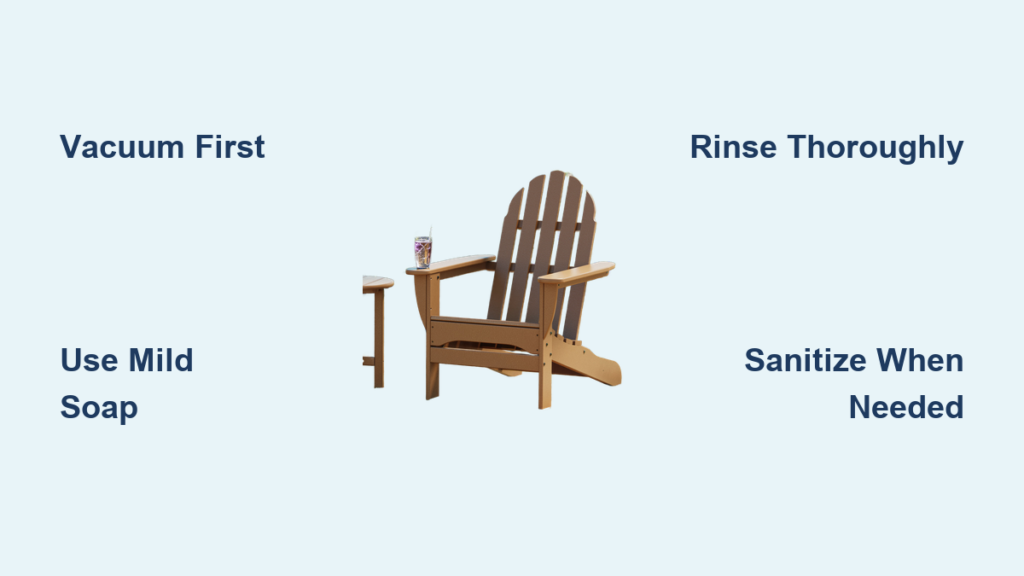
Your POLYWOOD Adirondack chairs have weathered another season of backyard barbecues, lazy afternoons, and unexpected summer storms. Now they’re showing the wear—dust trapped between slats, pollen clinging to armrests, and that stubborn ring left by a forgotten drink. Unlike traditional wooden furniture that cracks and splinters without constant attention, your HDPE chairs promise durability but still need proper care to maintain their vibrant color and smooth finish.
Knowing exactly how to clean POLYWOOD Adirondack chairs saves you from damaging their surface with harsh tools or chemicals. The good news? You don’t need specialized products or professional help. With basic household items and 30 minutes of your time, you can restore that just-bought shine to your outdoor seating. This guide reveals the exact methods recommended by POLYWOOD owners and the manufacturer itself—no guesswork required.
Whether you’re preparing for weekend guests or performing routine maintenance after summer, these techniques work for all POLYWOOD Adirondack chair models. Skip the ineffective hacks circulating online and learn the proven approach that keeps your chairs looking new for years.
Revive Your Chairs With the Weekly Cleaning Method
Gather These Essential Supplies Before Starting
Skip the trip to specialty stores—your kitchen and garage already contain everything needed for standard POLYWOOD chair cleaning. You’ll need a dry vacuum to remove loose debris without scratching surfaces, a soft-bristle brush that won’t mar the HDPE material, and a simple washcloth or microfiber towel for application. Fill a standard bucket with warm water and add any mild dish soap you already own—no special formulas required. Keep your garden hose ready for thorough rinsing, as residual soap attracts more dirt.
Follow These 7 Steps for Spotless Chairs in 30 Minutes
Vacuum thoroughly before wet cleaning
Begin by running your dry vacuum across all chair surfaces, especially between slats and underneath the seat. This critical first step removes grit and debris that would otherwise scratch the surface during washing. Pay extra attention to the crevice where the backrest meets the seat—this area traps the most dirt from daily use.
Create the perfect soap solution
Mix warm water with a generous squirt of dish soap in your bucket until suds form. The ideal solution cuts through grime without being harsh on the HDPE material. Too little soap won’t lift stubborn residues like sunscreen or pollen, while too much creates excessive suds that are difficult to rinse completely.
Apply solution to all surfaces systematically
Wipe down every inch of your chair with your soapy washcloth—don’t overlook the legs, undersides, or armrests. The non-porous nature of POLYWOOD means water won’t soak in, so you can be thorough without worrying about swelling or warping. Work from top to bottom to prevent dirty runoff from re-soiling cleaned areas.
Allow proper dwell time for maximum effectiveness
Let the soap solution sit for 3-5 minutes to break down accumulated outdoor residues. This dwell time is crucial for dissolving pollen, bird droppings, and other organic materials that bond to the surface over time. Don’t let the solution dry completely, as this makes rinsing more difficult.
Target problem areas with strategic scrubbing
Use your soft-bristle brush on stubborn spots, focusing on joints where the back meets the seat and around armrest connections. These high-contact zones collect the most buildup from hands, drinks, and food. Apply moderate pressure—HDPE is durable but unnecessary abrasion can cause premature wear.
Rinse completely to prevent residue buildup
Thoroughly rinse every surface with your garden hose, paying special attention to crevices where soap can hide. Any remaining film will attract dirt faster than untreated areas, defeating your cleaning efforts. Start from the top and work downward to ensure runoff doesn’t re-soil cleaned sections.
Air dry properly before use
Allow chairs to dry completely in direct sunlight for 15-20 minutes. The quick-drying nature of POLYWOOD means you won’t wait long before relaxing again. Don’t towel-dry unless you have hard water, as this could leave mineral spots on the surface.
Eliminate Mold and Bacteria With Deep Sanitizing
Recognize When Your Chairs Need Sanitizing
Your POLYWOOD Adirondack chairs require deep sanitizing after winter storage when moisture may have caused mold growth, following illness in your household, before hosting gatherings with guests, or when visible mildew appears. Standard cleaning removes surface dirt but doesn’t kill bacteria and mold spores that can thrive in damp conditions.
Upgrade Your Cleaning Solution With Safe Bleach Ratio
Combine your regular soap solution with household bleach using a precise 1 part bleach to 2 parts water ratio. This concentration effectively kills pathogens without damaging the HDPE material. Always wear rubber gloves when handling bleach solutions, and never mix bleach with other cleaners—this creates dangerous fumes.
Apply Sanitizing Solution Correctly for Maximum Effectiveness
Follow the same seven-step process used for weekly cleaning, but extend the dwell time to 10-15 minutes after applying the bleach solution. This extended contact time ensures complete sanitization of all surfaces. For severe mold cases, apply the solution generously to affected areas and let it sit for 20 minutes before scrubbing and rinsing thoroughly.
Safely Pressure Wash Your POLYWOOD Chairs Without Damage

Set Up Your Pressure Washer Correctly
Use a pressure washer rated at no higher than 1,500 PSI with a 40-degree fan tip nozzle—the maximum safe settings for POLYWOOD material. Hold the wand 8 inches from the surface and maintain constant movement to prevent gouging. Before cleaning your entire chair, test the pressure on an inconspicuous area to ensure it won’t damage the finish.
Follow This Pressure Washing Technique for Impeccable Results
Start at the top of your chair and work downward in slow, overlapping sweeping motions. Maintain a consistent distance and speed—never hold the wand stationary on any spot. For stubborn areas like textured surfaces or deep crevices, make additional passes rather than increasing pressure. Always wear safety goggles, gloves, and closed-toe shoes when operating pressure washing equipment.
Maintain Hardware to Prevent Rust and Loosening

Clean Stainless Steel Components Properly
Your POLYWOOD chairs feature marine-grade 18-8 stainless steel hardware with specialized coating that resists corrosion. Clean these components monthly using the same soap solution as your weekly chair cleaning. Gently scrub with a soft-bristle brush, rinse thoroughly, and towel-dry to prevent water spots. Inspect all connections during cleaning and tighten any loose hardware immediately.
Address Coastal Environment Challenges
If you live within 5 miles of the ocean, salt air accelerates hardware corrosion despite the marine-grade materials. Increase your cleaning frequency to weekly during beach season and always rinse hardware after exposure to salt spray. Apply a thin coat of automotive wax to hardware surfaces after cleaning for extra protection against salt damage.
Prevent Future Stains With These Proven Strategies
Implement These Simple Preventive Measures
Position your chairs away from overhanging trees to minimize leaf and sap accumulation. Use breathable furniture covers during extended non-use periods—never use plastic covers that trap moisture. After heavy usage days, perform a quick rinse to remove sunscreen, food residues, and sweat before they bond to the surface. Keep a dedicated cleaning kit near your outdoor space for immediate spot treatment of spills.
Handle Spills Immediately With This Protocol
When accidents happen, act within minutes: Blot (never rub) with a paper towel to absorb liquids, apply your soap solution immediately, gently scrub the area, and rinse thoroughly. Prompt attention prevents most substances from causing permanent stains on POLYWOOD material.
Troubleshoot Stubborn Problems Like a Professional
Eliminate Persistent Stains That Resist Standard Cleaning
For particularly tough stains, escalate your approach methodically: First, extend the soap solution dwell time to 15 minutes. If that fails, slightly increase the soap concentration while maintaining the same gentle application. Next, try the pressure washing method at proper settings. As a last resort, use the sanitizing bleach solution with extended dwell time.
Completely Remove Mold and Mildew Growth
The bleach sanitizing method eliminates mold completely when applied correctly. For severe cases, saturate affected areas generously, allow 20 minutes of dwell time, scrub with a soft brush, and rinse thoroughly. Never use undiluted bleach or commercial mold removers, as these can damage the HDPE surface.
Follow This Seasonal Cleaning Schedule for Year-Round Perfection
Perform a sanitizing clean in early spring before your first outdoor gathering to remove winter storage residue. During summer’s peak usage, maintain chairs with monthly standard cleans, focusing extra attention on armrests where sunscreen accumulates. Before winter storage, use the pressure washing method to remove all summer buildup. When bringing chairs out of storage, perform another sanitizing clean and inspect all hardware connections.
Your POLYWOOD Adirondack chairs are engineered for decades of outdoor enjoyment with minimal maintenance. By following these specific cleaning methods—whether quick weekly touch-ups or seasonal deep restoration—you’ll preserve their vibrant color and smooth finish for years. The secret to long-lasting beauty isn’t complicated products or professional services, but consistent application of these simple techniques. Spend less time worrying about maintenance and more time relaxing in chairs that look as good as the day you bought them. For optimal results, keep your cleaning supplies organized and visible so you’ll never put off that 30-minute refresh your chairs deserve.


