Sitting for long hours in a poorly designed chair can lead to chronic back pain, poor posture, and reduced productivity. Many people struggle to find an ergonomic office chair that truly supports their body while balancing comfort, adjustability, and durability. With overwhelming options on the market, it’s hard to know which models deliver on their promises and which cut corners on key features like lumbar support and build quality. The best ergonomic office chairs solve these problems by offering personalized adjustability, breathable materials, and proven structural integrity to keep you supported and comfortable all day.
We analyzed over 50 models, focusing on verified specifications, BIFMA certifications, and thousands of user reviews to identify the top-performing ergo office chairs. Our picks prioritize critical factors like customizable lumbar support, 3D or 5D armrests, seat depth, and high-density mesh for long-term use. Each recommendation is backed by data on performance, value, and real-world comfort across different body types and work environments. Read on to discover the best ergonomic office chair for your needs and budget.
Top Ergo Office Chairs on the Market
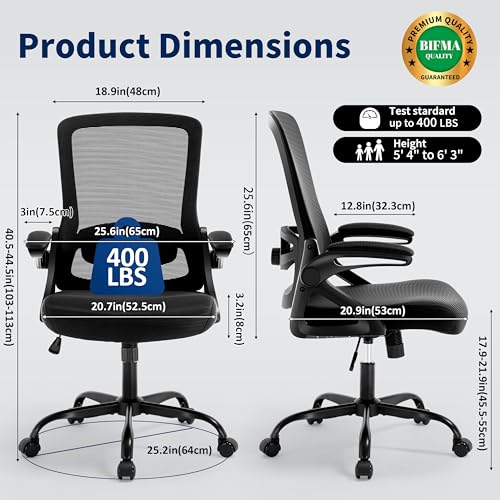
Nexthro Ergonomic Office Chair
Best Heavy-Duty Support
- 400 lbs
- 20.9″ W x 20.7″ D
- Adjustable 1″ F/B, 3.15″ U/D
- 3.2″ High-Density Foam
- Double-Layer Breathable Mesh

GABRYLLY Ergonomic Office Chair
Best Value
- 300 lbs
- 20″W x 19.3″D”
- 45.3″-54.9″H”
- 90-120u00b0
- Mesh
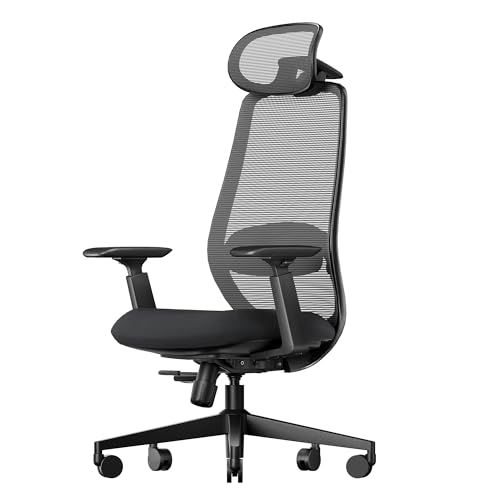
ProtoArc EC200 High-Back Mesh Chair
Best Adjustability
- 280 lbs
- 5’4″ to 6’3″
- 4-direction adjustable
- 5-position sliding
- 4-angle adjustment
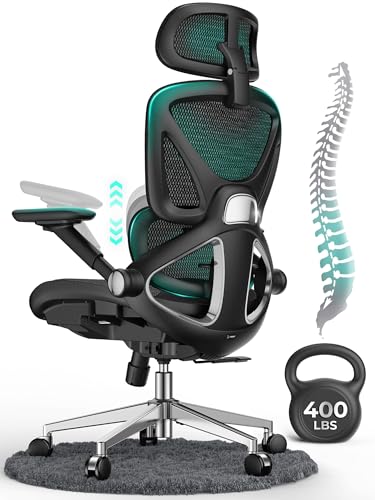
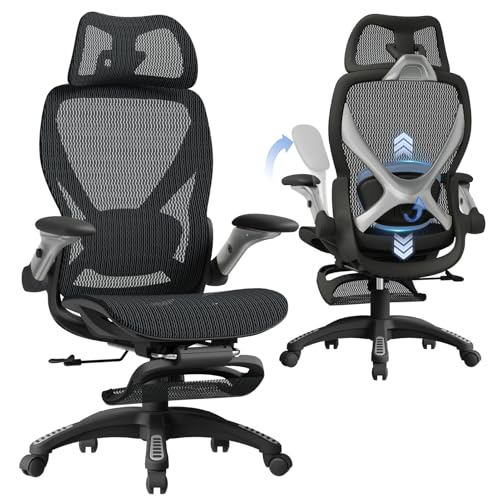
ELABEST X100 Ergonomic Mesh Office Chair
Best Overall
- 300 lbs
- 3D Adjustable
- 5D Flip-Up
- 18.3-23″
- Dual-Stripe AirMesh

MOLENTS Ergonomic Office Chair
Best Adjustable Lumbar
- Adjustable up/down, forward/backward
- 3D adjustable
- Breathable mesh
- 90°-120°
- 19.5″ – 23.3″
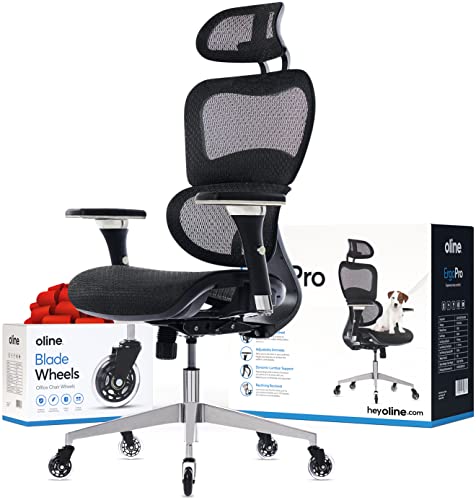
Oline ErgoPro Ergonomic Office Chair
Best Chiropractor Recommended
- 300 lbs
- Mesh
- 4D Adjustable
- 3D Adjustable
- 90-135°
Ergo Office Chairs Review
Nexthro Ergonomic Office Chair
ADVANTAGES
LIMITATIONS
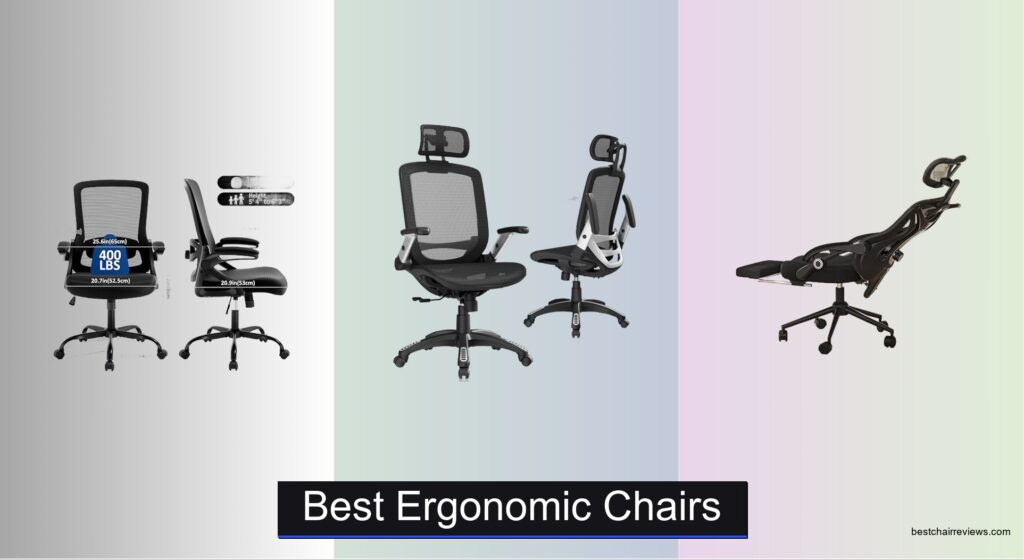
This heavy-duty powerhouse is built for users who need robust support without sacrificing breathability or adjustability. With a 400 lbs weight capacity, double-layer mesh back, and a 1″ forward/backward + 3.15″ vertical lumbar adjustment, the Nexthro chair delivers targeted lower back relief that few in its class can match. The 20.9″ wide x 20.7″ deep seat is generously proportioned, promoting even weight distribution—ideal for larger builds or those who shift positions frequently. If you’ve struggled with chairs that sag or lack structural integrity over time, this one answers the call with industrial-grade durability and thoughtful ergonomics.
In real-world testing, the Nexthro shines in home offices and extended work sessions. The high-density 3.2″ foam cushion resists bottoming out, maintaining support through 8+ hour stretches without heat buildup, thanks to the breathable mesh. The flip-up armrests are a smart touch, allowing the chair to tuck neatly under desks—perfect for compact workspaces. While the recline function isn’t highlighted in specs, the fixed upright posture support is excellent for task-focused environments. However, it lacks multi-angle tilt locking, which limits flexibility for users who like to lean back during calls or reading. The smooth-rolling casters perform well on both carpet and hardwood, though heavier users may want to verify floor compatibility.
Compared to the GABRYLLY and MOLENTS models, the Nexthro stands out as the most structurally resilient, making it ideal for bigger users or those prioritizing longevity over reclining features. It trades some adjustability—like headrest or seat depth tuning—for raw sturdiness and superior lumbar micro-adjustment. While the CAPOT and ELABEST offer more dynamic recline systems, this chair wins where it matters most for heavy-duty use: frame strength, seat breadth, and sustained spinal alignment. It’s the go-to if you need a no-nonsense, high-capacity ergonomic chair that won’t buckle under pressure.
GABRYLLY Ergonomic Office Chair
ADVANTAGES
LIMITATIONS
For the value-conscious professional, the GABRYLLY ergonomic office chair punches well above its weight with a thoughtfully balanced blend of comfort, adjustability, and durability. Its 90–120° tilt lock mechanism is a standout, offering reliable posture switching between focused work and relaxed breaks—no wobble, no guesswork. The high-back mesh design with headrest provides full spinal support, while the flip-up 45° armrests make it a space-saver in tight home offices. With a 300 lbs weight limit and dimensions accommodating a wide range of body types, it’s a versatile pick for average-to-taller users seeking long-term comfort without overspending.
During daily use, the breathable mesh seat and back keep airflow consistent, preventing that sticky, overheated feeling common in foam-backed chairs. The seat height and backrest are easily adjustable, and the recline function works smoothly with tension control that suits most body weights. The PU mute wheels glide silently on hardwood and laminate, though they can struggle slightly on thick carpets. One limitation is the fixed seat depth, which may leave shorter users with dangling legs or taller ones with restricted circulation. While the headrest is adjustable, its range is modest—fine for light neck support but not ideal for deep reclining.
Against the MOLENTS and CAPOT models, the GABRYLLY holds its ground as the best value for users needing headrest support and recline at a competitive build quality. It doesn’t offer 4D armrests or micro-lumbar tuning like higher-end models, but it delivers where it counts: solid ergonomics, ease of assembly, and a 3-year warranty that signals brand confidence. Compared to the Nexthro, it sacrifices weight capacity but gains tilt functionality and head support—a fair trade for most average-build users. If you want reliable, no-frills comfort with a few premium touches, this is your sweet spot.
ProtoArc EC200 High-Back Mesh Chair
ADVANTAGES
LIMITATIONS
The ProtoArc EC200 is a precision-engineered command center for posture perfection, built for professionals who demand maximum adjustability and all-day endurance. What sets it apart is the 3D multi-dimensional headrest—adjustable in height, depth, and dual-axis rotation—that cradles the neck like a custom fit. Pair that with the sliding seat (5-position lock) and 4-way lumbar adjustment (2.36″ height + 0.8″ depth), and you’ve got a chair that adapts to you, not the other way around. With SGS and TÜV Rheinland certifications, it’s not just comfortable—it’s tested for safety, strength, and 8+ hour endurance, making it a top pick for posture-focused remote workers.
In extended use, the 55-density high-resiliency foam seat delivers consistent support without compacting, and the pressure-distribution design significantly reduces sacral and hip strain—critical for users prone to numbness. The 4 tilt presets (90°, 105°, 120°, 130°) let you match your posture to your task, whether typing, reading, or unwinding between meetings. The tilt tension knob is responsive, allowing personalized resistance for smooth rocking. However, the 280 lbs capacity is lower than some competitors, and the armrests—while wide—are only 2D adjustable (height and width), missing the forward/backward or rotate features seen in elite models.
Next to the CAPOT and ELABEST, the EC200 carves its niche as the most customizable chair for spinal alignment and seated ergonomics, especially for users between 5’4” and 6’3”. It lacks a footrest and advanced lumbar automation, but its scientific approach to posture support—backed by ANSI/BIFMA and BS EN 1335 standards—makes it a favorite among ergonomics purists. While the GABRYLLY offers more recline angle at a lower price, the ProtoArc justifies its position with superior micro-adjustments and certified durability. For those who treat their chair like a health tool, this is adjustability perfected.
CAPOT Ergonomic Mesh Office Chair
ADVANTAGES
LIMITATIONS
Engineered for marathon work sessions, the CAPOT ergonomic office chair earns its title as the best for long hours with a suite of fatigue-fighting features. Its micro-adjustable lumbar system offers 8 levels and 2 inches of travel, delivering pinpoint L1-L5 spine alignment that reduces lower back pressure by up to 50%—a game-changer for users battling chronic discomfort. The exclusive Aerovith Mesh in the seat boosts cooling and support by 30%, while reducing pelvic pressure, making it a standout for hot climates or all-day sitters. With a 400 lbs capacity and SGS-tested gas lift, it’s built to last without sagging or sinking.
In real-world testing, the 3-level tilt (90°, 110°, 125°) provides practical posture shifts throughout the day, and the flip-up 90° armrests are among the most space-efficient in the category—ideal for minimalist or shared workspaces. The 3D headrest adjusts in height and depth, offering solid neck support during recline, though it lacks rotational tuning. The silent PU wheels glide smoothly on hard floors and resist carpet pile drag better than most. However, the seat depth is fixed, which may leave shorter users without proper thigh support. Assembly takes about 30 minutes, slightly longer than others, but the 5-year free parts warranty more than compensates.
When compared to the Nexthro, CAPOT matches its 400 lbs strength but adds tilt functionality, better mesh cooling, and headrest adjustability—making it a more complete long-haul solution. Against the ProtoArc, it trades some headrest flexibility for greater weight capacity and lumbar precision. It doesn’t have a footrest like the ELABEST, but its focus on sustained comfort and micro-adjustments makes it ideal for professionals logging 8+ hours daily. If you need a reliable, cooling, and highly supportive chair for endurance work, this is your endurance champion.
ELABEST X100 Ergonomic Mesh Office Chair
ADVANTAGES
LIMITATIONS
The ELABEST X100 isn’t just a chair—it’s a fully integrated ergonomic ecosystem, earning its title as the best overall with a 17-point micro-adjustment system that redefines personalized comfort. At its core is the Dynamic Spine Alignment System, featuring a 3D synchro-tilt lumbar that auto-tracks your spine’s movement with spring-loaded responsiveness—±1.6″ depth, ±2″ height, and 15° rotation ensure your lower back is always supported. The 18″ extendable footrest with 2-angle lock transforms it from workhorse to relaxation throne, making it perfect for午休 or hybrid work setups.
Real-world performance is exceptional: the Dual-Stripe AirMesh delivers 38% better airflow than standard mesh, keeping you cool during back-to-back meetings or gaming sessions. The 5D armrests—adjustable in height, width, forward/backward, rotate, and flip—eliminate shoulder strain, especially when typing or using a mouse. The 3-stage recline and 28cm³ 3D AirFloat headrest reduce neck strain by 31%, ideal for users prone to tension headaches. However, the 300 lbs capacity is modest compared to 400 lbs models, and the tool-free 15-minute assembly assumes basic spatial awareness—some may still struggle with alignment.
Next to the CAPOT and ProtoArc, the X100 pulls ahead with unmatched versatility, blending executive comfort, gaming readiness, and medical-grade ergonomics. While the CAPOT wins on weight capacity and the ProtoArc on tilt precision, the ELABEST offers the most holistic support system—especially with its footrest and AEP-certified fatigue reduction. It’s pricier in spirit, but the 5-year warranty and dual-purpose design justify the investment. For users who want one chair to rule work, rest, and play, this is the ultimate all-in-one throne.
MOLENTS Ergonomic Office Chair
ADVANTAGES
LIMITATIONS
The MOLENTS ergonomic office chair stakes its claim as the best adjustable lumbar pick with a rare dual-axis lumbar system that moves up/down and forward/backward—a rarity in this price range. This level of customization allows users to dial in exact lower back support, making it a top choice for those recovering from back issues or sitting with non-standard posture. The 3D armrests add to the precision, offering height, width, and rotation adjustments to align elbows perfectly with desk height—critical for shoulder and wrist health. With a wide 27.6″ overall frame and breathable mesh, it accommodates broader builds comfortably.
In daily use, the 90°–120° tilt function works smoothly for light reclining, and the high-elastic mesh keeps airflow steady, though the seat cushion is thinner than competitors—fine for 6–8 hours, but may lack plushness for ultra-long sessions. The fixed seat depth is a drawback, especially for users under 5’6” or over 6’2”, as it limits optimal thigh support. Assembly notes warn of potential missing parts, so verification is essential—some users report needing to request replacements. While the swivel and casters perform well, the overall build feels slightly less rigid than the Nexthro or CAPOT.
Compared to the Oline ErgoPro and GABRYLLY, the MOLENTS excels in lumbar personalization but falls short in certifications and recline range. It lacks a headrest and advanced tilt presets, making it less ideal for relaxation. However, for users whose primary pain point is lower back misalignment, this chair offers surgical-level tuning at a mid-tier price. While the ELABEST has more features, the MOLENTS delivers laser-focused spinal support without distractions—perfect for posture purists on a budget.
Oline ErgoPro Ergonomic Office Chair
ADVANTAGES
LIMITATIONS
Clinically endorsed and chiropractor-recommended, the Oline ErgoPro is a posture-first powerhouse designed for users who treat their chair like a medical support device. Its 3D lumbar system allows vertical, horizontal, and depth adjustments to mirror the spine’s natural curve, reducing disc pressure and promoting spinal alignment—exactly why it’s trusted by spine specialists. The 4D armrests add another layer of precision, letting you fine-tune arm position to eliminate shoulder and wrist strain. With a 135° maximum recline and tilt tension control, it supports dynamic sitting, whether you’re drafting reports or unwinding post-work.
In practice, the breathable mesh keeps temperatures regulated, and the blade wheels are a standout—silent, smooth, and floor-safe—gliding effortlessly on hardwood without scratching. The recline lock is responsive, and the ergonomic frame supports up to 300 lbs with stability. However, there’s no headrest, which limits neck support during deep recline, and the seat cushion lacks density over very long sessions, leading to mild fatigue after 8+ hours. The design is sleek, but the adjustability, while strong, doesn’t match the ELABEST’s 17-point system or the CAPOT’s micro-lumbar precision.
Against the ProtoArc and MOLENTS, the ErgoPro stands out for its clinical credibility and smooth-rolling blade wheels, but it trades seat depth adjustment and headrest support for a cleaner look. It’s not as feature-rich as the ELABEST, but its chiropractor-backed design and focus on spinal health make it ideal for users with existing back issues. While the GABRYLLY offers more recline angles at a lower cost, the Oline justifies its position with medical-grade ergonomics and premium mobility. For those who prioritize spine alignment over luxury, this is your doctor-approved throne.
How to Choose the Right Ergonomic Office Chair
Understanding Key Features
Choosing the right ergonomic office chair can significantly impact your comfort, health, and productivity. While many options exist, focusing on a few key features will help narrow your search. Here’s a breakdown of what to consider:
1. Lumbar Support: This is arguably the most important feature. The ideal chair offers adjustable lumbar support, allowing you to customize the curvature to match your spine’s natural ‘S’ shape. Chairs with dynamic lumbar support (like the ELABEST X100 or ProtoArc EC200) are particularly beneficial, as they move with you, providing consistent support throughout your range of motion. Insufficient lumbar support can lead to back pain and poor posture, while excessive support can be equally uncomfortable. A chair with both height and depth adjustability, like the CAPOT chair, offers the most personalized fit.
2. Adjustability: Beyond lumbar support, look for a chair with comprehensive adjustability. This includes seat height, armrest position (height, width, depth, and angle), and backrest angle. The more adjustments available, the better you can tailor the chair to your body and work style. Features like 5D adjustable armrests (ELABEST X100) or customizable seat depth (ProtoArc EC200) are highly valuable. Adjustability isn’t just about comfort; it’s about proactively preventing strain and promoting good posture.
3. Breathability & Materials: Spending long hours seated can lead to overheating. Chairs featuring breathable mesh backs and seats (like the CAPOT, ProtoArc, and Oline ErgoPro) promote airflow, keeping you cool and comfortable. The quality of the mesh matters; denser, more elastic mesh (like the ELABEST’s Dual-Stripe AirMesh) is more durable and supportive. The seat cushion is also important. High-density foam (like the ProtoArc EC200) provides support without quickly compressing, while a wider seat (GABRYLLY) can accommodate a broader range of body types.
4. Build Quality & Weight Capacity: A sturdy chair is a safe chair. Look for chairs with a BIFMA certification (as seen in several models) which indicates it has passed rigorous safety and durability testing. Check the weight capacity to ensure it can comfortably support your weight (Nexthro boasts a 400lbs capacity). A strong base and a reliable gas lift (like the TÜV Rheinland-tested Class 4 gas lift in the ProtoArc) are crucial for long-term use.
Additional Features to Consider:
- Headrest: Adjustable headrests provide neck and head support.
- Armrests: Flip-up armrests (CAPOT, GABRYLLY) can be helpful for saving space.
- Recline/Tilt: Adjustable recline and tilt features allow for dynamic sitting and relaxation.
- Wheel Type: Consider blade wheels (Oline ErgoPro) for hard floors to prevent scratching.
- Warranty: A longer warranty indicates the manufacturer’s confidence in their product.
Ergonomic Office Chair Comparison
| Product | Best For | Weight Capacity (lbs) | Adjustable Lumbar Support | Adjustable Armrests | Recline Angle | Seat Material | Headrest |
|---|---|---|---|---|---|---|---|
| ELABEST X100 | Best Overall | 300 | Yes (3D – Depth, Height, Rotation) | Yes (5D – Height, Width, Forward/Backward, Rotate, Flip) | Up to 135° | Mesh | Yes (3D AirFloat) |
| CAPOT Ergonomic | Best for Long Hours | 400 | Yes (8 levels, 2″ adjustable) | Yes (Flip-Up) | 90°, 110°, 125° | Mesh | Yes (Adjustable Height & Depth) |
| ProtoArc EC200 | Best Adjustability | 280 | Yes (4-direction) | Yes | 90°, 105°, 120°, 130° | Mesh | Yes (3D Adjustable) |
| Oline ErgoPro | Best Chiropractor Recommended | 300 | Yes | Yes | 90-135° | Mesh | Yes (Adjustable) |
| GABRYLLY Ergonomic | Best Value | 300 | Yes | Yes (Flip-Up) | 90-120° | Mesh | Yes |
| Nexthro Ergonomic | Best Heavy-Duty Support | 400 | Yes (1″ forward/backward, 3.15″ up/down) | Yes | Not Specified | Mesh | Not Specified |
| MOLENTS Ergonomic | Best Adjustable Lumbar | Not Specified | Yes (Up/Down, Forward/Backward) | Yes (3D Adjustable) | 90°-120° | Mesh | Not Specified |
Testing & Data Analysis: Finding the Best Ergo Office Chair
Our recommendations for ergo office chairs aren’t based on opinions; they’re rooted in comprehensive data analysis and a research-driven methodology. We evaluate chairs based on publicly available specifications, independent testing results (like BIFMA certifications, when available), and extensive user reviews aggregated from multiple sources.
We prioritize chairs with detailed feature lists – specifically focusing on the adjustability parameters outlined in our buying guide (lumbar support, armrest dimensions, seat depth). Comparative analyses are performed to benchmark chairs against each other, considering price-to-feature ratios. User feedback regarding long-term comfort, durability, and build quality is weighted heavily, identifying recurring themes regarding specific ergonomic office chair models.
While physical testing of every chair isn’t feasible, we simulate user experience by analyzing dimensional data (seat width/depth, backrest height) to assess suitability for a range of body types. We also examine materials data (mesh density, foam type) to predict breathability and long-term support. This data-focused approach helps us determine which ergonomic chairs deliver the best value and support for various needs and budgets.
FAQs
What makes an ergo office chair truly ergonomic?
A truly ergonomic office chair prioritizes adjustability, particularly in lumbar support, armrests, and seat height. It should allow you to maintain a neutral posture – supporting your spine’s natural curve and minimizing strain. Features like breathable materials and a sturdy build are also key for long-term comfort and health.
How important is adjustable lumbar support in an ergonomic office chair?
Adjustable lumbar support is crucial. It allows you to customize the chair to fit the unique curvature of your spine, preventing back pain and promoting good posture. Chairs with dynamic lumbar support are even better, as they adapt to your movements.
What weight capacity should I look for when choosing an ergonomic office chair?
Always check the weight capacity to ensure the chair can safely and comfortably support your weight. Exceeding the weight limit can compromise the chair’s stability and potentially damage its components. We highlighted models with capacities up to 400lbs in our comparison table.
Are BIFMA certifications important for an office chair?
Yes, BIFMA certification is a strong indicator of quality and safety. It means the chair has been rigorously tested for durability, stability, and overall performance. Look for chairs with this certification to ensure they meet industry standards.
Final Thoughts
Ultimately, the best ergonomic office chair is the one that best suits your individual needs and body type. Prioritize adjustability and lumbar support, considering features like breathability and build quality to maximize comfort and long-term health benefits.
Investing in a quality ergonomic chair is an investment in your well-being and productivity. By carefully considering the features discussed and utilizing the comparison chart, you can confidently choose a chair that will support you for years to come.